
Brazilian Clubs Shine in Club World Cup Group Stage
Brazil's Dominance in the Club World Cup
As the group stage of the Club World Cup wraps up, Brazilian teams have emerged as a surprising force. Flamengo, Palmeiras, Botafogo, and Fluminense, all recent Copa Libertadores champions, have successfully advanced to the knockout rounds, showcasing their strength against formidable European clubs and captivating millions of fans back home.
After enduring a series of defeats against European teams in FIFA tournaments, Brazilian supporters are feeling a renewed sense of optimism.
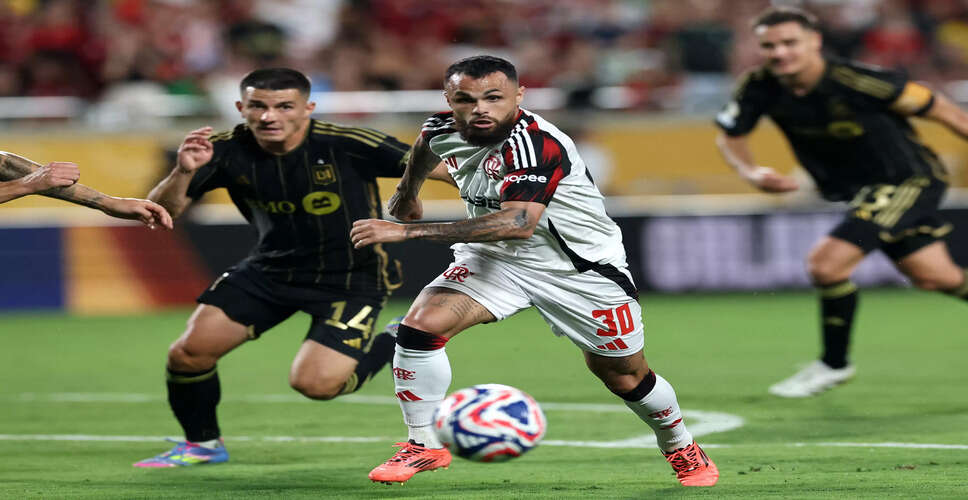
Flamengo and Palmeiras led their respective groups, with Flamengo making headlines by defeating Chelsea 3-1, marking their qualification for the knockout phase. Botafogo, which stunned Champions League titleholder Paris Saint-Germain, and Fluminense also progressed, finishing in second place.
Fluminense midfielder Jhon Arias expressed the team's ambitions after a goalless draw with South Africa's Mamelodi Sundowns, stating, "Our first goal was to reach the Round of 16, but we aim for more." All four Brazilian clubs share similar aspirations as they head into the knockout stage.
This Saturday, Botafogo and Palmeiras will clash, ensuring at least one Brazilian team secures a spot in the quarterfinals. Flamengo is set to face Bayern Munich on Sunday, while Fluminense will take on Inter Milan on Monday.
The last Brazilian team to claim the world club title was Corinthians, who triumphed over Chelsea in 2012, in a tournament format that was significantly smaller than the current 32-team competition featuring clubs from five continents.
Renewed Hope
Botafogo's victory over PSG on June 19 was the most significant upset of the group stage. Prior to this match, many Brazilian fans and analysts anticipated a dominant performance from the French side against Botafogo, who have had a mixed season.
PSG coach Luis Enrique acknowledged Botafogo's performance, stating, "They were the best team we faced defensively all season. They earned their victory."
Two key factors have contributed to the success of Brazilian clubs: they are in the middle of their season, while European teams have completed theirs, and they are accustomed to the heat that has enveloped the tournament.
Despite initial skepticism from Brazilian coaches, players, and fans before the tournament, the mood has shifted. Flamengo supporters in Philadelphia were heard chanting, "the time is coming" for their upcoming match against Bayern Munich.
Botafogo's coach, Renato Paiva, remarked after their victory over PSG, "The cemetery of football is full of favorites." He acknowledged the risks involved in facing such strong opponents.
Atletico Madrid's narrow 1-0 victory over Botafogo was the only blemish for Brazilian teams during the group stage.
South American Strength
Brazilian clubs have demonstrated their dominance in South America, winning the last six Copa Libertadores titles, including five finals featuring only Brazilian teams. Their regional superiority is evident in the Club World Cup, where their Argentine rivals, Boca Juniors and River Plate, failed to advance past the group stage.
Much of this success can be attributed to the talent pool from across South America, which has been showcased in the Club World Cup.
The Brazilian league attracts young talent from the region, who often move on to more lucrative opportunities in Europe. However, some choose to remain and develop in a competitive league with multiple serious contenders for the title each year.
Flamengo's playmaker Giorgián de Arrascaeta hails from Uruguay, while Botafogo's standout player is Venezuela's Jefferson Savarino. Fluminense relies heavily on Arias, and Palmeiras is counting on contributions from Argentina's Flaco López, none of whom have played in Europe.
"Many remarkable events in football history originate from South America," stated Manchester City coach Pep Guardiola. "The greatest players come from there."
Real Madrid's coach Xabi Alonso noted that European teams can learn from the competitive level of teams outside their usual sphere, mentioning Brazilian clubs and River Plate as particularly impressive.
Brazil has also welcomed several Portuguese coaches, contributing to their success. Paiva took over Botafogo from fellow countryman Arthur Jorge, while Abel Ferreira has led Palmeiras to numerous titles since joining in 2020, enhancing the competitiveness of Brazilian clubs.
"I take great pride in being in Brazil. I had many opportunities to leave, but I chose to stay," Ferreira remarked at the tournament's outset.
When asked about the gap between his team and European clubs, Ferreira confidently stated, "It is minimal. We are ready to compete."
The upcoming knockout stage of the Club World Cup will reveal whether his assertion holds true.