
Argentina vs Spain: FIFA World Cup Final Faces Air Quality Concerns

FIFA World Cup Final Set Amidst Air Quality Worries
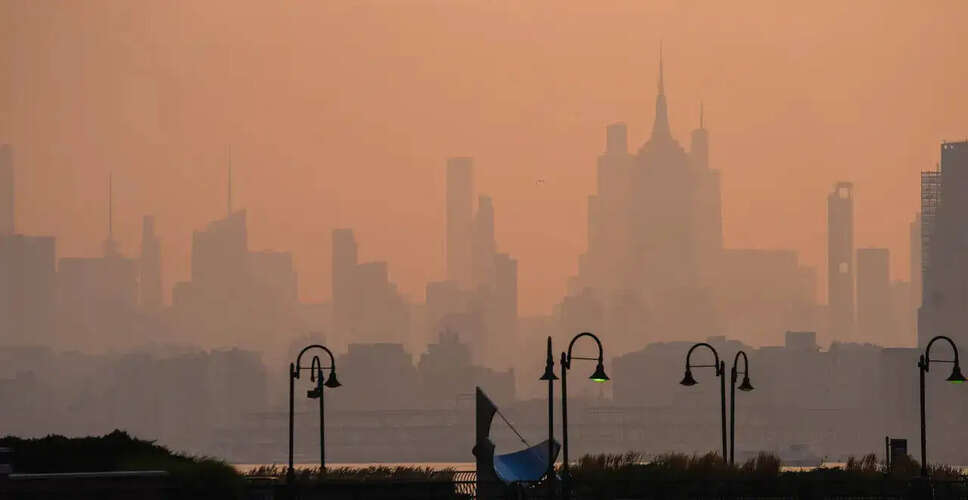
The defending champions, Argentina, are gearing up to take on Spain in the FIFA World Cup final this Sunday in New Jersey. This highly anticipated match is expected to attract approximately 80,000 spectators to the stadium. However, concerns regarding deteriorating air quality have emerged, casting doubt on whether the event can proceed as scheduled. Smoke from wildfires in Canada has led to hazy and potentially dangerous conditions in parts of New York and New Jersey, including the vicinity of the open-air stadium in East Rutherford, creating uncertainty surrounding the final.
In response to the situation, the White House has confirmed discussions with tournament organizers. Andrew Giuliani, the executive director of the White House World Cup task force, stated during a press briefing, “We are closely monitoring the situation with the help of someone from the National Weather Service stationed at FIFA headquarters.” As of now, no decisions have been made regarding the final match between Spain and Argentina, as altering or postponing such a significant event is a complex matter.
While rain is forecasted for Saturday, it does not guarantee an improvement in air quality before the final. In fact, conditions may worsen. Mark Parrington, a senior scientist at the Copernicus Atmosphere Monitoring Service, noted, “There is another smoky air mass expected to follow the rain, but it remains uncertain how it will affect New York or New Jersey by Sunday.” He added that if fire activity increases on Saturday, it could lead to more smoke entering the atmosphere shortly after the rain.
Impact of Wildfire Smoke on Players
Wildfire smoke poses serious health risks, affecting nearly every bodily system and contributing to tens of thousands of deaths annually, according to various medical studies. It can lead to a spike in asthma cases, resulting in increased ambulance calls within hours. Smoke triggers inflammation in various body parts, often targeting individuals' vulnerabilities, which can lead to a cascade of immune responses against the irritants.
Even under moderate air quality conditions, players' performance may be impacted, as explained by Chantal Darquenne, a professor of medicine at the University of California, San Diego. “The effects are dose-dependent,” she stated. “If the air quality is moderate, the impact will be less severe, but it will still be present, especially given the intense physical exertion during these matches.”