
Anatoly Karpov Questions Legitimacy of Gukesh's World Chess Championship Win
Karpov's Controversial Remarks on Gukesh's Title
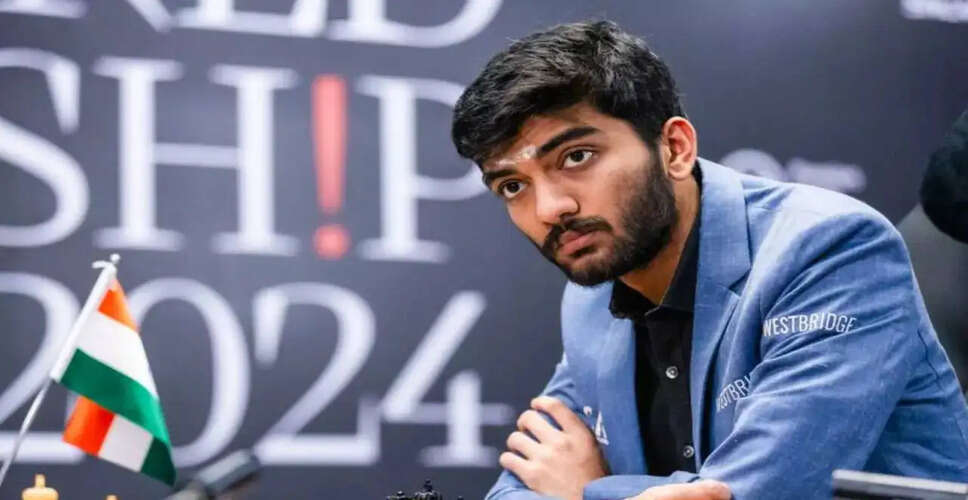
Former world chess champion Anatoly Karpov has ignited a debate within the chess community by suggesting that current world champion Dommaraju Gukesh secured his title “by chance.” This statement has reignited discussions regarding the validity and quality of recent world championship events. In an interview with a Russian publication, Karpov expressed skepticism about the conditions surrounding Gukesh’s victory over Ding Liren during the 2024 World Chess Championship in Singapore. At just 18 years old, Gukesh made history as the youngest world champion in chess.
Karpov stated, “The Indian chess player became [champion] by chance, because he wasn’t supposed to win the match against the Chinese player [Ding Liren].” He further elaborated that if Ding had not lost a game he should have won, he would have retained his title.
The bluntness of Karpov’s comments has attracted attention, especially considering the historical context. Karpov himself became world champion in 1975 after Bobby Fischer forfeited his title, a situation often referenced in discussions about unconventional championship outcomes. He later solidified his legacy by defending his title against Viktor Korchnoi in 1978 and 1981, and through a legendary rivalry with Garry Kasparov across five championship matches.
These remarks reflect a broader sentiment in Russian chess circles, which have not seen a world champion since Vladimir Kramnik held the title in 2007. Since then, challengers like Sergey Karjakin in 2016 and Ian Nepomniachtchi in 2021 and 2023 have come close but ultimately fell short.
Karpov is not the only one voicing concerns about Gukesh’s ascent. Following the teenager's historic win in December 2024, Kramnik expressed his disappointment on social media, stating, “No comment. Sad. End of chess as we know it.” He had previously criticized the quality of play during the championship match, describing it as disappointing and lacking the expected level of strategic depth.
Kramnik remarked, “Both players were making mistake after mistake, strategical mistakes. It’s as if they don’t grasp the position. I expect something more from a world championship match, like ideas! If I want to enjoy chess as just a game of calculation, I would rather watch a world championship of chess engines!”
Additionally, Andrei Filatov, president of the Chess Federation of Russia, has gone further by suggesting that Ding may have intentionally lost the match and has called for an investigation by FIDE, the global governing body of chess.
Despite the criticism, Gukesh’s victory signifies a generational shift in the chess world, showcasing the emergence of young talents from diverse regions. While some question the quality and circumstances of his win, supporters argue that the unpredictability of elite competition is what keeps chess vibrant and evolving.