
Air India Boeing 787 Fleet Inspections Show No Major Safety Issues Post-Crash
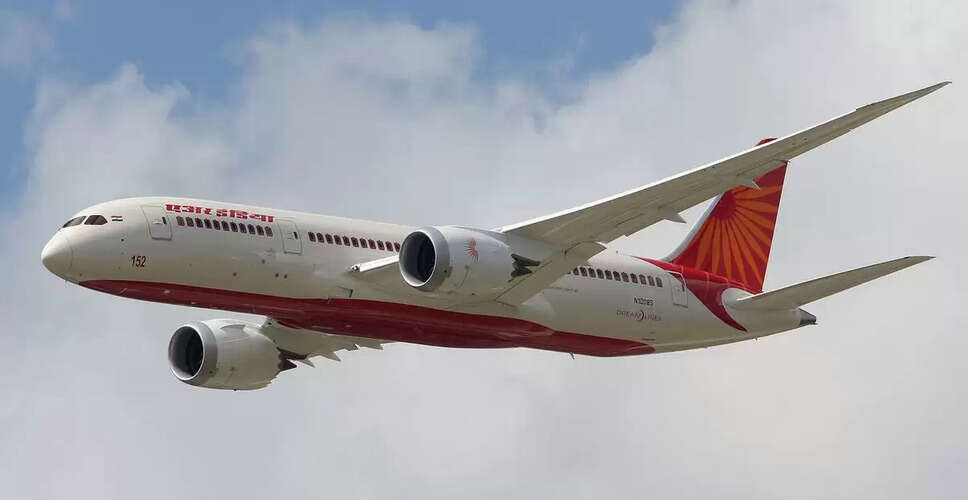
Safety Inspections Following the Ahmedabad Crash
Following the tragic plane crash in Ahmedabad on June 12, recent inspections of Air India’s Boeing 787 fleet have not uncovered significant safety problems, according to the civil aviation authority. This announcement comes amid the cancellation of numerous flights.
The Directorate General of Civil Aviation (DGCA) confirmed that the aircraft and their maintenance systems met the current safety standards after discussions with officials from Air India and Air India Express.
On Tuesday, Air India canceled 16 flights that were scheduled to operate with wide-body aircraft, including 13 flights using Boeing 787 models, as reported by the regulator.
Since the crash on June 12, a total of 83 flights utilizing wide-body aircraft, including the 787 Dreamliner and Boeing 777, have been canceled. The DGCA noted that 66 of these cancellations involved the 787.
Flight delays and the unavailability of aircraft on Tuesday were attributed to the heightened safety inspections mandated by the DGCA, along with airspace restrictions in West Asia, according to unnamed sources.
The Boeing 787-8 Dreamliner involved in the crash was carrying 242 passengers and was on its way to London’s Gatwick airport when it went down just 33 seconds after takeoff. Only one passenger survived, sustaining impact injuries.
The crash, which struck a hostel building at BJ Medical College, resulted in the deaths of at least 33 individuals on the ground. This incident is being regarded as one of the worst aviation disasters globally in the past decade and marks the first fatal accident involving a 787 Dreamliner.
In response to the incident, the DGCA convened a meeting with Air India and Air India Express to assess the airlines' operational integrity and ensure compliance with safety and passenger service regulations.
The regulator expressed concerns regarding recent maintenance issues reported by Air India, advising the airline to improve coordination among its engineering, operations, and ground handling teams. They emphasized the need for adequate spare parts to prevent passenger delays and to strictly follow regulations.
Enhanced Safety Checks for Dreamliner Fleet
Dreamliner Safety Checks
The DGCA stated that the enhanced safety inspections initiated after the June 12 crash apply to the entire fleet of 33 Boeing 787 aircraft.
Currently, four of these aircraft are undergoing major checks at various maintenance facilities, while 24 have completed the necessary inspections as of Tuesday afternoon.
Two additional aircraft are expected to finish their checks on Tuesday, with one more scheduled for Wednesday.
The remaining six aircraft include two that are currently grounded in Delhi, with checks planned once they are declared serviceable. The other four will undergo inspections before being released from maintenance.
The DGCA has recommended establishing a more systematic and real-time defect reporting system to ensure that critical operational and safety departments receive timely updates, which should enhance decision-making and minimize disruptions.
The regulator also reviewed the impact of recent airspace closures, particularly over Iranian airspace due to the ongoing conflict between Iran and Israel, urging airlines to maintain effective communication with passengers and crew while adopting alternative routing strategies.
Murlidhar Mohol, the minister of state for civil aviation, indicated that a high-level panel tasked with investigating the crash is expected to deliver its findings within three months. Concurrently, the Aircraft Accident Investigation Bureau is conducting its own investigation, with the United States’ National Transportation Safety Board also involved in a parallel inquiry.