
Why Delays in Tejas Aircraft Induction Are a Concern for India's Air Force

Critical Delays Impacting Indian Air Force's Fighter Jet Strength
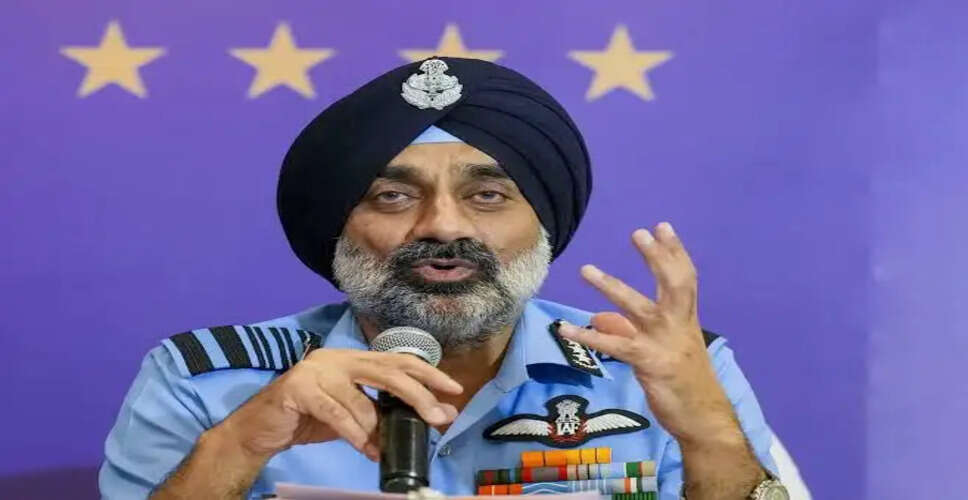
New Delhi: The Indian Air Force (IAF) is facing significant challenges due to delays in the delivery of Tejas combat aircraft, as highlighted by Air Chief Marshal A P Singh during a recent press briefing. He emphasized that the dwindling number of fighter jet squadrons is a pressing issue, especially as air power becomes increasingly vital for national security.
In anticipation of Air Force Day, the IAF chief stated that the force needs to incorporate at least 36 to 40 new fighter jets each year for the foreseeable future. He expressed optimism that the situation would improve with the arrival of the domestically produced Tejas Mark-1A aircraft and the Rafale jets being acquired through the multi-role fighter aircraft (MRFA) initiative.
Air Chief Marshal Singh mentioned that India aims to finalize the MRFA agreement within this financial year, contingent on the progress of negotiations.
Earlier this year, India made a significant move in defense procurement by approving a long-awaited plan to acquire 114 Rafale fighter jets from France, nearly 20 years after the initial proposal aimed at enhancing the IAF's combat capabilities.
Currently, negotiations regarding pricing and other essential aspects of the project are underway.
If negotiations proceed smoothly, the MRFA deal could be signed within this financial year, according to Singh, who noted the collaborative nature of discussions between Indian and French representatives.
The IAF chief also raised concerns about the delays in the supply of Tejas Mark-1A jets from Hindustan Aeronautics Ltd (HAL), stating that these setbacks are detrimental to the IAF's operational readiness.
In February 2021, a deal worth Rs 48,000 crore was finalized with HAL for the procurement of 83 Tejas Mk-1A jets, with the first deliveries expected by March 2024. However, no jets have been delivered to date.
The IAF is eager to receive these aircraft, especially as its fighter squadrons have decreased to 29, significantly below the authorized strength of 42.
In September of the previous year, another agreement was reached with HAL for 97 Tejas MK-1A light combat aircraft, valued at Rs 62,370 crore.
The Chief of Air Staff expressed anticipation for the arrival of Tejas Mark-1A jets, aircraft from the MRFA program, Tejas Mark 2s, and planes from the Advanced Medium Combat Aircraft (AMCA) initiative.
He also indicated that the IAF might need to consider alternative platforms if the AMCA program experiences further delays.
While Russia has proposed the Su-57 jets, no decisions have been made regarding this offer.
When asked about the proposed theaterization plan, Air Chief Marshal Singh noted that the structure is being reassessed following insights gained from Operation Sindoor.
He clarified that the IAF supports the concept of theater commands and has actively participated in discussions surrounding it.
The discussions have evolved since Operation Sindoor, which provided valuable firsthand experience.
The government introduced the theaterization plan in 2019 to enhance coordination among the three military branches, but progress has been slow.
This model aims to integrate the capabilities of the Army, Navy, and Air Force, optimizing their resources for various operations.
The IAF chief stated that the government will determine the organizational structure for theaterization, including the sequence and method of implementation.
He expressed confidence that the government will make informed decisions based on the options presented to them.
Under the theaterization framework, each command will consist of units from the Army, Navy, and Air Force, functioning as a cohesive unit to address security challenges in designated regions.
Currently, the three services operate independently with separate commands.
Air Chief Marshal Singh also highlighted the increasing significance of air power in the current geopolitical landscape, stressing the need for India to enhance its aerial capabilities.
Regarding the modernization of the IAF, he mentioned the necessity of incorporating artificial intelligence, while affirming that human judgment will remain crucial in decision-making.
We must develop an AI-augmented force, he stated.
Additionally, the Chief of Air Staff underscored the importance of India developing its own fighter jet engine.