
What Insights Did Astronaut Shubhanshu Shukla Share About India's Gaganyaan Mission?
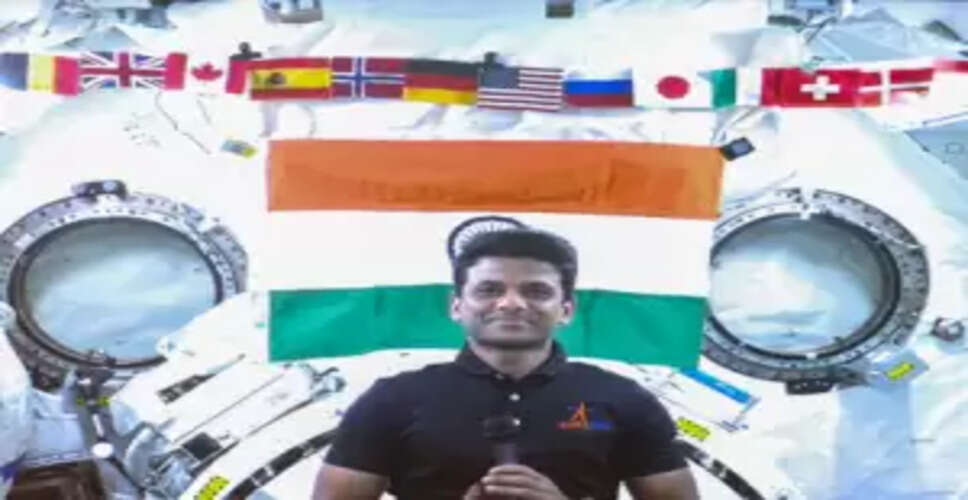
Shubhanshu Shukla Discusses Gaganyaan Preparations
New Delhi: On Tuesday, astronaut Shubhanshu Shukla revealed that engineers at ISRO are analyzing his experiences from the Axiom-4 mission to enhance the planning of Gaganyaan, India's first human spaceflight initiative.
As the inaugural Indian astronaut to visit the International Space Station (ISS), Shukla mentioned that formal training for the Gaganyaan mission is set to commence shortly.
Four Indian astronauts have been selected and are currently undergoing training for the Gaganyaan mission, which is anticipated to launch in 2027. The mission will utilize the domestically developed LVM-3 rocket to send at least two astronauts into low Earth orbit.
Shukla, who transitioned from an IAF pilot to an astronaut, noted that ISRO engineers are pinpointing the differences between the Gaganyaan mission and other human spaceflights to identify any potential gaps.
"These missions are incredibly intricate, and we must ensure everything is thoroughly prepared before launch. This is an ongoing process, with all systems being reviewed and revised. The underlying philosophy is also being scrutinized," he stated during a press briefing at the India International Space Conclave, organized by the Indian Space Association (ISpA).
He emphasized that the Gaganyaan mission is a continuous program, with training and development occurring concurrently.
While there will be a structured training regimen for Gaganyaan, it will not be as extensive as that of other missions. "My training for Axiom-4 was comprehensive up to the mission, but the first Gaganyaan mission will have a different approach," he explained.
Shukla is actively sharing insights from his Axiom-4 experience with ISRO engineers, focusing on the systems and knowledge acquired during his 18-day stay at the orbital laboratory.
"The key takeaway from the Axiom-4 mission is that Indian engineers are leveraging our experiences to develop a framework for future missions," he remarked.
He added that the challenge with space missions is that there are multiple valid approaches. "My role is to validate the effectiveness of our strategies, and that evaluation is currently underway," he noted.
"I don't believe there will be immediate changes in our approach for G-1 (the first uncrewed mission under the Gaganyaan program). However, we are conducting analyses, and if necessary, adjustments will be made," Shukla concluded.