
Vinod Khosla Highlights AI's Potential for India's Global Influence
AI as a Game Changer for India
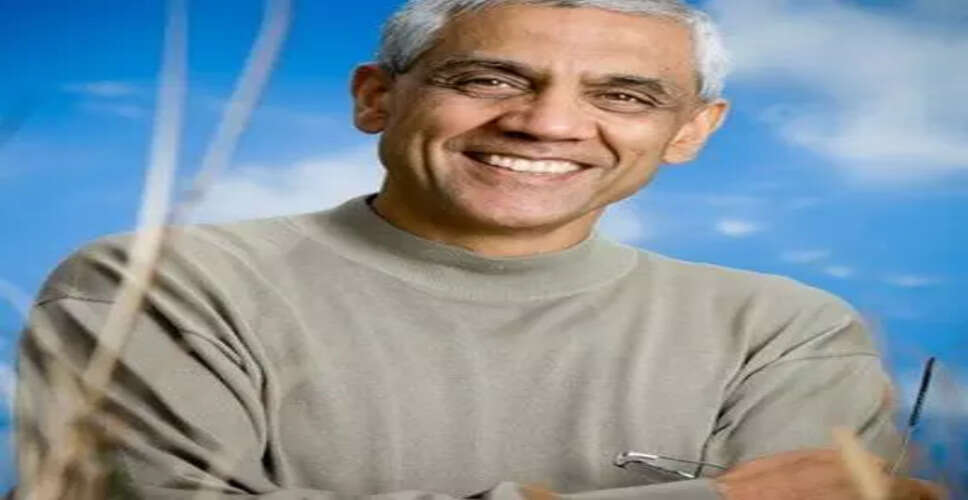
Washington, Dec 6: Tech investor Vinod Khosla has emphasized that Artificial Intelligence (AI) could serve as a significant equalizer for India, potentially enhancing the nation's global standing, provided that policymakers act swiftly to leverage its capabilities.
Speaking at the AI Impact Summit pre-conference in San Francisco, organized by the Indian Consulate, Khosla described AI as presenting an unprecedented opportunity, one he could not have envisioned a decade or more ago.
He forecasted that in the next 15 years, nearly all forms of expertise, including medical, legal, scientific, and educational services, will be accessible for free.
According to Khosla, AI will be capable of performing nearly all tasks currently done by humans, leading to a scenario where labor becomes 'almost free,' resulting in both vast opportunities and significant disruptions.
He noted that AI's ability to eliminate traditional barriers to entry would particularly benefit those who have historically been marginalized. "All you need is voice in your language," he stated, highlighting that no additional skills are necessary to utilize AI.
He expressed optimism about the impact of AI on individuals lacking formal education, suggesting it could be transformative for them.
Khosla cautioned that conventional economic indicators may fail to capture the impending changes, asserting that GDP might not accurately reflect the value of services that will become free.
He predicted a deflationary economy where $10,000 could yield what $30,000 to $50,000 does today.
He asserted that India could swiftly provide high-quality services to every household, envisioning that by 2030, nearly every child in India could have access to affordable personal tutoring.
Khosla also anticipated the availability of 24/7 medical services at home and suggested that legal services would become nearly free, with AI potentially offering superior care compared to human doctors.
He pointed out India's existing digital infrastructure, including Aadhaar, UPI, DigiLocker, and India Stack, as crucial assets for building AI-enabled services.
However, he warned that the immediate future could see the decline of the BPO and IT services sectors in India, which would pose a significant challenge unless transformed into exportable services.
Khosla also discussed the geopolitical ramifications of AI, suggesting that with the right capabilities, nations like Ukraine could prevail in conflicts, and Taiwan could defend itself against threats.
Looking ahead to 2050, he envisioned a globally abundant economy driven by breakthroughs in energy and transportation, but stressed that good policy is essential for realizing this future.
His comments set the stage for a series of discussions among Indian officials, U.S. tech leaders, global investors, and researchers in preparation for the AI Impact Summit 2026, which Prime Minister Narendra Modi will inaugurate in New Delhi next February.
Consul General K. Srikar Reddy, in his opening remarks, described AI as a field where India seeks to transform its economy and society, urging stronger collaboration between Silicon Valley and India's burgeoning innovation landscape.
India's Deputy Chief of Mission in Washington, Ambassador Namgya Khampa, framed AI collaboration with the U.S. as both strategic and vital, emphasizing the importance of their strong bilateral relationship.
She concluded by stating that India envisions a future where AI empowers individuals, safeguards the environment, and fosters inclusive growth, highlighting the country's strengths in talent and digital infrastructure.