
Unveiling the Sun: Scientists Capture Stunning New Images of Solar Surface
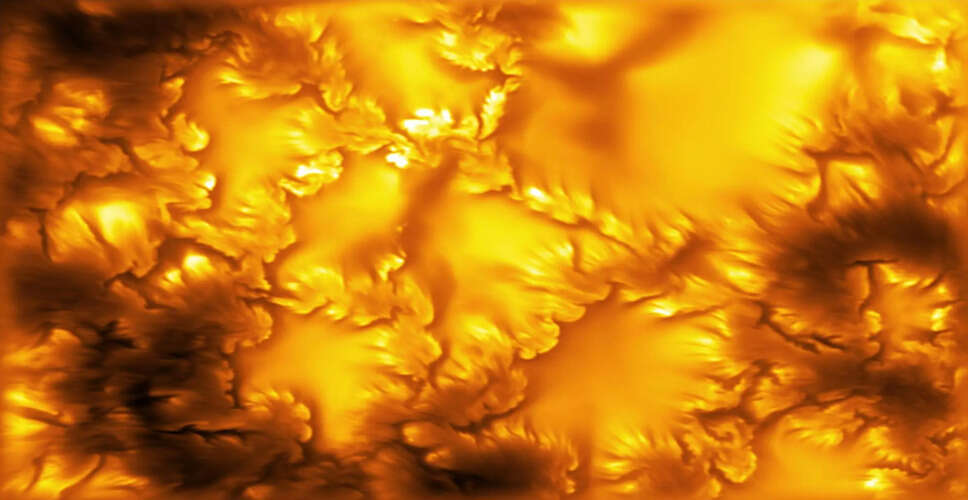

Revolutionary Images of the Sun's Surface
In a groundbreaking achievement, researchers have successfully captured the sun's surface in unprecedented detail, unveiling a captivating and dynamic appearance. While it's unsafe to gaze directly at the sun without appropriate eye protection, scientists utilized the Daniel K. Inouye Solar Telescope, situated in Maui, Hawaii, to observe its intense surface.
Initially, the images were taken to calibrate and assess the telescope's capabilities. However, upon reviewing the results, the team discovered they had recorded the sun's brilliant outer layer at an unmatched resolution.
Among the findings were peculiar, feathery patterns undulating across the solar surface. Solar physicist Ruizhu Chen from Stanford University, who was not part of the study, remarked, "It reminds me of famous paintings, like the swirling skies in Van Gogh's Starry Night."
The researchers observed waves of instability on the sun's surface, caused by magnetized plasma interacting at varying speeds, akin to the ripples formed when wind disturbs water. This phenomenon, known to occur on Earth and other planets such as Jupiter and Saturn, had never before been documented at such a level on the solar surface, according to Friedrich Woger, a co-author of the study from the National Solar Observatory.
The results of this research were published on Wednesday in the journal Nature. Scientists are eager to understand the sun's internal mechanisms to better monitor significant energy bursts known as coronal mass ejections, which can impact Earth. These events can lead to solar storms that disrupt GPS communications and create stunning auroras.