
Revolutionizing Wildlife Protection: AI Surveillance at Debrigarh Sanctuary
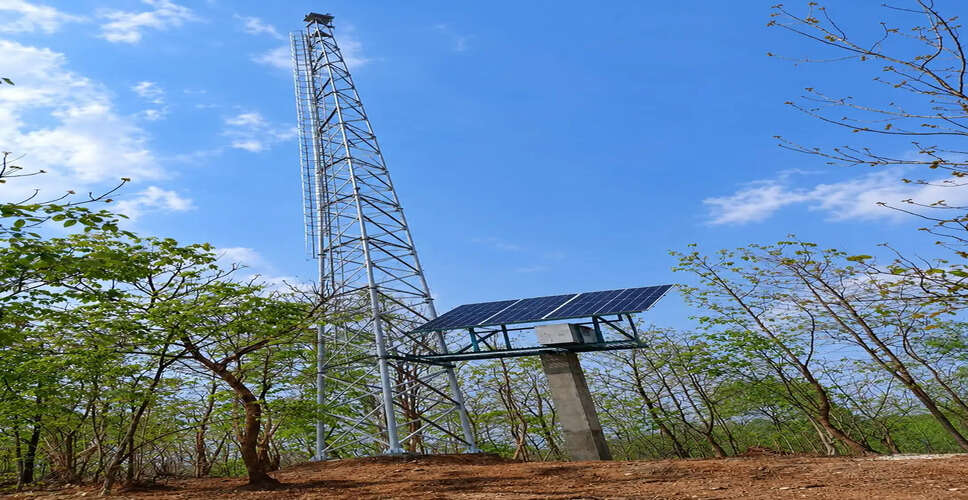

Innovative AI Surveillance Enhances Wildlife Monitoring
Bhubaneswar: The Debrigarh Wildlife Sanctuary has significantly enhanced its wildlife protection efforts through an advanced AI-integrated surveillance system. This system merges an e-Eye tower with 18 smart camera traps designed to monitor wildlife movements, human activities, and potential threats in real-time. The project commenced in December 2025 with an initial setup of five camera traps linked to the AI surveillance tower.
After establishing a stable wireless mesh network within the sanctuary, the system was expanded in October 2026, adding 18 camera traps strategically placed in remote forest areas. These cameras send images and videos directly to a central control room, allowing forest officials to oversee wildlife and potential dangers without the need for frequent field visits. The AI surveillance tower, located at Chourasimal and operational since December 2025, covers approximately 70 square kilometers within a 5–6 km radius. It is equipped with both optical and thermal imaging capabilities, enabling continuous monitoring of wildlife, human movements, and possible intrusions, even during nighttime or in low-visibility conditions.
The 18 smart camera traps utilize wireless mesh networking and AI technology to capture and analyze images and videos, identifying various species such as Gaur, Leopard, Sambar, Spotted Deer, Sloth Bear, and Nilgai. The system is designed to filter out irrelevant images, thereby streamlining wildlife monitoring and record-keeping processes. Data collected from the surveillance tower and camera traps are transmitted to the central control room at Zero Point, allowing forest personnel to observe wildlife activities in real-time, track movement patterns, and coordinate prompt responses to potential threats.
This expanded network not only aids in wildlife tracking and identifying animal trails but also detects suspicious human activities and potential poaching incidents. It facilitates early detection of forest fires and enhances nighttime surveillance through thermal imaging. Additionally, it improves patrolling efficiency while minimizing disturbances to sensitive wildlife habitats.
The AI surveillance network builds upon Debrigarh's ongoing ground-level protection initiatives, with forest personnel conducting nearly 90,000 kilometers of foot patrols annually for three consecutive years to protect wildlife and their habitats. By integrating extensive patrolling with real-time digital surveillance, automated species identification, and centralized monitoring, the sanctuary is bolstering its technology-driven conservation strategies. This comprehensive approach is anticipated to enhance threat detection, support scientific habitat management, and improve the effectiveness of frontline forest staff.