
NISAR: A Landmark Collaboration in Earth Observation Set for Launch
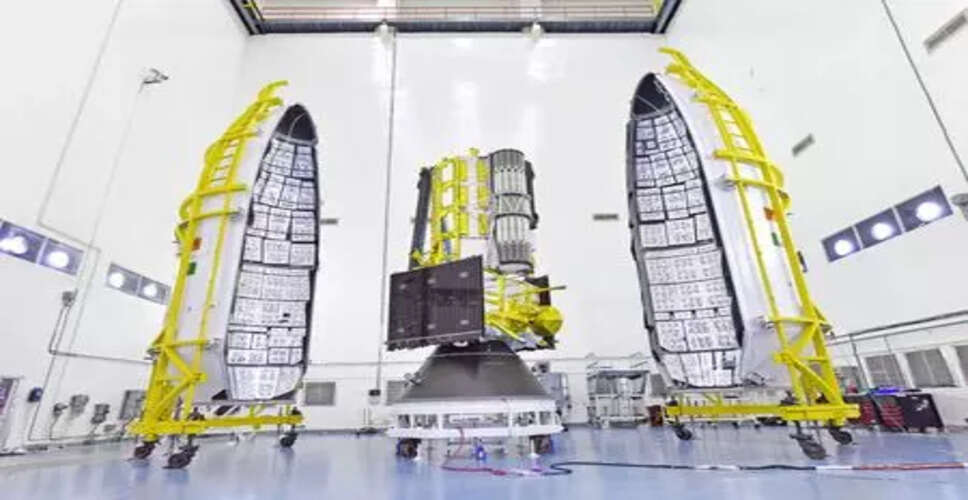
NISAR Launch Announcement
New Delhi, July 26: The upcoming launch of the NASA-ISRO Synthetic Aperture Radar (NISAR) next week exemplifies a remarkable collaboration in global technology, as stated by the Indian space agency.
This mission marks the inaugural joint satellite venture between the Indian Space Research Organisation (ISRO) and NASA.
NISAR is set to be launched by ISRO’s GSLV-F16 from the Satish Dhawan Space Centre (SDSC SHAR) located in Sriharikota, Andhra Pradesh, at 5:40 PM. This will be the first instance of the Geosynchronous Satellite Launch Vehicle (GSLV) entering a Sun-Synchronous Orbit (SSO).
The launch is a culmination of over ten years of robust technical collaboration between the teams at ISRO and NASA/JPL.
ISRO highlighted on social media that NISAR is a product of extensive integration and testing, developed across various continents.
According to ISRO, NISAR has achieved several significant milestones.
It is recognized as the “first dual-band radar satellite,” the first GSLV to reach SSO, and the first Earth observation mission jointly developed by ISRO and NASA.
The GSLV-F16 will place the NISAR satellite into a Sun-synchronous orbit at an altitude of 743 km, with an inclination of 98.4 degrees.
NASA Earth remarked on social media, “Two space agencies. One big win for Earth. NISAR is the first time @NASA and @ISRO have built Earth science hardware together. This powerful satellite will track changes on land and ice, from areas at risk for landslides and earthquakes to shifting glaciers and ice sheets.”
Weighing in at 2,392 kg, NISAR is a distinctive Earth observation satellite, utilizing a dual-frequency Synthetic Aperture Radar (NASA’s L-band and ISRO’s S-band) and featuring NASA’s 12m unfurlable mesh reflector antenna, integrated with ISRO’s modified I3K satellite bus.
The satellite will cover a swath of 242 km with high spatial resolution, employing SweepSAR technology for the first time.
“The satellite will scan the entire globe and provide all-weather, day and night data at a 12-day interval, enabling a wide range of applications,” ISRO stated.
According to ISRO, NISAR is capable of detecting even minor changes in the Earth’s surface, including ground deformation, ice sheet movement, and vegetation dynamics.
This mission will facilitate numerous critical applications, such as monitoring sea ice, detecting ships, tracking storms, assessing soil moisture changes, mapping surface water, and responding to disasters.