
New Initiative Launched to Combat Air Pollution in Guwahati
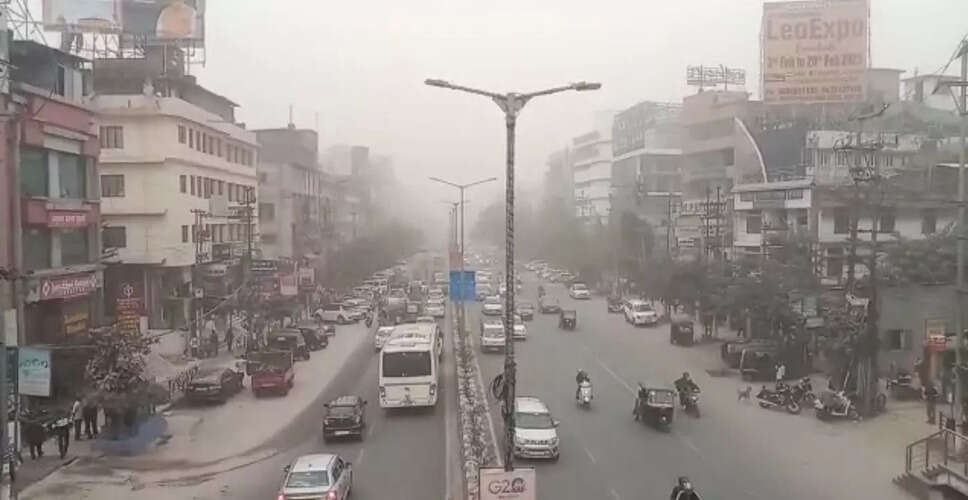
Guwahati's New Clean Air Initiative
Guwahati, Dec 19: In a bid to address air quality issues, the Assam Pollution Control Board (APCB) has partnered with iForest (International Forum for Environment Sustainability & Technology) to develop a new strategy aimed at improving the air in the city.
The 'Guwahati Clean Air Plan' was unveiled on Wednesday, marking a significant step following a Memorandum of Understanding established during the Advantage Assam 2.0 summit.
A report created in collaboration with the Shakti Sustainable Energy Foundation indicates that road dust and transportation are the primary sources of air pollution in Guwahati.
Out of the estimated PM10 emissions of 1071 tons per year, construction and road dust account for 37%, while industrial activities contribute approximately 25%, and road transport adds 21%. Emissions from cooking and heating in both domestic and commercial sectors make up about 12%.
For PM2.5 emissions, which total around 435.3 tons per year, road transport is the leading contributor at 52%, followed by road dust at 16%, industrial emissions at 6%, construction dust at 4%, and cooking emissions at 16%.
The report pointed out that guidelines from the Central Pollution Control Board (CPCB) regarding dust management, such as the absence of green net covers at construction sites and inadequate barricading around flyover projects, have not been adhered to.
Interestingly, the 2018 Action Plan aimed to reduce road and construction dust, but little progress has been made in its implementation.
The iForest plan recommends that authorities issue a show-cause notice for initial violations, halt construction for a second offense, and impose a ban for a third.
Additionally, the report identified issues such as a lack of structured parking, excessive on-street parking leading to congestion, and the operation of large buses on narrow roads, which contribute to increased vehicle emissions. It calls for a traffic congestion management plan to address these challenges.
On the industrial side, the iron and steel sectors are highlighted as major polluters, primarily due to emissions from coal-fired furnaces, despite the presence of pollution control measures.
The report also raised alarms about the city's inadequate solid waste management system. Out of the 884 tons of waste generated daily, only about 650 tons are collected, with roughly 50% processed, while the remainder ends up in landfills.
It was noted that around 7% of the total waste generated is incinerated, resulting in emissions estimated at 61 tons per day (22,349 tons annually), contributing 179 tons of PM10 and 122 tons of PM2.5 each year.
Furthermore, the Brahmaputra riverbed on the city's northern side contributes to natural dust re-suspension. The report suggests that enhancing soil stabilization and increasing green cover along the riverbanks are essential to mitigate this issue. Expanding green spaces in barren areas throughout the city is also necessary to minimize dust generation.
The launch event was attended by notable figures including APCB chairman Arup Kumar Mishra, MLA Mrinal Hazarika, musician Joi Baruah, Aaranyak’s secretary general Bibhab Talukdar, CEO of iForest DR Chandra Bhusan, and Cotton University VC RC Deka, among others.