
Karnataka High Court Hears X's Challenge Against Takedown Notices Under IT Act
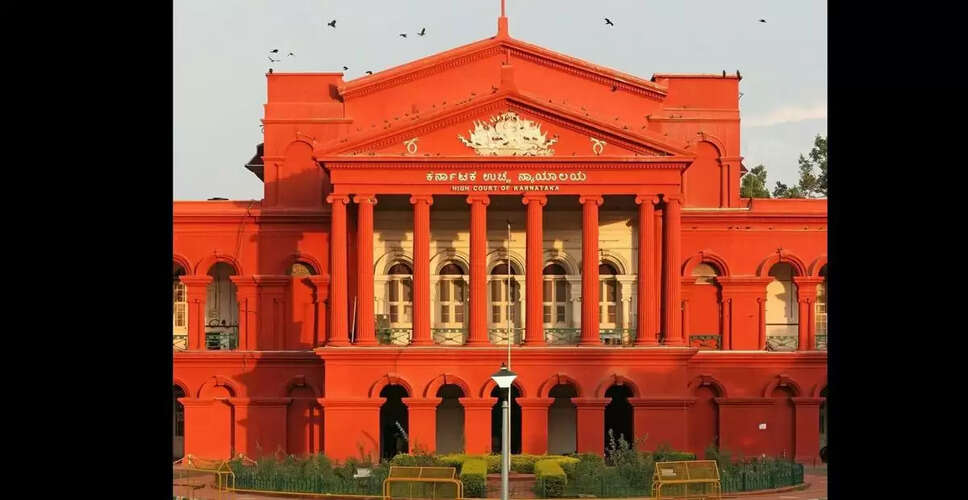
Centre Advocates for Evolving Free Speech Restrictions
During a recent hearing, the Centre informed the Karnataka High Court that the limitations on freedom of speech and expression, as outlined in Article 19 (2) of the Constitution, are an adaptable concept that should progress alongside technological advancements.
This assertion was made in response to a legal challenge from the social media platform X, which is contesting the validity of takedown notices issued under Section 79(3)(b) of the Information Technology Act, 2000.
This specific provision indicates that online intermediaries, including social media platforms, risk losing their safe harbour protection if they do not remove or restrict access to content associated with unlawful activities after being notified by government authorities. Losing this protection would render these platforms liable for the content in question.
X contends that the Centre is misapplying this section to circumvent the stipulations of Section 69A of the Information Technology Act, which governs the blocking of online content based on criteria such as national security, public order, or international relations.
Unlike Section 69A, Section 79(3)(b) lacks a clear definition of what constitutes an “unlawful act” and does not provide a review process.
The platform has further claimed that these takedown orders induce a “chilling effect” on its user base.
Solicitor General Tushar Mehta, representing the Centre, argued in court that this reasoning cannot serve as a valid defense for disseminating content that is detrimental to societal interests.
Mehta emphasized that X cannot assert that the orders have created a “chilling effect” on behalf of its users.
“Twitter, now known as X, claims to provide a platform for others to share their opinions,” Mehta stated. “If they merely act as a notice board, how can their freedom of speech be infringed?”
Concerns Over Fake Accounts
In opposition to X’s petition, Mehta presented evidence of an account named “Supreme Court of Karnataka.”
“I could post anything there, and countless individuals would believe that the Supreme Court of Karnataka has made such statements, all while remaining anonymous,” Mehta remarked.
He pointed out that fake accounts and deepfake videos violate privacy rights and contribute to misinformation. To address these risks, the “safe harbour” protections for intermediaries cannot be absolute, as reported by legal news sources.
Mehta described the takedown notices issued under Section 79(3)(b) as an “exception to the exception” of safe harbour protections.