
Guwahati Faces Rising Leopard Sightings Amid Urban Growth
Urban Expansion and Wildlife Encounters
The rapid urbanization of Guwahati is increasingly intersecting with wildlife habitats, leading to a notable increase in leopard sightings within residential areas. This trend has reignited concerns regarding human-wildlife interactions, particularly along the city's vulnerable hill peripheries.
Leopard sightings are no longer rare occurrences; they have transformed into frequent reports shared among local communities and on social media platforms. From the narrow streets of Pandu to the hillside neighborhoods of Maligaon and Shantipur, the presence of these big cats is becoming more common.
While residents express unease about these encounters, they have not yet resulted in serious injuries. However, the frequency of sightings has raised alarm, especially for families residing near the hills.
Kangkana Hazarika, a Pandu resident, shared, "Although it's concerning, my home is quite distant from the last sighting. It hasn't significantly affected our daily routine. I hope the situation stabilizes soon."
Impact of Urban Encroachment on Wildlife
Displaced Predators and Urban Development
Experts attribute the surge in leopard sightings to the rapid encroachment of urban development into natural habitats. Areas that were once densely forested and sparsely populated are now filled with residential buildings and commercial spaces.
Shyamanta Ram Phukan, a human-animal conflict management expert, noted, "In the past, places like Kharguli and Maligaon were untouched landscapes. Now, with human encroachment, leopards have fewer places to go."
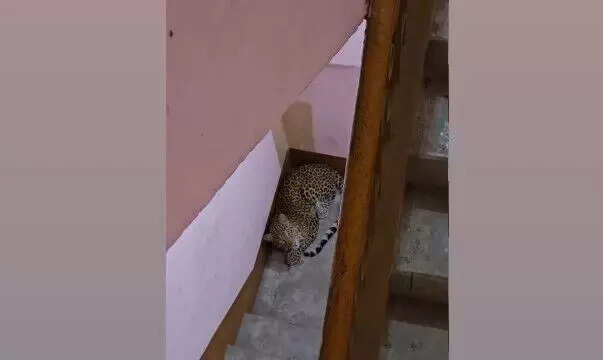
A file image of a leopard spotted in Kumarpara
Residents near the hills recognize this transformation, recalling when the slopes were lush with trees and only a few houses were present. Dipika Das, another Pandu resident, remarked, "These areas used to be peaceful and green. With so many houses now, it's not surprising that wildlife is coming down, but it can be frightening."
Phukan emphasized that leopards have historically inhabited the city's outskirts, stating, "They have been part of this landscape for generations. People used to avoid certain forested areas, especially at night, due to a natural fear of wildlife."
Changing Ecological Dynamics
Smartphones and Wildlife Management Challenges
Phukan also highlighted a shift in the ecological balance of the city as a contributing factor to the rising leopard sightings. He explained, "A decade ago, leopards primarily fed on stray dogs, but recent sterilization efforts have significantly reduced their numbers. This decline has disrupted the leopards' food supply, forcing them to venture into urban areas for sustenance."
The challenge of managing public reactions during wildlife sightings has intensified. What used to be discreetly handled by forest officials is now rapidly disseminated through social media, leading to increased public anxiety.
Phukan noted, "The biggest issue today is mobile phones. In the past, when elephants or tigers were spotted, people would flee. Now, they often try to capture photos and videos, which can create chaos." He believes that the natural caution people once exercised has diminished in the smartphone era.
Residents admit that curiosity often trumps caution. When a sighting occurs, many rush to balconies or gather in the streets to catch a glimpse. Dipika Das remarked, "When we hear about a sighting, our first instinct is to check WhatsApp or go outside to see what's happening. This likely exacerbates the situation."
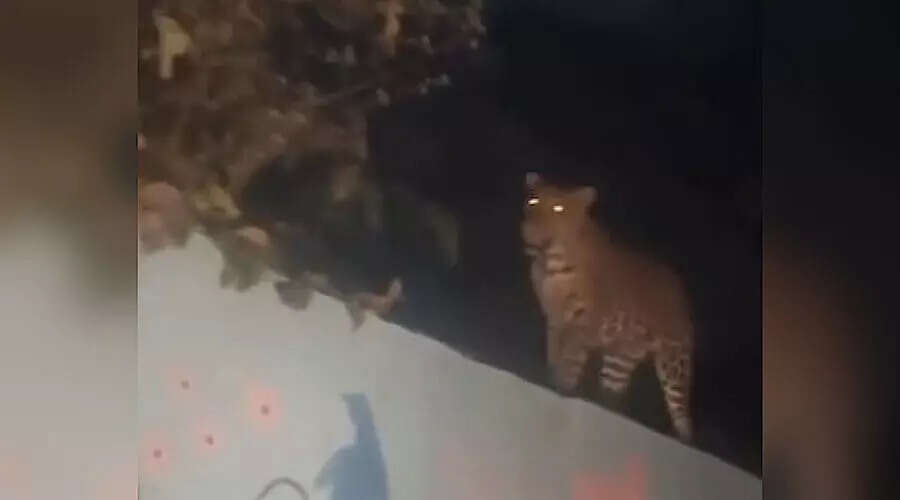
A screengrab of a leopard spotted near Kamakhya Temple area. (Photo: Meta/devilhunter)
During rescue operations, forest teams advise residents to stay calm and maintain a safe distance. Phukan stated, "When we rescue wildlife, we ask people not to panic and to move to safety. However, many immediately contact news channels, which heightens the panic."
The Path Forward
As Guwahati continues to expand into the surrounding hills, the line between urban life and wildlife habitat is increasingly blurred. The rise in leopard sightings highlights a broader issue: development that lacks ecological consideration can have serious consequences. Finding a way to coexist with wildlife, while complex, may be the only sustainable solution moving forward.