
GalaxEye Partners with Bellatrix Aerospace for Groundbreaking Satellite Propulsion Systems
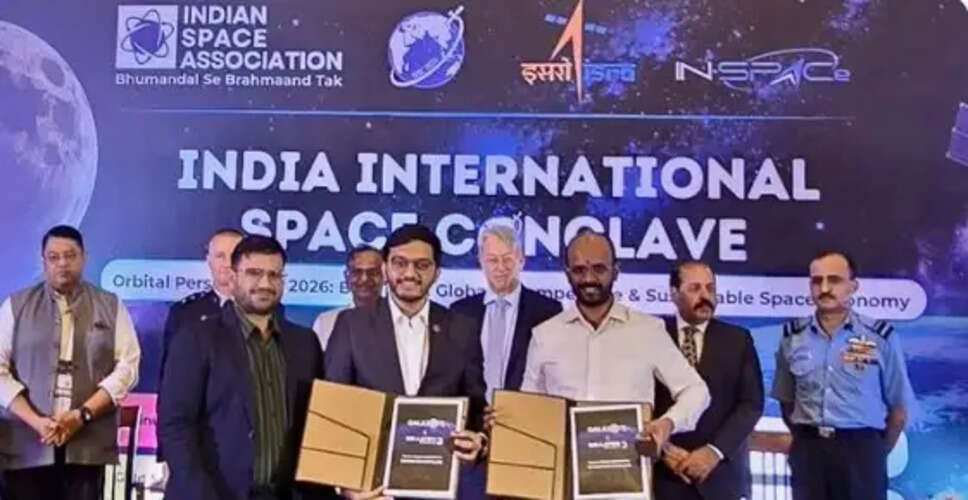

Major Contract Awarded at India International Space Conclave 2026
Bengaluru's GalaxEye has made headlines by signing a multi-year agreement with Bellatrix Aerospace to provide propulsion systems for its upcoming fleet of 30 satellites. This contract marks a significant milestone, being the largest business-to-business order placed by an Indian private space firm since the sector's privatization in 2020, as stated by GalaxEye.
This announcement was made during the ongoing India International Space Conclave 2026, an event organized by the Indian Space Association (ISpA) in partnership with ISRO and IN-SPACe.
As part of the phased delivery plan, Bellatrix will be responsible for the design, construction, testing, and delivery of propulsion systems tailored for the 30 GalaxEye OptoSAR Gen-II satellites.
The OptoSAR satellite features a unique combination of electro-optical (EO) and synthetic aperture radar (SAR) sensors integrated into a single platform. The EO sensors are capable of capturing high-resolution images in optimal lighting conditions, while the SAR sensors ensure all-weather imaging capabilities using radar technology.
In a satellite constellation, propulsion systems play a crucial role beyond merely keeping individual satellites operational; they are essential for maintaining the overall formation of the network.
Bellatrix's thrusters will facilitate the transition of each satellite from its rideshare deployment to its designated orbit, ensuring precise spacing despite atmospheric variations. They will also help maintain the reliable revisit schedules that clients depend on, navigate satellites away from potential debris, and safely deorbit each satellite at the conclusion of its operational lifespan, according to GalaxEye.