
Exploring Innovative Technologies for Sustainable Development in India
Innovative Approaches to Combat Climate Change
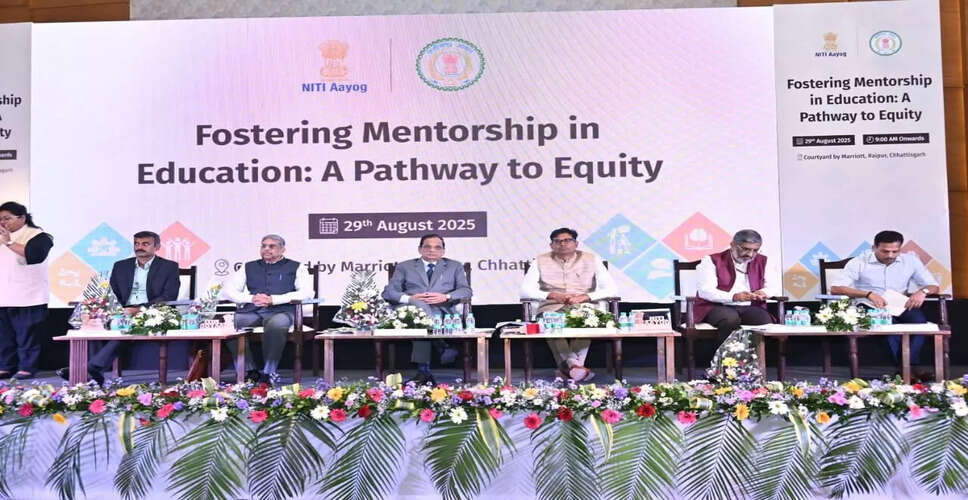
New Delhi, Aug 29: B.V.R. Subrahmanyam, the CEO of NITI Aayog, emphasized the urgent need for India to investigate advanced technologies aimed at sustainable development, particularly in light of the severe impacts of climate change on the nation.
Speaking at a high-level workshop co-organized by NITI Aayog, the Council on Energy, Environment, and Water (CEEW), and the Centre for Social and Economic Progress (CSEP), he highlighted the importance of assessing research, risks, and governance related to geoengineering to effectively address climate challenges.
Subrahmanyam noted, "India's development trajectory is remarkable, with our economy expanding while we strive for a low-carbon and sustainable future. This transition will demand significant energy, yet we are making steady progress on our Nationally Determined Contributions (NDCs) and initiatives like Mission LiFE. Climate change poses serious threats to India, especially as many major emitters lag in their energy transitions."
He further stated, "While mitigation should be the primary global obligation, we must continue to explore alternative technologies. This necessitates India investigating some groundbreaking technologies to not only keep up but also lead in sustainable development in the future."
The workshop included discussions on India's strategies for carbon dioxide removal and the governance challenges associated with solar radiation management.
Dr. Arunabha Ghosh, Founder-CEO of CEEW, remarked, "India needs to adopt a non-linear development approach—decarbonizing without hindering industrial growth. Although research in climate engineering is advancing, the broader dialogue on governing climate-altering technologies must evolve concurrently. Climate geoengineering, which has far-reaching implications, requires enhanced collaboration among governments, researchers, and scientists globally. Equity and climate justice should be central to international decisions."
Geoengineering involves large-scale interventions in the Earth's climate system aimed at cooling the planet or extracting greenhouse gases (GHGs) from the atmosphere.
Dr. Laveesh Bhandari, President and Senior Fellow at CSEP, added, "Geoengineering presents significant questions regarding science, sovereignty, and society. India must proactively engage, invest in strategic research, and ensure that any proposed pathways align with democratic oversight and national interests. This includes evaluating the techno-economics of various options, establishing institutions to manage long-term risks, and recognizing the implications for water security, agriculture, and livelihoods in a nation reliant on monsoon rains."