
Breakthrough in Eco-Friendly Electronics: Bacterial Proteins Show Semiconductor Properties
Innovative Discovery by Indian Scientists
New Delhi, Jan 10: A research team from the Institute of Nano Science and Technology (INST) in Mohali, which operates under the Department of Science and Technology (DST), has made a significant discovery regarding the semiconductor capabilities of a self-assembling bacterial shell protein. This advancement could lead to the development of safe and eco-friendly electronic devices, including mobile phones, smartwatches, medical instruments, and environmental sensors.
While traditional semiconductor materials like silicon are essential for technology, they come with drawbacks such as rigidity, high-energy processing requirements, and contributions to electronic waste. Consequently, there is a growing need for sustainable, soft, and biocompatible electronics, including wearables and green sensors.
The scientists at INST investigated the self-assembling bacterial shell proteins to determine if these proteins, which naturally create stable, large flat 2D sheets with inherent electron density patterns, could exhibit photoactive properties.
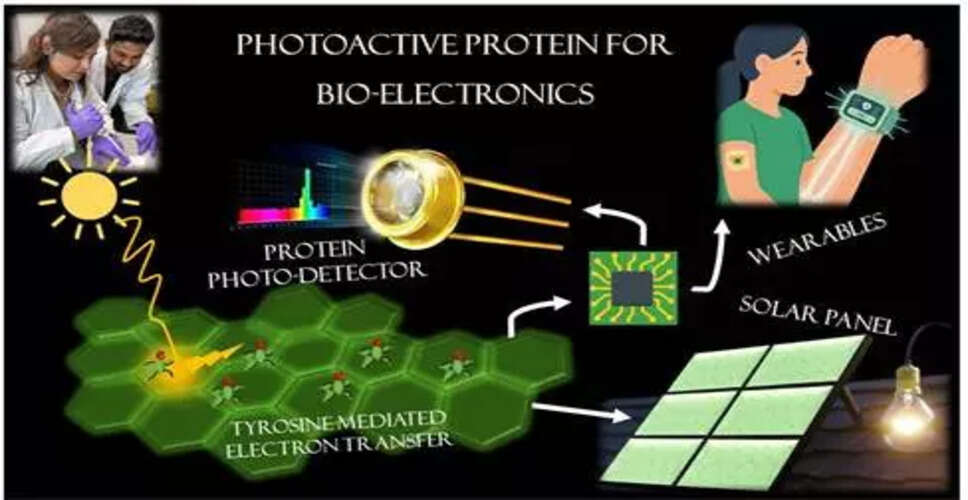
Their findings revealed that these proteins, when arranged in flat, sheet-like films, can absorb UV light and produce an electrical current without the need for additional dyes, metals, or external power sources, functioning as light-driven, scaffold-free semiconductors akin to those used in electronic circuits and sensors.
Moreover, the team observed that these proteins spontaneously form thin, sheet-like structures. Upon exposure to UV light, small electrical charges begin to traverse the protein surface.
“This phenomenon occurs because the proteins contain tyrosine, a natural amino acid capable of releasing electrons when stimulated by light. As electrons and protons move, the protein sheet generates an electrical signal, similar to the operation of a miniature solar cell. This light-driven effect is based on the protein’s internal structure and does not necessitate synthetic additives or high-temperature processing,” explained Dr. Sharmistha Sinha and her student researchers, Silky Bedi and S. M. Rose.
“This discovery presents exciting opportunities for practical applications. Given the material's flexibility and compatibility with the human body, it could lead to the creation of wearable health monitors, skin-safe UV-detection patches, and implantable medical sensors that function safely within the body,” the team noted.
In their publication in the journal Chemical Science of the Royal Society of Chemistry, the researchers also highlighted potential uses for temporary or disposable environmental sensors, such as pollution detectors or sunlight trackers, which would naturally decompose after use without causing environmental harm.
In the future, families, patients, and consumers may enjoy the benefits of soft, comfortable, and environmentally friendly devices that seamlessly integrate into everyday life.