
What Secrets Does the Moon's Surface Hold? ISRO Unveils Surprising Findings!

Revealing the Moon's Unique Structure
New Delhi: Recent research from the Indian Space Research Organisation (ISRO) reveals that the Moon's surface is not merely a flat expanse of dust but features a unique two-layered structure resembling a cake. The top layer is just a few centimeters thick, according to the findings released on Tuesday.
This layered composition indicates that the lunar surface has been subjected to relentless impacts from tiny meteoroids since the crust solidified.
The investigation was conducted by scientists at the Physical Research Laboratory, a prominent national institute focused on space and related sciences, primarily funded by India's Department of Space.
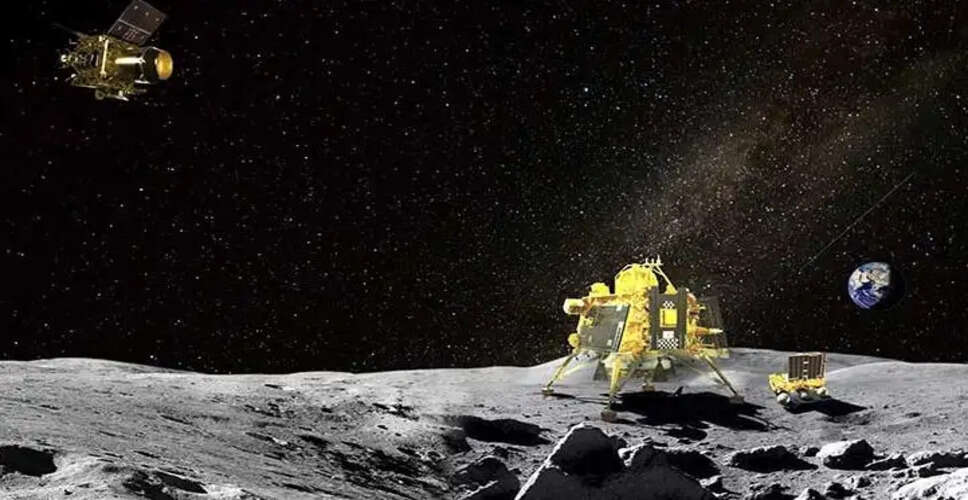
The research centered on the location where the Vikram lander from Chandrayaan 3 performed a brief hop on September 2, 2023.
ISRO explained that when the lander's engines ignited for the 'hop', the exhaust functioned like a blower, removing the top three centimeters of loose dust and revealing the denser lunar material beneath.
The study also highlighted that while the surface dust is relatively light, it becomes significantly denser and more cohesive at a depth of just 6.5 centimeters.
For astronauts, this means that walking on the surface might feel akin to traversing dry flour, whereas just a few centimeters deeper, it would feel more like navigating through damp, stiff clay.
ISRO noted that these discoveries enhance our understanding of surface operations in the Moon's southern polar region.
Grasping the diverse characteristics of the lunar surface is crucial for future exploration endeavors, particularly for establishing scientific bases on the Moon.
This research represents a pioneering effort in obtaining such unique measurements.