
Union Minister Advocates for Private Sector Involvement in Nuclear Energy
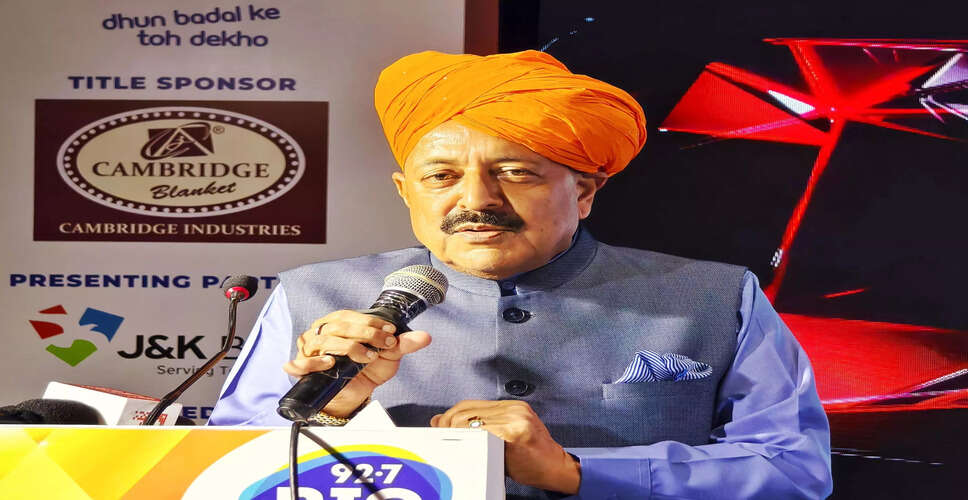
Push for Private Participation in Nuclear Energy
New Delhi, July 20: Jitendra Singh, the Union Minister responsible for the Department of Atomic Energy, has emphasized the need for modifications in existing regulations and laws to enable private sector participation in nuclear energy, which is currently tightly regulated by the central government.
In an exclusive video interview, Singh stated, "The announcement was made in the Union Budget, but we need to establish rules and potentially new legislation to proceed, which will require extensive deliberation and reflection."
He noted that the initiative to allow private entities into the nuclear sector is more complex than the recent reforms in the space sector.
Singh attributed this progress to the personal involvement of Prime Minister Narendra Modi, highlighting that stakeholders in the nuclear industry have traditionally operated under a shroud of secrecy.
According to Singh, opening the nuclear sector is vital for India to achieve its goal of becoming a developed nation by 2047 and to rank among the world's leading economies.
"To achieve this objective, our approach must be globally oriented. Meeting international standards requires us to operate in a cohesive manner, without isolated efforts. Thus, we are aligning our strategies with those of other developed nations," he explained.
During her budget address in February, Finance Minister Nirmala Sitharaman announced plans to amend significant legislation, including the Atomic Energy Act and the Civil Liability for Nuclear Damage Act, to encourage private sector engagement.
At present, the Nuclear Power Corporation of India Limited (NPCIL), Bhartiya Nabhikiya Vidyut Nigam Limited (BHAVINI), and the NPCIL-NTPC joint venture, Anushakti Vidyut Nigam Limited (ASHVINI), are the only entities authorized to construct nuclear power plants in India.
Singh mentioned that the proposed changes to the Civil Liability for Nuclear Damage Act aim to alleviate the concerns of private investors who have been hesitant to enter the nuclear power market.
He acknowledged that many suppliers, primarily private and from abroad, have expressed business-related concerns. However, he is optimistic that these issues will be resolved over time, encouraging them to invest.
The minister also addressed the worries of foreign suppliers allocated sites for nuclear power parks in Jaitapur (Maharashtra), Mithi Virdi (Gujarat), and Kovvada (Andhra Pradesh) regarding liability laws.
"India's stance has always been clear, yet some skepticism remains among suppliers. Since this government took office, we have reiterated that these concerns are unfounded," he stated.
In the event of an incident, Singh clarified that the initial responsibility lies with the plant operator, followed by the supplier, and after a certain threshold, the insurance pool would provide support.
He also noted that India is a signatory to the Convention of Supplementary Compensation for Nuclear Damage, which includes parties from the International Atomic Energy Agency (IAEA).
Currently, India generates 8,780 MWe of nuclear power, with plans to increase this capacity to 22,480 MW by 2031-32.