
Strengthening India-Central Asia Economic Relations: Key Strategies Outlined
Enhancing Trade and Investment Ties
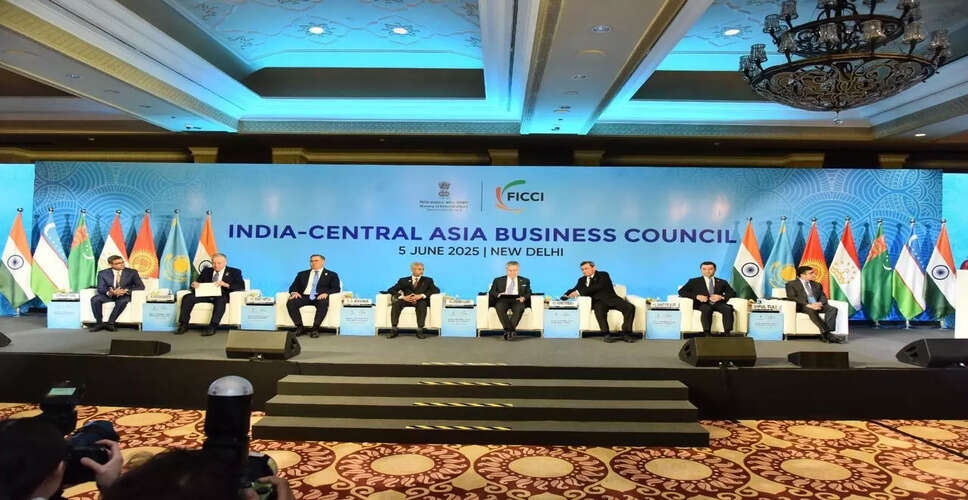
New Delhi, June 6: S. Jaishankar, the External Affairs Minister, has called upon the India-Central Asia Business Council to devise a strategic plan aimed at enhancing trade, economic, and investment relations between India and Central Asia.
During his address at the Business Council meeting held in the capital, Jaishankar outlined three primary goals for fortifying the economic partnership: enhancing current cooperation, diversifying trade options, and ensuring sustainability and predictability in economic engagements.
“Firstly, we aim to deepen our existing cooperation in both volume and quality. There is already a mutual recognition of key players and products in our economies. However, we must build upon this foundation, particularly in sectors like pharmaceuticals,” he stated.
“Secondly, diversifying our trade baskets is essential to provide more options and foster competition, while also seeking new opportunities. Central Asian economies should recognize that a growing economy, currently exceeding $4 trillion and expanding at 6-8% annually, will generate new demands for various products and services,” Jaishankar emphasized.
He further highlighted the importance of introducing greater sustainability and predictability in economic interactions.
“This entails establishing long-term contracts, cross investments, joint ventures, and focusing on sectors such as energy—whether it be uranium, crude oil, or gas—as well as mining and fertilizers, which are crucial for forming enduring agreements,” the minister noted.
Over the past decade, India’s trade and economic relations with Central Asia have exhibited a robust upward trend. Mutual trade, which was under $500 million in 2014, has now approached nearly $2 billion.
However, Jaishankar pointed out that this figure does not fully capture the potential available. Addressing this gap is increasingly urgent due to the uncertainties in the global economy, necessitating collaboration between governments and businesses, which is the purpose of this gathering.
He proposed five strategies to further enhance economic ties with Central Asia: focusing on the Digital Economy and Innovation, Financial Services, Healthcare and Pharmaceuticals, improving connectivity, and streamlining transit procedures.
“Moreover, we should also explore the economic and business potential in tourism, education, films, and cultural exchanges,” he concluded.
--IANS