
Shocking Air Quality Report: 44% of Indian Cities Struggle with Chronic Pollution
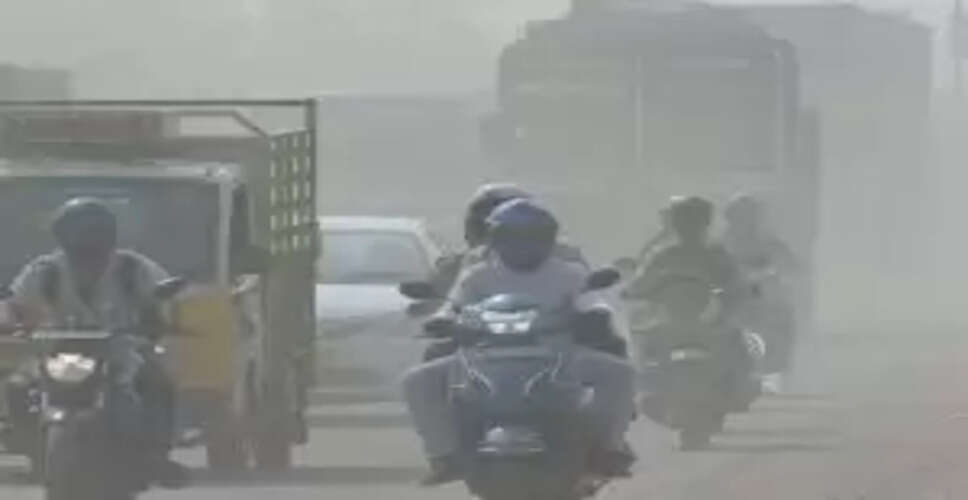
Alarming Air Pollution Levels in India
New Delhi: A recent study by the Centre for Research on Energy and Clean Air (CREA) reveals that approximately 44% of urban areas in India are grappling with severe air pollution, highlighting a systemic issue caused by ongoing emissions rather than isolated incidents.
The report indicates that only a mere 4% of these polluted cities are included in the National Clean Air Programme (NCAP).
Utilizing satellite imagery, CREA evaluated PM2.5 pollution levels across 4,041 cities in India.
The findings show that at least 1,787 cities consistently surpassed the national PM2.5 annual standard over the last five years (2019-2024), excluding the pandemic year of 2020. This statistic underscores the chronic nature of air pollution in nearly half of India's cities.
According to the PM2.5 data for 2025, Byrnihat (Assam), Delhi, and Ghaziabad (Uttar Pradesh) rank as the top three most polluted cities, with annual PM2.5 concentrations of 100 µg/m³, 96 µg/m³, and 93 µg/m³, respectively.
Noida follows closely, along with Gurugram, Greater Noida, Bhiwadi, Hajipur, Muzaffarnagar, and Hapur.
Despite the alarming statistics, the NCAP only addresses a small fraction of the issue, covering just 130 cities, with only 67 of these overlapping with the 1,787 cities that consistently fail to meet air quality standards. Consequently, the NCAP is only tackling 4% of the cities suffering from chronic pollution.
Non-attainment cities are defined by the Central Pollution Control Board (CPCB) as those that repeatedly fail to comply with the National Ambient Air Quality Standards (NAAQS).
The report highlights that Uttar Pradesh has the highest number of non-attainment cities at 416, followed by Rajasthan (158), Gujarat (152), Madhya Pradesh (143), and both Punjab and Bihar (136 each), with West Bengal having 124.
Among the 130 cities under the NCAP, 28 lack continuous ambient air quality monitoring stations (CAAQMS). Of the 102 cities equipped with monitoring stations, 100 reported PM10 levels of 80% or higher.
The progress in controlling PM10 levels has been inconsistent. Twenty-three cities have met the revised target of a 40% reduction, while 28 cities achieved a reduction of 21-40%. However, 26 cities only saw minor improvements of 1-20%, and 23 cities experienced an increase in PM10 levels since the program began.
Delhi leads with an annual PM10 average of 197 µg/m³, which is three times the national standard. Ghaziabad and Greater Noida follow with averages of 190 µg/m³ and 188 µg/m³, respectively.
Rajasthan has the highest representation in the Top 50 cities for PM10 concentration, with 18 cities, followed by Uttar Pradesh (10), Madhya Pradesh (5), and Bihar and Odisha (four each).
Manoj Kumar, an analyst at CREA, emphasizes that enhancing air quality governance through targeted, science-driven reforms is crucial for progress.
This includes prioritizing PM2.5 and its precursor gases (sulphur dioxide and nitrogen dioxide) over PM10, revising the list of non-attainment cities under the NCAP, implementing stricter emission regulations for industries and power plants, and allocating funds based on source apportionment studies.
Since the NCAP's launch, ₹13,415 crore has been allocated, with ₹9,929 crore (74%) already utilized. The majority of spending (68%) has gone towards managing road dust, followed by transport (14%) and waste and biomass burning (12%). In contrast, industries, domestic fuel use, public outreach (each less than 1%), and capacity building and monitoring (3%) received minimal funding.