
Revolutionizing Medicine: India and UK's Groundbreaking Nanorobotics Collaboration

Innovative Partnership in Nanorobotics
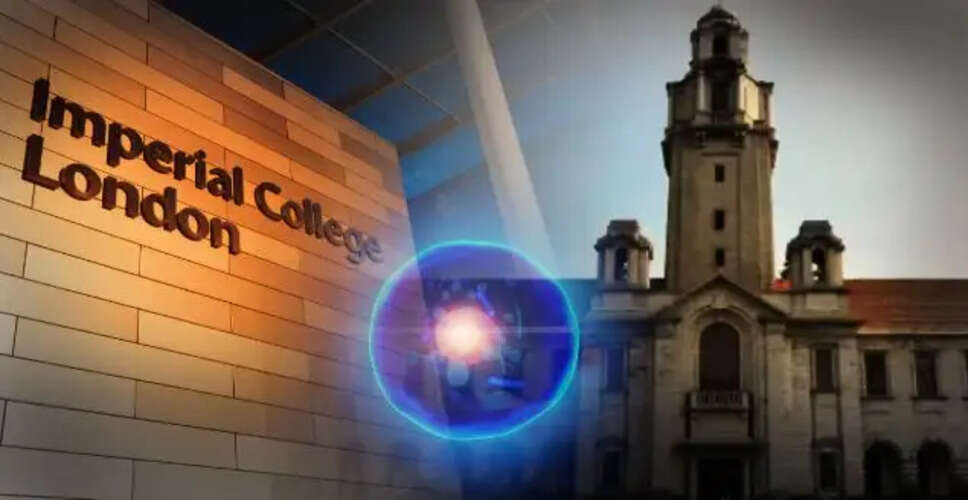
London: A collaborative effort between researchers from Imperial College London and the Indian Institute of Science (IISc) in Bengaluru is paving the way for the development of nanorobots that can be navigated through the human body and other intricate environments using magnetic forces.
This partnership, revealed by Imperial this week, merges synthetic biology with nanorobotics to engineer tiny systems capable of movement, material transport, and targeted delivery.
The implications of this technology could lead to advancements in targeted therapies, biosensing, and environmental monitoring.
"Synthetic cells present an exciting opportunity to replicate some of the extraordinary functions of living cells," stated Dr. Claudia Contini from Imperial's Department of Life Sciences.
"Incorporating magnetic nanomotors could enhance these systems' ability to navigate and react to their environments. Collaborating with IISc Bengaluru, we aim to develop controllable, lifelike technologies with potential applications in medicine and environmental monitoring," she added.
Dr. Contini highlighted Professor Ghosh and his team's global recognition for their work on magnetic nanorobots that function in complex biological settings, noting their success in demonstrating nanorobotic systems moving through human blood and within living cells.
Professor Ambarish Ghosh, a prominent figure in magnetic nanorobotics at IISc, explained that while his team has mastered the navigation of magnetic nanorobots through blood and tissue, these robots are inherently inorganic.
"Dr. Contini's synthetic cells can transport and release materials in ways that inorganic robots cannot. Together, they provide a platform that can be directed to specific targets and perform actions there. We are excited to collaborate with Dr. Contini and appreciate Imperial's support for this partnership," he remarked.
The collaboration aims to create hybrid systems that merge the adaptability of artificial cells with the mobility of tiny magnetic motors, functioning like miniature engines within cell-like structures to navigate challenging environments and execute designated tasks.
Synthetic cells are meticulously designed to replicate certain beneficial characteristics of living cells, yet most lack the ability to move independently or reach specific targets. This new initiative will investigate the potential of integrating magnetic nanomotors into polymer-based vesicles, which are microscopic compartments that mimic biological cells.
A significant challenge with existing therapeutics is that drug molecules can disperse throughout the body upon entering the bloodstream, leading to unintended side effects. By employing external magnetic fields to guide synthetic cells, researchers could precisely control their movement and actions, potentially minimizing required dosages and reducing side effects.
Dr. Contini's research group focuses on creating lifelike systems from the ground up, designing artificial cells that emulate selected traits and functions of living cells. Her work integrates synthetic biology, bioengineering, and active matter, emphasizing biomedical and biotechnological applications.
This collaborative project between India and the UK is backed by Imperial's India Connect Fund, facilitating the exchange of expertise, training, and resources between both institutions. The initiative aims to establish a sustainable research platform that bridges synthetic biology and nanorobotics, fostering future projects, student training, and knowledge sharing between the UK and India.