
NASA's Artemis II Mission: A Historic Journey to the Moon Begins!
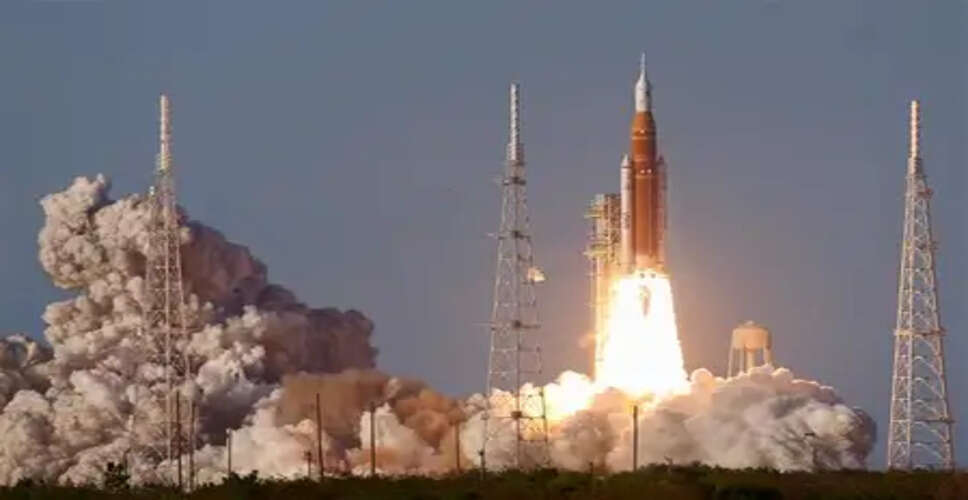
NASA Launches Artemis II: A New Era of Lunar Exploration
Florida: NASA has successfully launched its Artemis II Moon mission from Florida, marking the first crewed flight around the Moon in over five decades, with four astronauts aboard.
The Space Launch System rocket, topped with the Orion spacecraft, took off from NASA's Kennedy Space Center at 6:35 p.m. Eastern Time on Wednesday.
This mission is a significant milestone as it represents NASA's inaugural crewed endeavor under the Artemis program. The crew includes NASA astronauts Reid Wiseman, Victor Glover, Christina Koch, and Canadian Space Agency astronaut Jeremy Hansen.
The countdown to launch experienced a brief hold at the T-10 minute mark before continuing.
Artemis II is designed to showcase a variety of capabilities essential for deep space exploration. It will test Orion's life-support systems and allow astronauts to rehearse operations vital for the success of Artemis III and future lunar missions.
The astronauts will journey approximately 7,400 kilometers beyond the Moon's far side before returning to Earth, reaching distances not traversed by humans in over 50 years.
Re-entry poses significant challenges, as Orion will enter Earth's atmosphere at speeds nearing 25,000 miles per hour, encountering temperatures around 5,000 degrees before landing in the Pacific Ocean.
Throughout the mission, the crew will assess spacecraft performance, practice emergency protocols, and capture images of the Moon's far side.
This mission is historic, featuring the first woman, the first African-American astronaut, and the first Canadian heading towards the Moon.
Artemis II is seen as the first step in NASA's ambitious plan to create a sustainable human presence on the Moon and eventually send astronauts to Mars.
The Artemis program builds on the legacy of the Apollo missions, which saw 24 astronauts travel to the Moon between 1968 and 1972, including 12 who walked on its surface.
NASA's goal is to establish a long-term lunar base and conduct future missions targeting the Moon's south pole later this decade, paving the way for Mars exploration.