
NASA's Artemis II: Astronauts Take Personal iPhones on Historic Moon Mission
A New Era in Space Exploration
New Delhi: For the first time, NASA astronauts on the Artemis II mission are bringing their personal iPhones into deep space, marking a significant change in how the agency prepares its crews for missions beyond Earth's atmosphere.
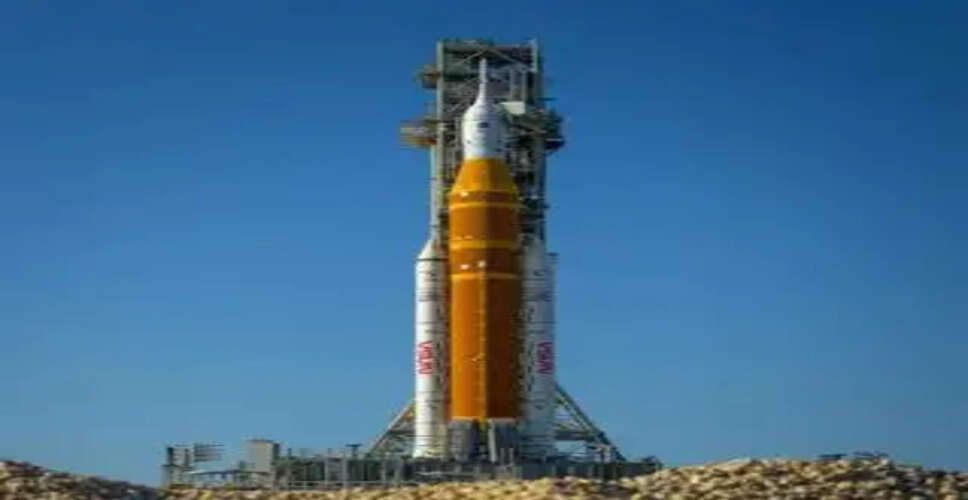
The crew, consisting of Commander Reid Wiseman, Pilot Victor Glover, Mission Specialist Christina Koch, and Mission Specialist Jeremy Hansen, launched aboard the Orion spacecraft on a Space Launch System rocket from Kennedy Space Center in Florida on Wednesday. They are set for a groundbreaking 10-day mission that will take them around the Moon and back.
NASA Administrator Jared Isaacman announced earlier this year that personal smartphones would be permitted as part of an initiative to modernize crew equipment and simplify mission documentation.
This decision enables astronauts to document their experiences without the need for cumbersome, government-issued cameras.
Isaacman expressed on X in February, "We are equipping our crews with tools to capture memorable moments for their families and share inspiring visuals with the world."
He also noted that quickly qualifying modern technology for space missions would benefit NASA in upcoming lunar and orbital endeavors.
Throughout the deep space segment of their journey, the devices will remain in Aeroplane mode to avoid disrupting spacecraft systems, effectively functioning as advanced cameras. When passing the International Space Station, the astronauts will have the opportunity to connect to its Wi-Fi to send photos and emails, although voice calls will not be available.
The Artemis II mission represents humanity's first crewed flight near the Moon in over five years. During their lunar flyby, the crew will capture live images of the Moon's surface, observe previously unseen features, and experience a partial solar eclipse from their unique position in deep space.