
Kendrapara's Call for River-Linking: A Lifeline for Agriculture and Ecology
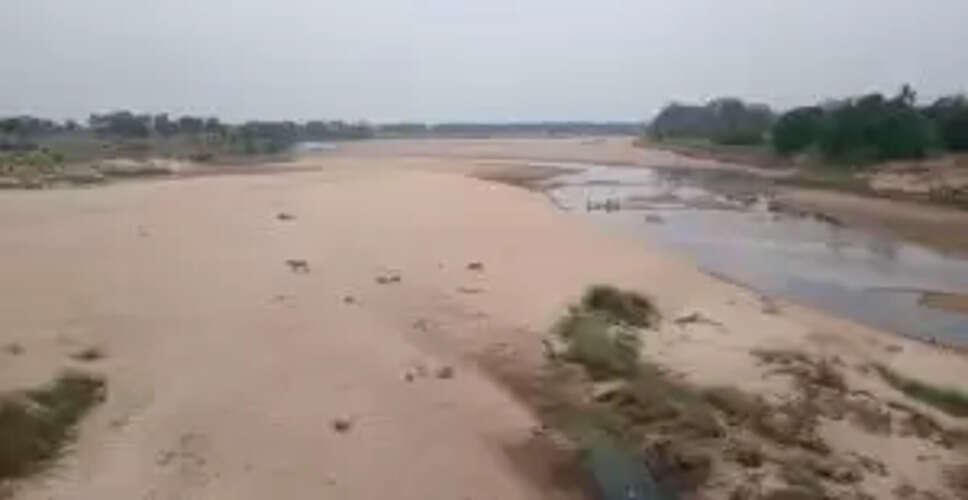
Kendrapara's River-Linking Initiative Gains Momentum
In Kendrapara, the local government is focusing on interstate river-linking projects, prompting calls for similar initiatives within the district. Community leaders, social activists, and political figures are advocating for the inclusion of Kendrapara in the state's river-linking strategy.
This matter is particularly important given that Kendrapara's coastline spans 48 kilometers, from the Dhamra sea mouth in the adjacent Bhadrak district to Batighar within Kendrapara.
The district is home to nine rivers and 27 creeks and canals, making it susceptible to natural disasters such as flooding.
The government has outlined plans for six significant river-linking projects over the next five years, with an estimated budget of Rs 1,800 crore.
These projects include the Katara-Subarnarekha canal link, the Hiradharbati barrage-Chilika lake connection, the Bahuda-Rushikulya basin linkage, the Vamsadhara-Rushikulya linkage, the Telengiri-Upper Kolab connection, and the Anga-Suktel garland project.
The primary aim is to tackle issues related to drinking water scarcity and irrigation in drought-prone regions.
Prominent figures such as senior BJP leader Bhuban Mohan Jena, local intellectual Ganesh Chandra Samal, environmentalist Hemant Kumar Rout, academic Kshitish Kumar Singh, and social activist Manoj Kumar Singh have all emphasized the pressing need for river-linking in Kendrapara.
They argue that such initiatives would not only enhance agricultural productivity but also improve water security during natural disasters and support coastal afforestation efforts, including mangrove and casuarina plantations.
Kendrapara boasts a complex network of rivers, including the Luna, Chitrotpala, Paika, Mahanadi, Birupa, Brahmani, Gobari, Kharasrota, Baitarani, and Hansua, along with 27 major drainage channels.
Currently, canal irrigation covers 16,357 hectares in Kendrapara block, 7,840 hectares in Derabish, 3,409 hectares in Marshaghai, 3,007 hectares in Mahakalapara, and 11,049 hectares in Pattamundai, as reported by the Water Resources department.
However, farmers in Aul, Rajnagar, Rajkanika, and other blocks still rely heavily on lift irrigation and rainfall.
Out of the district's 1.52 lakh hectares of cultivable land, over 31,081 hectares remain fallow each year due to insufficient water supply.
Advocates for river-linking assert that this would not only expand irrigation but also benefit inland fisheries, water-based livelihoods, and enable year-round vegetable farming.
Residents believe that such integration could transform Kendrapara into a more agriculturally productive and less saline area.
With rising salinity levels in groundwater, the coastal population may soon have to depend entirely on river water for drinking.
Experts highlight that river interlinking is essential not only for meeting the region's drinking water demands but also for addressing ecological challenges and preserving biodiversity in areas like Bhitarkanika National Park, where freshwater fails to reach during the summer months.
Every summer, Bhitarkanika experiences a severe shortage of fresh water, threatening its rich biodiversity.
The absence of fresh water has resulted in the degradation of flora, fauna, and medicinal plants.
Both marine and freshwater species are at risk, along with the crucial mangrove ecosystem.
Mangrove forests, such as those in Bhitarkanika, serve as natural barriers, safeguarding the coast during natural disasters like cyclones.
The protective function of these forests was notably demonstrated during the 1999 Super Cyclone, which saved numerous lives and properties.
With the Sagarmala project advocating for coastal road development in the area, stakeholders believe that the district could further benefit if inland waterways are connected within a five-kilometer coastal corridor.
This integration could help mitigate future risks from cyclones, storm surges, floods, and droughts.
However, Additional District Collector Rabindra Kumar Mallik stated that no formal procedures have commenced for river-linking, although discussions are ongoing.