
Innovative Bulk Drug Park in Himachal Pradesh Sets New Standards for Eco-Friendly Development
Introduction to the Bulk Drug Park
Sunil Chadha
Una: The forthcoming Bulk Drug Park located in Haroli, Una district of Himachal Pradesh, is not just a symbol of industrial progress for the state but also serves as a national benchmark for sustainable and water-conscious development.
Advanced Effluent Treatment Technology
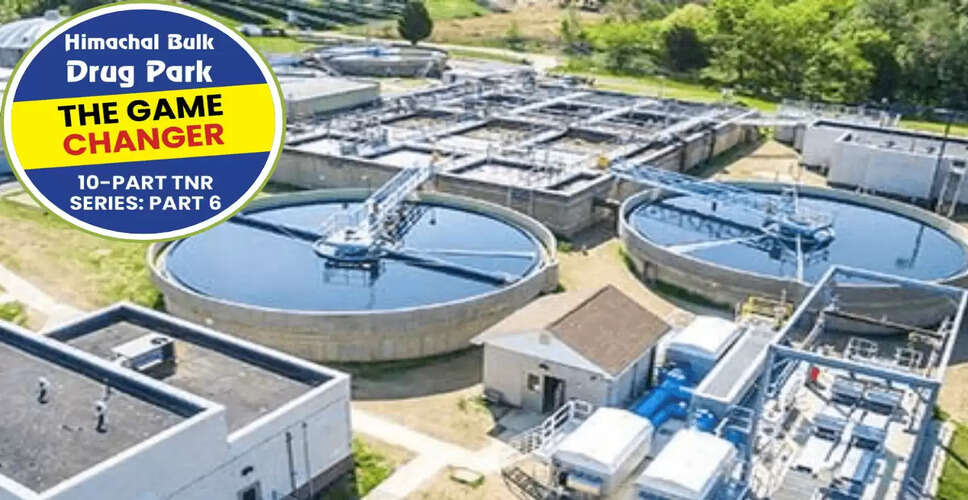
This park features state-of-the-art zero liquid discharge (ZLD) technology in its common effluent treatment plant (CETP), which aims to mitigate water pollution risks, particularly concerning groundwater.
ZLD-based CETP: A Technological Barrier Against Pollution
In contrast to India’s coastal bulk drug parks, the landlocked nature of Himachal Pradesh necessitates a more stringent approach to managing effluents. Consequently, a CETP with a capacity of 5 million litres per day is being established at Haroli, utilizing ZLD technology to ensure that no untreated wastewater is released into the environment. This project, costing Rs 284 crore, will handle all industrial effluents produced by chemical manufacturing units within the park.
The treatment facility will cleanse chemical-laden wastewater through scientific, closed-loop processes, allowing for the reuse of treated water and completely eliminating the risk of contamination to underground water supplies.
Safeguarding Groundwater and Ecosystems
Protecting Groundwater and Local Ecosystems
This initiative is vital, especially since Himachal Pradesh does not have the option for marine discharge. In this context, the CETP serves as an essential protective measure, ensuring that untreated wastewater does not infiltrate the soil or pollute aquifers.
Additionally, it enhances the local water cycle by allowing purified water to be safely reintroduced into the ground or reused, thereby alleviating pressure on natural water resources.
This environmentally friendly infrastructure will also promote biodiversity and ecosystem stability, preserving a fragile ecological balance even as industrial activities expand.
A Model for Sustainable Industrialization
National Model for Environmentally Responsible Industrialisation
While the CETPs in coastal bulk drug parks in India typically cost around Rs 100 crore due to the availability of ocean disposal options, the larger investment in Haroli signifies a stronger commitment to groundwater conservation and sustainability. Endorsed by NITI Aayog, this project is set to become a standard for green industrialization nationwide.
The Haroli Bulk Drug Park exemplifies how meticulous planning and stringent environmental regulations can foster sustainable development. Himachal Pradesh is demonstrating that industrial growth can coexist with ecological responsibility.
Sustainability for Future Generations
Balancing Growth with Sustainability for Future Generations
The advancements in Haroli represent a significant move towards intergenerational equity, ensuring that current industrial growth does not jeopardize water security for future generations. This park illustrates that with vision, technology, and dedication, it is feasible to achieve a balance between economic and environmental goals.
“As the CETP approaches completion, the Haroli Bulk Drug Park is set to become a national inspiration, showcasing a fusion of clean technology and industrial ambition, thereby establishing a new benchmark for responsible growth in India,” stated a government official from Himachal Pradesh.