
Honda Expands Electric Vehicle Lineup with New Shine 100 EV Variant
Honda's Electric Vehicle Ambitions
Honda is making strides in the electric vehicle (EV) market, although it has not yet achieved the desired momentum. The latest models, the Activa-e and QC1, depend on a developing battery-swapping infrastructure that is still in its early stages. These two models represent Honda's first steps toward electric mobility, with more innovations expected soon.
Potential EV Variant of Shine 100
Recent insights from a leading automotive publication suggest that Honda may be working on an electric version of the Shine 100 commuter motorcycle. This strategy mirrors that of several four-wheeler manufacturers in India, indicating a shift towards electric solutions in the two-wheeler segment. By adapting existing models for electric powertrains, companies can optimize their research and development resources.
Patent Filing and Design Insights
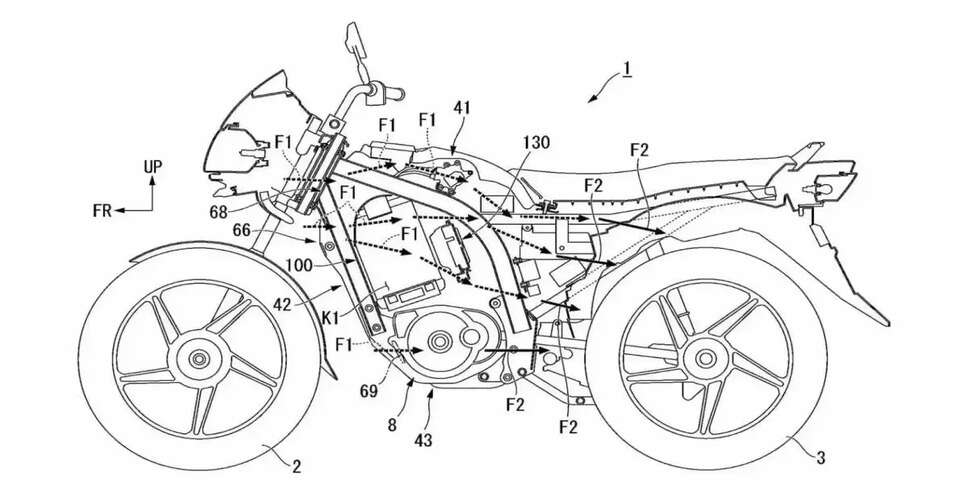
Honda has reportedly filed a patent that reveals the design of the upcoming electric Shine. The patent illustrations indicate that the bike's frame is similar to the traditional CB Shine 100, but the fuel tank has been replaced with an electric motor and compact battery units. In addition to product development, Honda is also focused on creating a battery-swapping network in major cities like Bengaluru, Delhi, and Mumbai. This infrastructure aims to enhance the convenience of EV ownership. The swappable batteries are expected to maintain a standard size, with each pack likely holding a capacity of 1.5kWh, allowing for a total of 3kWh when two packs are combined.