
Exploring Wildlife Conservation Through Fiction: Abhishek Ray's 'Baagh Tiger'
A Unique Perspective on Wildlife Conservation
Lakshmana Venkat Kuchi
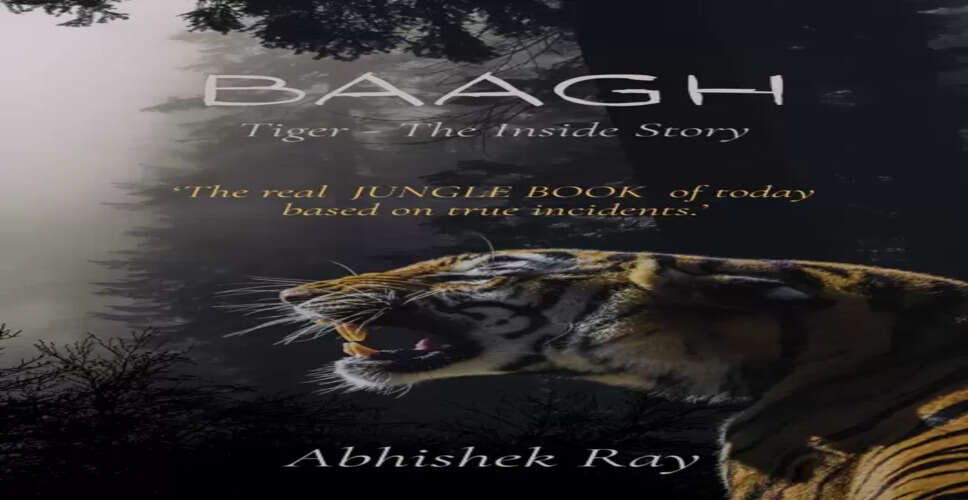
Abhishek Ray, one of the few advocates for 'rewilding' in India, has released a compelling book titled 'Baagh Tiger - The Inside Story.' This work delves into the world of wildlife crime, aiming to restore forests to their natural inhabitants, addressing the extensive environmental degradation that has occurred over generations.
Launched on July 1, this insightful narrative is a fictional portrayal of tiger poaching and the journey of a poacher's family member who ultimately becomes a protector of these majestic creatures. Ray's passion for tigers is evident throughout the book, which is the culmination of eight years of dedicated effort.
Ray, a renowned film music composer, invested much of his earnings into wildlife conservation, particularly focusing on tigers. His storytelling prowess shines from the very first page of this modern 'Indian Jungle Book,' released a century after Rudyard Kipling's classic.
In 2010, when the concept of rewilding was largely unknown in India, Ray acquired a barren hill in the Corbett landscape, now recognized as the Sitabani Wildlife Reserve. This area, once devoid of trees, is now a thriving habitat for tigers and leopards.
“When I first acquired the land, it was completely barren, a fallow agricultural site. Today, it has transformed into a forest, home to tigers,” he shared in an exclusive interview. Ray, who has been tracking tigers and leopards since childhood, noted that the region was previously plagued by human-animal conflicts due to agricultural encroachment.
“You can't tell deer to only graze in certain areas, nor can you instruct tigers to avoid livestock. This natural behavior leads to conflicts with humans,” he explained, highlighting the challenges faced in the area.
Ray's vision for rewilding began with the dream of restoring the land to its wild state. In 2010, the term 'rewilding' was unfamiliar to most, as land was typically purchased for commercial purposes.
With a background in Physics and Computer Applications, Ray initially pursued a career in technology before shifting his focus to music and wildlife conservation. “There’s a certain madness in me for forests and tigers,” he remarked, reflecting on his dedication to these causes.
After overcoming numerous challenges to acquire the land, Ray embarked on the arduous task of rewilding. He faced issues with invasive species like lantana, which hindered the growth of native flora. “The first step was to remove the lantana and replace it with bamboo, which grows rapidly,” he explained.
His efforts included creating water bodies, planting native grasses, and establishing fruit-bearing trees for birds. By 2015, a wild tigress chose his area to give birth to cubs, bringing international attention to the Sitabani reserve.
Ray's work has garnered recognition, including the Forbes Award for Wildlife Conservation in 2025. He attributes his success to the tigress, stating, “I am merely the gardener; she chose to make this place famous.”
His book, 'Baagh Tiger - The Inside Story,' published by Bluenose Publications, uses a fictional narrative to explore the realities of poaching and wildlife conservation. The protagonist, Jaggu Bavaria, transitions from a poacher to a protector of tigers, illustrating the struggle for survival faced by these animals.
“In contemporary India, how does a tigress raise her cubs amidst highways and factories? This is the real Jungle Book of today,” Ray concluded, emphasizing the blend of fiction and reality in his work.