
COP31: Urgent Call for Climate Action Amidst Global Crisis
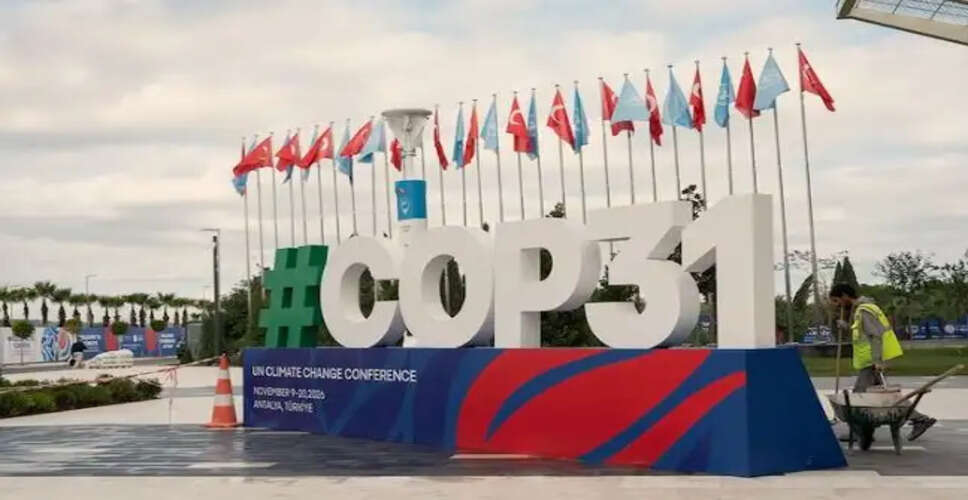

Global Leaders Gather to Address Climate Challenges
Antalya (Turkiye): As the effects of climate change escalate, UN Climate Change Executive Secretary Simon Stiell urged nations to leverage COP31 for accelerating actionable solutions, emphasizing the critical need for unified efforts.
During the opening session of the UN climate conference, Stiell pointed out the alarming rise in heat waves, glacial lake outburst floods in the Himalayas, and the looming threat of a super El Niño, warning that the repercussions of climate change are becoming increasingly severe.
He stated, "The planet is already paying a hefty price due to global warming. The Himalayas have faced devastating tragedies, adding to the growing list of impacts affecting communities worldwide. A formidable El Niño is exacerbating the climate crisis that is ravaging economies and communities globally."
Stiell highlighted that vulnerable populations bear the brunt of these challenges, warning that deep injustices could undermine collective progress. He stressed the importance of fairness in the transition to clean energy and climate resilience, asserting that such a shift benefits all nations by helping to mitigate global warming and safeguard communities.
He also addressed the economic ramifications of reliance on fossil fuels, noting that this year's fluctuations in fossil fuel prices have caused a global economic shock, increasing household costs and contributing to inflation.
"The chaos in fossil fuel pricing has sent shockwaves across the globe, severely impacting households and spreading inflation like wildfire. The consequences have been dire, both economically and politically," he remarked.
In discussing potential solutions to the climate crisis, Stiell pointed out the financial advantages of renewable energy, which saved approximately half a trillion dollars last year and an additional USD 265 billion in the first half of this year.
However, he warned that the conference is facing significant financial limitations, even as its responsibilities expand. He indicated that serious budget discussions with countries would be necessary in the coming months.
"We cannot continue to do more with less. No single COP can solve all issues. We must confront reality as it is, not as we wish it to be. Each COP has made progress, and this one must as well," Stiell stated.
COP31 President-Designate and Turkiye's Minister of Environment and Urban Planning, Murat Kurum, emphasized the need for increased dialogue, trust, and resources, urging that the gap between commitments made at previous climate summits and their real-world impact must be bridged.
"We aim for COP31 to be an Implementation COP. The message from the world is clear: each crisis exacerbates the others. While we may come from diverse backgrounds, we increasingly share the same climate timeline. Sharing this timeline entails sharing responsibility," he said during the plenary.
Kurum also highlighted the challenges posed by war and geopolitical tensions, noting that as trade routes and energy networks are reconfigured, millions struggle to secure basic necessities.
"Some divides in our world are invisible. They separate those who can access financing from those who cannot, those with technology from those in need, and nations capable of withstanding shocks from vulnerable societies," he remarked, adding that bridging these gaps is a key responsibility of climate diplomacy.
He stressed the urgency of addressing delays in climate financing, warning that inadequate funding for adaptation could worsen humanitarian crises, particularly in at-risk countries and communities.
"The costs we will face in the future must guide our current decisions. The 1.5-degree Celsius target remains our benchmark. We will be transparent about the scientific realities and ensure that the voices of the most vulnerable are central to our agenda.
"The decisions made in Antalya will only have real impact when they extend beyond these halls," he concluded.
Kurum appealed to nations at COP31, suggesting that the conference could initiate a historic partnership, with its outcomes leading to meaningful changes in urban infrastructure, agricultural methods, and industrial practices.
"Every nation has knowledge to share. Every society has experiences to offer. Every generation brings energy. Every institution possesses capabilities. We need all of these contributions. If we are to share a future, we must also share the responsibility for it," he stated.