
Zoramthanga Offers Mediation for Peace Talks Between ULFA-I and Governments

Zoramthanga's Proposal for Mediation
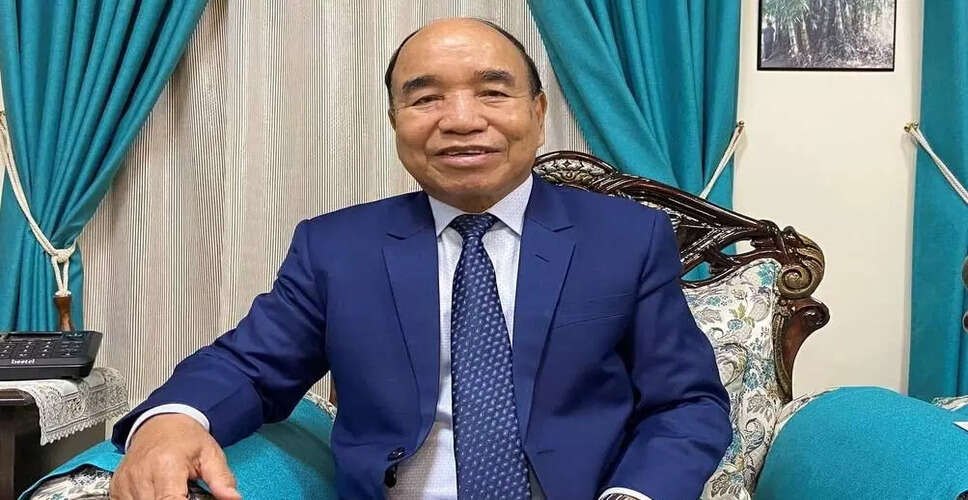
A file image of Mizoram chief minister Zoramthanga. (Photo:X)
NEW DELHI, Sept 28: On Sunday, former Chief Minister of Mizoram, Zoramthanga, expressed his willingness to mediate between the Central and Assam governments and the banned group United Liberation Front of Asom-Independent (ULFA-I). He stated that he is open to facilitating peace discussions if approached by any party involved.
During an event in New Delhi, Zoramthanga indicated that there is potential for ULFA-I to reach an agreement and that he is ready to serve as a “peacemaker” should the Government of India, the Assam government, or ULFA-I seek his assistance.
“It’s feasible for ULFA(I) to finalize an accord. If the Government of India, the Assam government, or ULFA requests my help, I will endeavor to act as a peacemaker,” he remarked. His comments come at a time when no designated mediator has been publicly identified to facilitate peace talks between the government and the ULFA-I leadership based in Myanmar.
Zoramthanga, who has long been invested in peace and security matters in the Northeast, emphasized the importance of developments in Myanmar for the region's security landscape. “If peace prevails in Myanmar, it will lead to stability in the Northeast,” he stated, highlighting the ongoing illegal trafficking of arms, ammunition, and drugs across the India-Myanmar border.
He characterized Myanmar as a refuge for various insurgent factions from the Northeast and argued that achieving stability in the neighboring nation would significantly impact insurgency issues in the region. “The primary requirement is to establish peace in Myanmar, which would serve as an effective remedy. If peace is achieved in Myanmar, the insurgency challenges in the Northeast would be addressed,” Zoramthanga asserted. Indian security and drug enforcement agencies have also pointed out the critical role of the Myanmar route in drug trafficking into the Northeast. The Union Ministry of Home Affairs noted in July that the Northeast is particularly susceptible to transnational trafficking of amphetamine-type stimulants and heroin due to its proximity to the Golden Triangle and porous borders with Myanmar. Reports indicated that between 2021 and 2025, drug law enforcement agencies seized 4,626 kg of ATS and 2,652 kg of heroin in the Northeast.
The Directorate of Revenue Intelligence has documented specific consignments linked to Myanmar. In January 2025, the DRI reported that 26 kg of methamphetamine tablets were smuggled into India via the India-Myanmar border in Mizoram before being intercepted in Assam. In August 2026, the DRI noted seizures in Assam and Mizoram involving methamphetamine and other foreign-origin goods smuggled from Myanmar. Security forces have also reported arms recoveries along the Indo-Myanmar border. In April 2024, the Assam Rifles seized heavy-caliber weapons, pistols, communication devices, and other military supplies near the border in Nagaland based on intelligence inputs. Addressing the ongoing crisis in Manipur, Zoramthanga supported the Kuki demand for a distinct administrative arrangement, noting that the rift between the Meitei and Kuki-Zo communities has deepened significantly.
“The divide between Meiteis and Kuki Zo is profound. Every attempt by the Central government to mediate has been unsuccessful,” he stated. Zoramthanga proposed that the establishment of a separate Union Territory could be one potential solution to the persistent conflict in Manipur.