
Yumnam Khemchand Singh Sworn in as Manipur's Chief Minister, Ending President's Rule
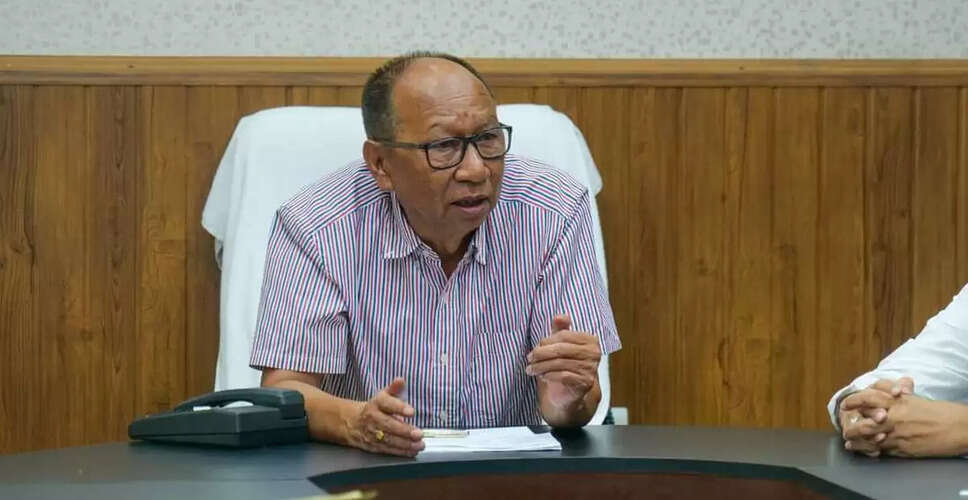
New Leadership in Manipur
On Wednesday, Yumnam Khemchand Singh, a prominent leader from the Bharatiya Janata Party (BJP), officially took the oath of office as the Chief Minister of Manipur, marking the conclusion of President's Rule in the state.
Joining him in the new government are Nemcha Kipgen, representing the Kuki community, and Losii Dikho from the Naga People's Front, who will serve as deputy chief ministers.
Notably, Kipgen has made history as the first female deputy chief minister of Manipur.
Earlier that day, Khemchand Singh met with Governor Ajay Kumar Bhalla to formally claim the right to establish a new government, following his election as the leader of the BJP's legislative party just a day prior.
Manipur had been under President's Rule since February 2025, when former Chief Minister N Biren Singh resigned.
The extension of President's Rule, which was sanctioned by Parliament in August, was set to conclude this month.
Khemchand Singh previously served as the Assembly speaker from 2017 to 2022 and held a ministerial position in the Biren Singh administration.
His election as legislative party leader came after BJP MLAs and their allies were summoned to Delhi for discussions regarding the formation of a new government. Reports indicated that MLAs from both the Meitei and Kuki communities were involved in these talks.
Since ethnic violence erupted between the Meitei and Kuki-Zo-Hmar communities in May 2023, over 260 lives have been lost, and more than 59,000 individuals have been displaced, with sporadic violence continuing into 2024 and 2025.
Biren Singh's resignation followed accusations from Kuki-Zomi-Hmar groups, who claimed that his handling of the unrest was biased and exacerbated majoritarian sentiments.
The current Assembly's term is set to expire in March 2027.
Kuki-Zo groups have consistently advocated for the establishment of a separate Union Territory to address their grievances and end the ongoing conflict.
While the Meitei community predominates in the valley, the Kuki community holds the majority in the hill districts of the state.
On January 6, the Kuki-Zo Council announced that its members would not participate in the formation of a new state government unless their demand for a Union Territory was acknowledged.
On January 13, Kuki militant groups and community MLAs reached a consensus to engage in government formation only after receiving a political assurance regarding the Union Territory.
In a recent statement, the Kuki-Zo Council warned that any MLAs from their community who choose to ignore this collective decision would be acting independently, and the Council would not be responsible for any repercussions from such actions.