
Youth Volunteers Save Himachal Village from Devastating Fire
Heroic Efforts Prevent Catastrophe in Kullu
Munish Sood
Kullu:
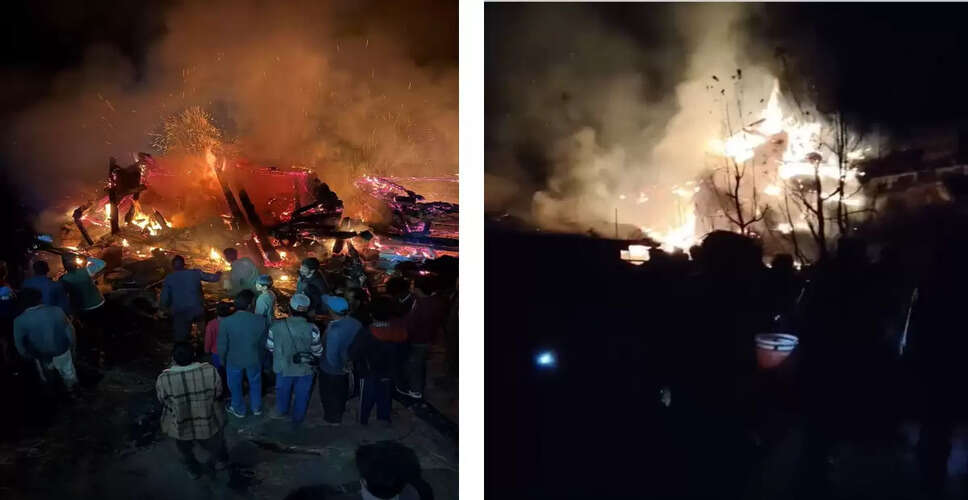
A potential disaster that could have obliterated a century-old village in Himachal Pradesh was averted thanks to the swift actions of local youth volunteers. They successfully contained a rapidly spreading fire in Pekhri village, located in the Banjar subdivision of Kullu district, without any support from the fire department.
The fire erupted around 7 PM, engulfing at least four cowsheds that housed livestock and stored fodder. The flames spread quickly due to the presence of dry hay and wooden structures, causing alarm among the villagers as the fire approached nearby homes.
As the situation escalated, the fire neared another building just a few feet away. Residents noted that even a minor delay could have led to the entire village being consumed by flames in mere minutes, given the dense layout of traditional wooden houses.
Youth Mobilize to Combat the Blaze
Due to the lack of accessible roads, fire trucks were unable to reach the scene. In a remarkable display of bravery, two young men, Bhanu and Chhina, trekked nearly a kilometer on foot, carrying a portable water pump across rugged terrain. Their timely intervention was vital in controlling the fire.
Alongside them, local villagers formed human chains to transport water from nearby sources, utilizing buckets, pipes, and other available tools to extinguish the flames. Their collective efforts successfully contained the fire before it could reach residential areas, averting what could have been a catastrophic event. Fortunately, no lives were lost, but the destruction of the cowsheds has significantly impacted the livelihoods of the affected families, many of whom rely on livestock for their income.
Increased Fire Risks in Himachal Pradesh
This incident highlights the heightened vulnerability of remote villages in Himachal Pradesh, where inadequate road access, lack of firefighting resources, limited water supply, and slow emergency responses complicate fire management.
Experts and local organizations have emphasized the urgent need for improved fire preparedness at the village level. Recommendations include implementing rainwater harvesting systems with dedicated fire reserves of at least 100,000 liters, as well as portable firefighting equipment suitable for challenging terrains.
“Himalayan villages are invaluable cultural heritage sites. Losing them to fire would mean erasing centuries of history, architecture, and community life,” stated a representative from a local organization focused on environmental sustainability and education. They are currently collaborating with local architects and disaster risk specialists to create fire safety solutions tailored for remote villages, with pilot projects anticipated soon.
Ongoing Fire Threats in the Banjar Region
The fire in Pekhri is part of a troubling trend. The Banjar region has experienced several destructive fires in recent months, including significant incidents in villages like Jhaniar and Tandi. These fires have resulted in the loss of numerous traditional homes, cowsheds, fodder storage, and even temples, leaving many families displaced, particularly during the harsh winter months.
Such recurring fires pose a serious risk to the traditional architectural heritage of Himachal Pradesh, much of which is preserved in the remote areas of Kullu and its surroundings. These villages are home to centuries-old wooden craftsmanship and unique building styles that are integral to the cultural identity of the Himalayan region.