
Youth Congress Protests Against India-US Trade Agreement and LPG Shortage
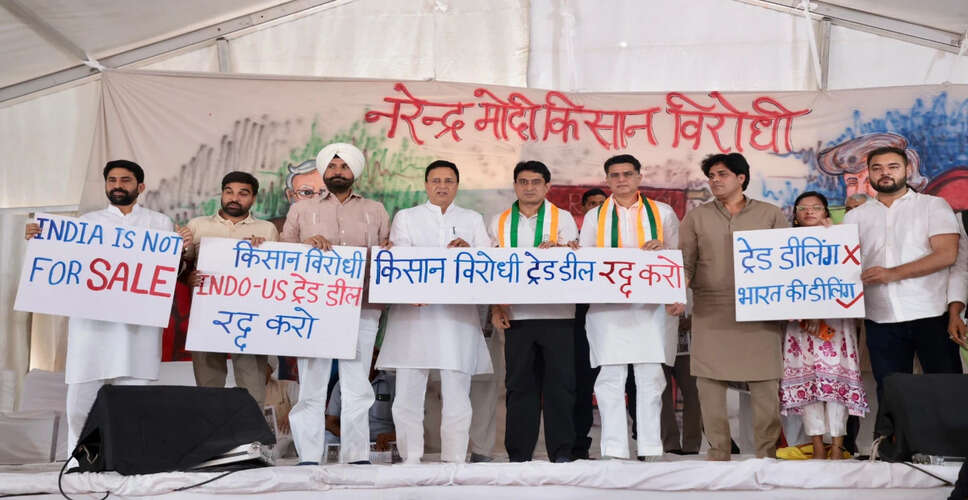
Youth Congress Demonstrates Against Trade Agreement
The Youth Congress staged a protest at Parliament against the India-US trade agreement and the reported shortage of LPG. Uday Bhanu Chib, the national president of the Youth Congress, expressed concerns that this trade deal would adversely affect farmers in the country. He emphasized the need to oppose the agreement to protect farmers' interests, stating that the Youth Congress, under Rahul Gandhi's leadership, is committed to this cause.
Protest Details and Leadership
Led by Uday Bhanu Chib, Youth Congress activists attempted to march towards Parliament from Jantar Mantar but were halted by police. Prior to the protest, senior Congress leaders, including Randeep Singh Surjewala, Sachin Pilot, and Amarinder Singh Raja Wadding, addressed the gathering. Chib claimed that the trade agreement was a result of external pressures, alleging that the Prime Minister had already made concessions and that the government was under duress due to the Epstein files. He called for the cancellation of the trade agreement.
Mobilization of Youth Congress Members
Earlier, Akshay Lakra, president of the Delhi unit of the Youth Congress, informed reporters that members from across the country would gather at Jantar Mantar to protest against the central government's policies and the India-US trade agreement. Lakra stated that the Youth Congress aims to highlight how the trade deal would harm farmers and the textile industry, as well as compromise national data security.
Previous Protests and Legal Context
Lakra noted that Youth Congress members had previously protested during the AI Summit. Chib and several other officials were arrested last month during a demonstration at the 'AI Impact' summit but have since been granted bail. Lakra remarked that both the session court and the Delhi High Court recognized that protests are an integral part of democracy. He raised concerns that the newly announced India-US trade agreement would allow American access to Indian data, negatively impacting domestic sectors.