
Yaral Pat Wetland in Imphal East Attracts Migratory Birds
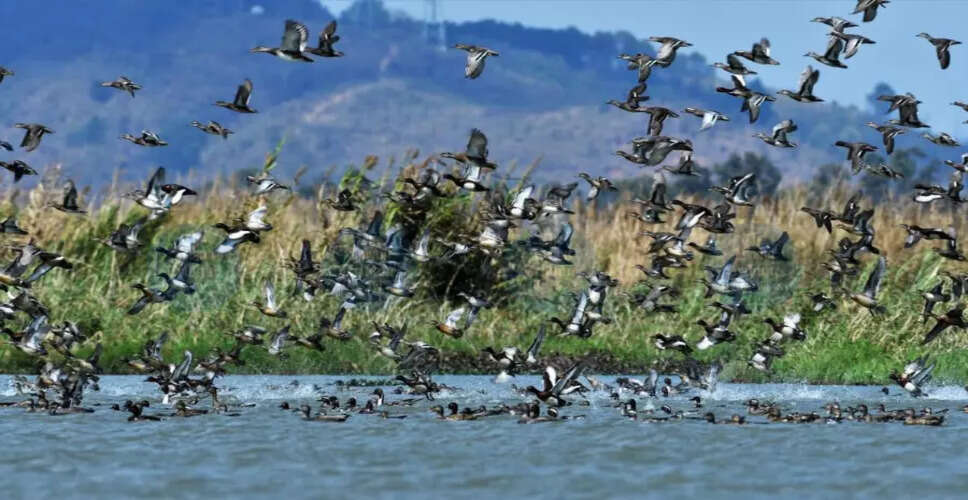
Yaral Pat: A Haven for Migratory Birds
Imphal, Feb 4: Yaral Pat, a significant wetland located in the Imphal East district, has become a hotspot for migratory birds, particularly waterfowl, following enhancements made to the water body.
The State Environment and Climate Change department, in collaboration with local organizations, has worked on the development of Yaral Pat, resulting in an influx of migratory birds, including lesser whistling ducks, gadwalls, and coots over the past five years.
Yanglem Rupa, treasurer of the Yaralpat Integrated Farming Cooperative Society, noted, “These water bodies are now drawing in migratory birds in significant numbers, with some even roosting on the nearby hill ranges.”
Every winter, thousands of migratory birds from the Arctic regions, including Siberia, China, and Mongolia, flock to the wetlands of the State.
Interestingly, gadwalls (Anas strepera), known as ‘Thoidingnum’ in Manipuri, migrate to Manipur in groups during the colder months when their breeding grounds in northern Europe, Asia, and North America freeze.
Recent reports indicate that gadwalls have become the most numerous migratory waterbirds visiting Loktak Lake and other wetlands in recent years.
A significant number of lesser whistling ducks (Dendrocygna javanica), referred to as ‘Tingi’ in Manipuri, which are classified as a Least Concern Species but are protected under Schedule II of the Wildlife Protection Act, were also observed at Yaral Pat, nestled among the Chingkhei Hill Range on Monday.
Yaral Pat was once famous for its ‘Kombirei’ (Manipuri iris) flowers, but these have disappeared due to the expansion of agricultural fields in the vicinity.
During a waterbird count conducted on January 22 this year, a redshank (Tringa erythropus) was spotted at Yaral Pat, as reported by Oken Sanasam, a wildlife photographer affiliated with Wildlife Explorer Manipur.
Dr. T Brajakumar, Director of Environment and Climate Change, stated, “The presence of birds is a strong indicator of a healthy ecosystem, reflecting the condition of the wetland.”
“We have been conducting bird censuses since 2021. In that year, approximately 1,700 migratory waterbirds from 17 different species were recorded at Yaral Pat. The latest census in January revealed around 3,000 waterbirds from 39 species,” he added.
Dr. Brajakumar emphasized that the increase in bird diversity signifies improving ecological conditions, a development made possible through the support of local communities.