
WTO Director General Calls for India's Leadership at Upcoming Ministerial Conference
India's Role in Global Trade
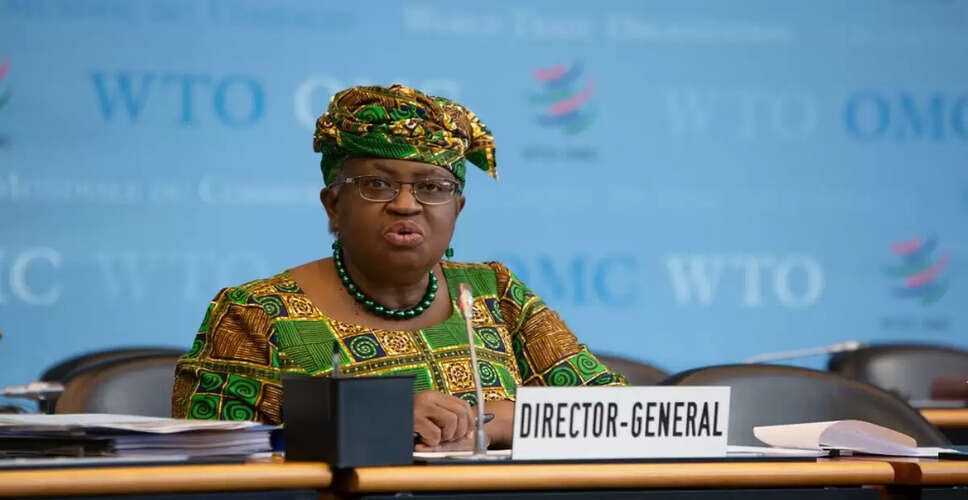
Ngozi Okonjo-Iweala, the Director General of the World Trade Organisation (WTO), emphasized the importance of India's leadership during the upcoming 14th WTO Ministerial Conference (MC14) scheduled for March 26 to 29, 2026, in Yaounde, Cameroon.
In a statement to reporters in Paris, she remarked, "We need India as a leader. India is a prominent nation and is performing well. It should pave the way for other developing countries." She underscored that reforms within the WTO must address key issues for India, particularly in agriculture.
Okonjo-Iweala also advocated for India's support regarding the Investment Facilitation for Development agreement, which has garnered backing from 90 out of 126 participating members.
"India is a leading country, and it is essential for it to support initiatives like investment facilitation for development, as many developing nations are eager to progress in this area. We must also consider India's agricultural concerns and strive to be as supportive as possible," she added.
Significance of the Mini-Ministerial Meeting
As the mini-ministerial meeting hosted by Australia approaches, the WTO Director General highlighted its significance in shaping the agenda for the upcoming ministerial conference.
She noted, "Most members recognize the WTO's value, but it requires repositioning." Okonjo-Iweala pointed out that the current challenges facing the multilateral trading system present a unique opportunity for essential reforms.
"The disruptions to multilateral trading systems are unprecedented. However, I view challenges as opportunities, and this is an excellent chance for WTO members to identify what works and what needs to be retained," she stated.
Addressing Reform Needs
Okonjo-Iweala further explained, "For instance, three-quarters of global goods trade still operates under WTO terms, and members wish to protect that. However, there are aspects that require improvement. During these disruptions, we must ask what reforms are necessary for the WTO. What concerns do developing countries like India have? What issues does the US face? What are the grievances from African nations? We need to gather this feedback to facilitate reform, as most members believe the organization is valuable but needs repositioning," she added.
The urgency of these discussions is heightened as the 14th WTO Ministerial Conference approaches, which will serve as a critical test for the organization's ability to reconcile the growing divide between developed and developing nations while upholding its multilateral principles.
Okonjo-Iweala's visit to Paris coincides with a mini-ministerial meeting held alongside the OECD Ministerial Council Meeting, organized by Australia. Trade ministers from around 25 countries, including India, Australia, and Singapore, are engaged in talks regarding potential reforms within the WTO.