
World Breastfeeding Week 2025: A Call to Action for Sustainable Support Systems
Highlighting the Importance of Breastfeeding
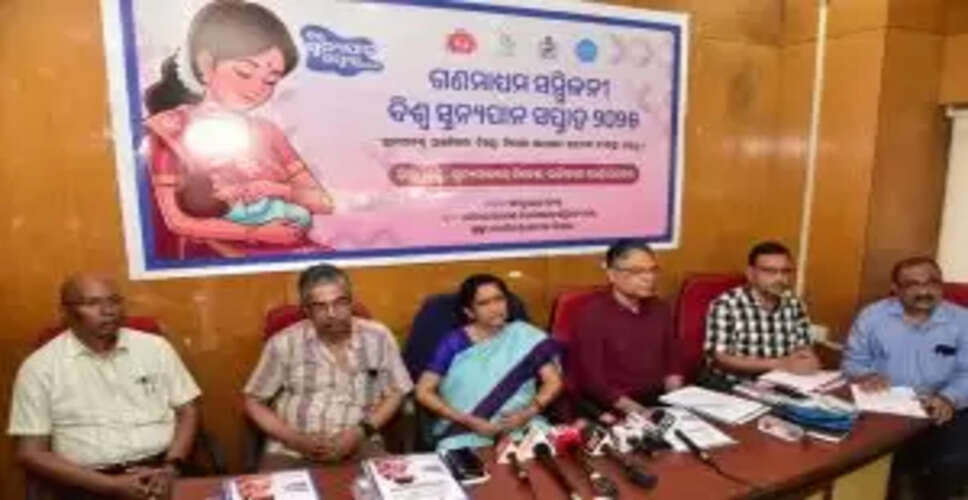
Bhubaneswar: In celebration of World Breastfeeding Week 2025, which runs from August 1 to 7, the Directorate of Health and Family Welfare, in partnership with UNICEF, hosted a media workshop on Thursday. The event focused on the theme, ‘Prioritise Breastfeeding: Create Sustainable Support Systems.’
The workshop underscored the critical role of breastfeeding in promoting the long-term health of both mothers and children, calling for collaborative efforts to establish sustainable support frameworks.
Rajyashree Pattnaik, the director of Family Welfare, stated, “Our department is dedicated to fostering an environment that supports mothers through counseling and community awareness, ensuring they receive the necessary assistance to continue breastfeeding.”
She further remarked, “Choosing to prioritize breastfeeding is not merely a health decision; it is an investment in our future.”
Sourav Bhattacharjee, a nutrition specialist from UNICEF, highlighted the broader societal and environmental advantages, asserting, “Breastfeeding transcends personal choice; it embodies a societal obligation. It diminishes the dependence on packaged infant foods that contribute to carbon emissions. We must advocate for safe public breastfeeding spaces and enhanced maternity protections.”
Aditya Mohapatra, the additional director of Child Health, emphasized, “Breastfeeding serves as the first vaccine for infants. It shields against infections and reduces the mother's risk of various diseases.”
Odisha is at the forefront of breastfeeding initiatives, with the National Family Health Survey (NFHS-5) indicating that 68.5% of newborns are breastfed within the first hour of life, and 72.9% are exclusively breastfed for the first six months.