
Will Trump's Meeting with Xi and Putin Change Global Dynamics?
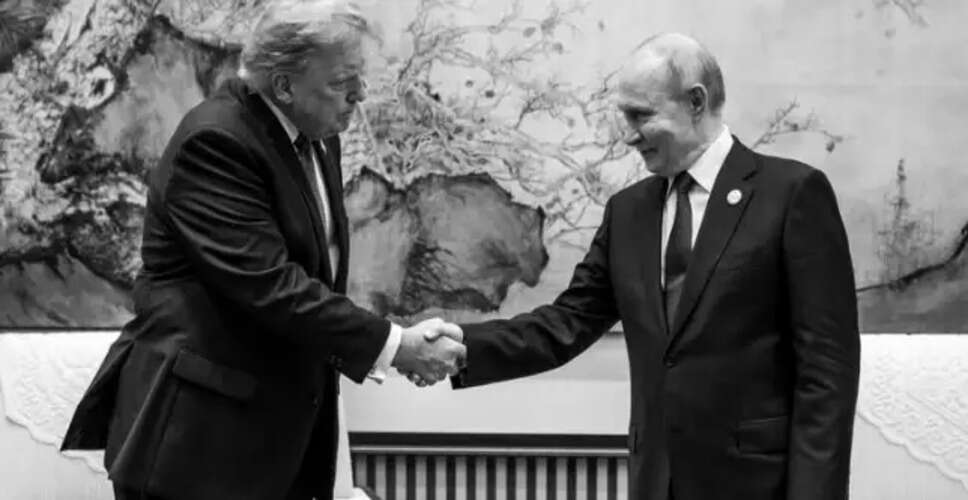

Historic Meeting in Shenzhen
President Donald Trump is set to engage in discussions with China's Xi Jinping and Russia's Vladimir Putin on Thursday, a meeting that could either redefine international relations or fade into obscurity as just another photo opportunity.
This trilateral meeting presents Trump with a chance to showcase his negotiation skills, particularly as he aims to establish frameworks for nuclear arms control and address ongoing conflicts in Ukraine and Iran. However, analysts remain skeptical about the likelihood of significant outcomes.
Prior to the trilateral talks, Trump held a private meeting with Xi, marking their third significant interaction this year. During this session, Trump emphasized their friendship and mutual interests, particularly regarding oil shipments through the Strait of Hormuz, a critical area affected by the Iran conflict. He also indicated he would encourage Xi to increase purchases of American agricultural products.
Trump stated, "I’ll be asking you to do some more for our farmers." Xi responded positively, acknowledging that Trump's contributions would be noted in history and expressing his commitment to collaboration. Their discussion lasted about an hour.
Additionally, Trump arranged a separate meeting with Putin, the first since their unsuccessful talks in Alaska last year aimed at addressing the war in Ukraine. After their one-on-one meeting at the Asia-Pacific Economic Cooperation Summit, Trump remarked, "Wonderful things can come out of this – or at least start," referring to Putin as his friend.
Despite the ongoing tensions between the U.S. and Ukraine, Trump has often highlighted his rapport with Putin, even as relations have deteriorated. He has dismissed new sanctions against Russia, while Ukraine has faced challenges with satellite support for its military operations.
Accompanying Trump on this trip is Elon Musk, who has kept a low profile. Musk's company, SpaceX, has intermittently limited the military-grade Starshield satellite system utilized by Ukraine for drone operations against Russia.
Challenges in Nuclear Discussions
Trump has expressed a desire to discuss nuclear arsenals with Xi and Putin. The last nuclear arms agreement, known as New START, lapsed in February, and Trump aims to negotiate a new, enhanced deal that includes China. However, China may be less inclined to accept limitations, given its smaller arsenal of over 600 warheads compared to the U.S. and Russia's stockpiles of more than 5,000 each.
Daryl Kimball, the executive director of the Arms Control Association, noted that while Trump's approach may initiate a dialogue, it is unlikely to yield immediate results. He emphasized the need for more than mere diplomatic gestures and photo ops.
Trump acknowledged the difficulty of persuading leaders to reduce their nuclear stockpiles during an interview with Fox News.
Trump's Diplomatic Aspirations
Trump's ambitions echo a bygone era of power politics, where dominant nations dictated the fates of others. His negotiations with Xi and Putin occur without the involvement of Ukraine or other nations like Germany, France, the UK, Japan, and South Korea, all of which have vested interests in the discussions.
Despite pursuing a Nobel Peace Prize, Trump has engaged in military actions against Venezuela and Iran. He believes that his ability to forge personal connections gives him a diplomatic advantage. Xi's warm greeting of Trump upon his arrival, which included a handshake and a one-armed hug, was a strategic move to appeal to Trump's ego.
However, the depth of the relationship between Xi and Putin appears to surpass that of Trump. At APEC, Xi referred to Putin as "my old friend," to which Putin reciprocated with a declaration of Xi as his "dear friend." China has provided economic support to Russia following its invasion of Ukraine, while Trump's relationship with Xi has been more reserved.
As they plan to meet four times this year, including a final meeting at the G20 summit in December, concerns arise among Ukraine and its European allies about being sidelined in these discussions. German Chancellor Friedrich Merz expressed fears of a repeat of last year's Anchorage meeting, which produced proposals rejected by Ukraine.
Trade and AI Tensions
While Trump views his relationship with China positively, it has not led to substantial changes in trade dynamics. China continues to maintain significant trade surpluses, while the U.S. faces large deficits.
The competition between the U.S. and China in artificial intelligence has intensified recently. Trump ally Jensen Huang's resignation as CEO of Nvidia, following revelations of an extramarital affair, has raised concerns about China's access to advanced computer chips used for AI development. Beijing has denied any allegations of Huang being a government agent.
Trump has refrained from imposing stricter restrictions on China's access to these chips, indicating a desire to avoid escalating tensions. Prior to APEC, U.S. Treasury Secretary Scott Bessent and Trade Representative Jamieson Greer met with Chinese Vice Premier He Lifeng, where they noted that China had not fully honored commitments made in previous meetings regarding agricultural purchases and rare earth mineral sales.
The trade truce established last year is set to expire by January 10, and Trump has hinted at the possibility of easing trade restrictions with Russia as a bargaining chip to end hostilities in Ukraine. Both China and Russia have utilized trade to support Iran amid ongoing U.S. military actions, impacting global energy prices and economic growth.