
Why the Shri Mata Vaishno Devi Medical Institute Lost Its Permission: Shocking Findings Revealed
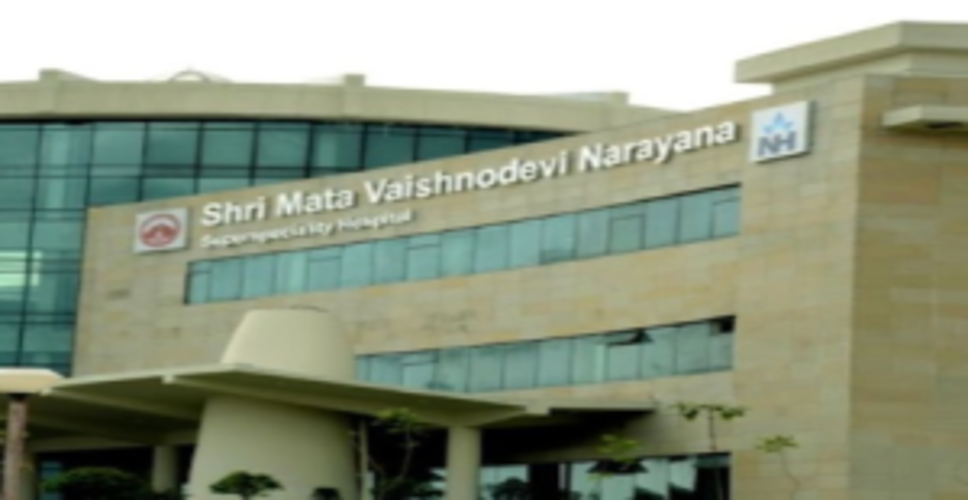
Withdrawal of Permission for Medical Institute
New Delhi: The Medical Assessment and Rating Board (MARB) of the National Medical Commission (NMC) has rescinded the permission previously granted to the Shri Mata Vaishno Devi Institute of Medical Excellence located in Reasi, Jammu and Kashmir, due to failure to meet essential standards.
In an official order released on Tuesday, the MARB stated that all students who were admitted during the counseling process for the academic year 2025-26 will be placed in other medical colleges in Jammu and Kashmir as supernumerary seats, managed by the Union Territory's competent authority.
This decision ensures that no student will lose their MBBS seat; instead, they will be accommodated in recognized medical institutions in the region beyond the usual intake limits.
The responsibility for implementing this transfer lies with the designated health and counseling authorities of the Union Territory, who have been duly notified of this decision.
The non-compliance issues were uncovered during an unannounced inspection.
The NMC's directive is effective immediately.
The institute had submitted an application under the NMC's public notices dated December 5 and December 19, 2024, seeking to establish a new medical college with an intake of 50 MBBS seats for the academic year 2025-26.
Following the review of the application, the MARB issued a letter of permission on September 8, 2025, to commence the MBBS program.
This permission was contingent upon several conditions, including adherence to essential standards, allowing surprise inspections, providing accurate information, and rectifying any deficiencies prior to renewal, as stated in the order.
The MARB retained the authority to withdraw or cancel the permission in cases of misrepresentation, non-compliance, or failure to adhere to regulatory standards.
After the permission was granted, the commission received numerous complaints regarding insufficient infrastructure, lack of clinical materials, and inadequately qualified full-time teaching staff and resident doctors at the college.
Complaints also highlighted low inpatient and outpatient numbers and poor bed occupancy rates, among other concerns.
Exercising its authority under section 28(7) of the National Medical Commission Act, 2019, which allows for surprise evaluations of medical institutions, a team of assessors conducted an inspection on January 2, 2026.
The findings from this inspection led to the adverse conclusions.
The assessment report revealed significant deficiencies in faculty numbers, clinical materials, and infrastructure at the institute.
Specifically, there was a 39% shortfall in teaching faculty and a 65% shortfall in tutors, demonstrators, and senior residents compared to the required standards.
The patient load and clinical services were also found to be significantly below acceptable levels, with outpatient attendance recorded at just 182 at 1 PM against a required 400, and bed occupancy at 45% instead of the mandated 80%.
Intensive care units reportedly had only about 50% average bed occupancy, and the average monthly deliveries were approximately 25, which the MARB deemed grossly inadequate.
Additionally, some departments lacked student practical laboratories and research facilities.
Lecture halls did not meet minimum standard requirements; the library contained only 744 books instead of the required 1,500, and only two journals were available against the necessary 15.
The report also noted the absence of an ART center and facilities for managing MDR-TB, along with significant infrastructure deficiencies in various departments, including the lack of separate male and female wards.
Only two operating theatres were operational, while five were required; there was no minor OT in the OPD area, and the equipment for para-clinical subjects was found to be insufficient.
The MARB referenced Chapter V (Sanction and Penalty), Regulation 29 of the Establishment of Medical Institutions, Assessment and Rating Regulations, 2023, which categorizes non-compliance by a medical college as an offense subject to penalties.
The deficiencies identified in the inspection report were classified as non-compliance under these regulations.
After reviewing the assessment, the commission determined that the institute had not met the minimum standards outlined in the UGMSR-2023 for establishing and operating a medical college.
As a result, with the NMC chairman's approval, the MARB decided to revoke the letter of permission immediately.
In addition to this revocation, the MARB has opted to invoke the performance bank guarantee provided by the college, in line with the original permission terms. This action highlights the financial and regulatory repercussions of non-compliance for the institution.