
Why India is Emerging as a Global Semiconductor Hub: Insights from PM Modi

India's Semiconductor Ambitions Unveiled
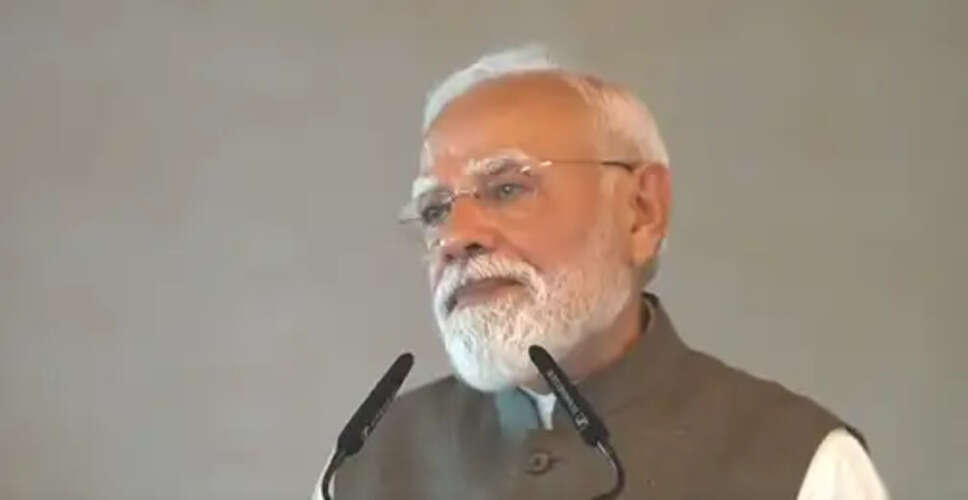
New Delhi: On Thursday, Prime Minister Narendra Modi emphasized India's potential as a reliable hub for global manufacturing, particularly in the semiconductor sector. Speaking at the SEMICON India conference, he assured industry leaders that the government is committed to establishing India as a prime destination for semiconductor production.
Modi highlighted the increasing global demand for trustworthy manufacturing locations, stating that India is gearing up to fulfill this requirement. He announced that Indian-manufactured chips have started reaching customers domestically and internationally for the first time.
In his address, he linked this initiative to India's broader economic growth, citing a quarterly GDP increase of 7.8%, a recent upgrade in sovereign ratings by a Japanese agency, and the New Delhi Declaration from the recent BRICS summit.
The Prime Minister acknowledged the contributions of industry leaders in rapidly developing the semiconductor ecosystem since the initiative's inception in 2022, calling them the 'pillars of success' for India.
He also noted significant advancements in the semiconductor program, which has progressed from planning to pilot production and commercial manufacturing. New plants in Mohali and Surat have begun operations, marking a significant milestone.
Modi stressed the importance of a comprehensive semiconductor ecosystem, which includes chip design, equipment, materials, testing, and packaging. He encouraged industry leaders to enhance domestic research and development and invited Indian researchers abroad to contribute to technological advancements in India.
He urged semiconductor companies to forge deeper research partnerships with Indian institutions, emphasizing that industry-led R&D would benefit both the companies and the nation's technology workforce.
The government is advancing the second phase of its semiconductor initiative, which includes regulatory reforms to foster collaboration among global firms, startups, and design companies. This phase, approved in July, has a budget of Rs 1.275 lakh crore.
Modi called for a more robust domestic supply chain, advocating for the growth of fabless semiconductor companies and the development of local intellectual property, alongside increased use of silicon photonics for AI infrastructure.
He encouraged companies involved in semiconductor equipment, chemicals, and materials to expand their operations in India, highlighting the opportunity to create a comprehensive semiconductor ecosystem.
The Prime Minister pointed out India's engineering talent as a significant advantage, with plans to train 100,000 engineering students in chip design, of which around 70,000 have already received training.
He also connected the semiconductor initiative to India's rising energy needs, particularly for AI data centers and advanced manufacturing facilities, noting that the country is enhancing its power generation capacity through solar and nuclear energy.
The SEMICON India 2026 conference, themed 'Silicon to Systems: Building the Ecosystem,' is taking place from September 17 to 19, gathering semiconductor companies, policymakers, investors, academics, and startups.
Modi reiterated that India's growing semiconductor capabilities would bolster global supply chains and invited international firms to expand their presence and partnerships in the country.
The first phase of the semiconductor mission, initiated in 2021, focused on attracting investment in fabrication and packaging, with the government committing approximately Rs 76,000 crore. This phase has led to the approval of 12 semiconductor manufacturing projects worth over Rs 1.64 lakh crore across six states, including Gujarat, Assam, Uttar Pradesh, Punjab, Odisha, and Andhra Pradesh.
Three companies—Micron, Kaynes, and CG Semi—have commenced commercial production, with another facility expected to launch later this year.
Industry projections suggest that the second phase could create between 150,000 to 200,000 direct and indirect jobs, shifting focus from fabrication to equipment, materials, chip design IP, and advanced nodes. Currently, India imports nearly 90% of its chip requirements, costing around USD 30 billion annually, with a goal to establish a USD 200 billion domestic semiconductor market.
The SEMICON India 2026 event, organized by the industry group SEMI in collaboration with the mission and the electronics ministry, features over 500 exhibitors, including 243 international firms, and delegates from more than 40 countries.
Modi also highlighted the importance of expanding solar and nuclear power capacity to meet the energy demands of AI data centers and semiconductor manufacturing.