
Why Did Trump Pause Military Action Against Iran? Insights from Gulf Allies
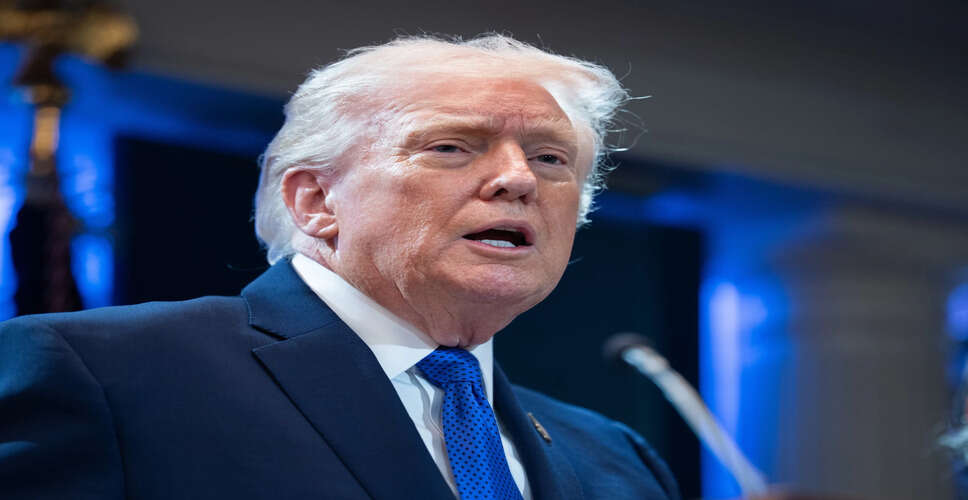

Trump's Decision to Delay Strikes on Iran
Washington: On Sunday, President Donald Trump revealed that he opted against launching new military strikes on Iran, influenced by the counsel of Gulf nations including Qatar, Saudi Arabia, and the UAE.
The President indicated that a significant military operation was prepared, marking the largest since World War II, but he chose to abandon it to allow diplomatic efforts to unfold after discussions with key Gulf leaders, notably Saudi Crown Prince Mohammed bin Salman, and unnamed Iranian officials.
Trump recounted his conversation with the crown prince, asking, 'What would you prefer? An attack or a deal?' The response was a clear preference for negotiations over military action, as the consequences of such strikes were uncertain.
Following their dialogue, Trump announced via social media that Middle Eastern allies were nearing an agreement to conclude the ongoing conflict that has persisted for five months.
This decision marked a shift for Trump, who had expressed skepticism about negotiations with Iran just a day prior, warning that the US military would respond forcefully.
He reiterated that the potential agreement would involve reopening the Strait of Hormuz, a vital passage for global energy, which had been disrupted since the conflict began, and would address US concerns regarding Iran's nuclear ambitions.
Iran has consistently targeted vessels navigating the Strait of Hormuz without its consent amid its ongoing tensions with the US.
Iran's Foreign Ministry spokesperson, Esmail Baghaei, stated that the status of the Strait of Hormuz would not revert to its previous condition prior to February 28, the onset of the war.
In a statement to Iranian state television, he mentioned that discussions regarding shipping through the strait with Oman are ongoing, but there are no current plans to reopen this crucial waterway.
Trump has previously announced pauses in military action against Iran following US and Israeli strikes on February 28, only for hostilities to resume shortly thereafter.
Iran's defense minister remarked on social media that the nation was neither surprised nor passive in response to Trump's announcement, asserting that Iran remains vigilant against US threats.
While Iran's leadership appears unified in its military strategy, there seems to be an internal conflict regarding negotiations with the US, with some advocating for military pressure while others oppose any talks.
The latest proposal aims to bring both parties back to the negotiating table.
Trump expressed optimism that negotiations would recommence the following afternoon, although he did not specify the participants.
A regional official indicated that the proposal discussed by Trump involves the US and Iran resuming talks to address the issues that have hindered previous agreements.
This proposal includes reopening the Strait of Hormuz and ceasing regional attacks, particularly by Iranian-backed militias in Iraq against Gulf nations and Jordan.
In return, the US would lift its naval blockade on Iran and permit Tehran to resume oil exports as part of a tentative ceasefire agreement.
While no formal agreement has been established yet, mediation efforts are actively ongoing, according to the official who requested anonymity due to the sensitive nature of the discussions.
Trump also mentioned that Israel is aligning with his commitment to end the conflict by implementing the ceasefire deal reached in June, although Israel has not publicly commented on this development.
Saudi officials have expressed concerns regarding potential Iranian retaliation.
Crown Prince Mohammed conveyed worries about the US escalating the situation during his phone call with Trump on Saturday.
The conversation was described as candid and constructive by a source familiar with the discussion, who requested anonymity.
The crown prince warned that an escalation could severely impact the global economy if Iran retaliated against US allies in the Gulf.
This call occurred prior to Trump's social media announcement, during which the crown prince sought clarity on Trump's potential military actions against Iran.
Saudi officials have emphasized to the Trump administration that while the kingdom and its Gulf allies, including the UAE and Qatar, are well-prepared to defend against Iranian attacks, Kuwait remains vulnerable to strikes from Iranian-backed militias in Iraq.
Trump suggested that his dialogue with the Saudi crown prince significantly influenced his decision to halt military strikes on Iran.
He remarked, 'It would have been disastrous for them. They didn’t want us to proceed, and frankly, Saudi Arabia didn’t want it either.'