
Why Are Tiger Reintroduction Efforts Failing in Odisha and Uttarakhand?
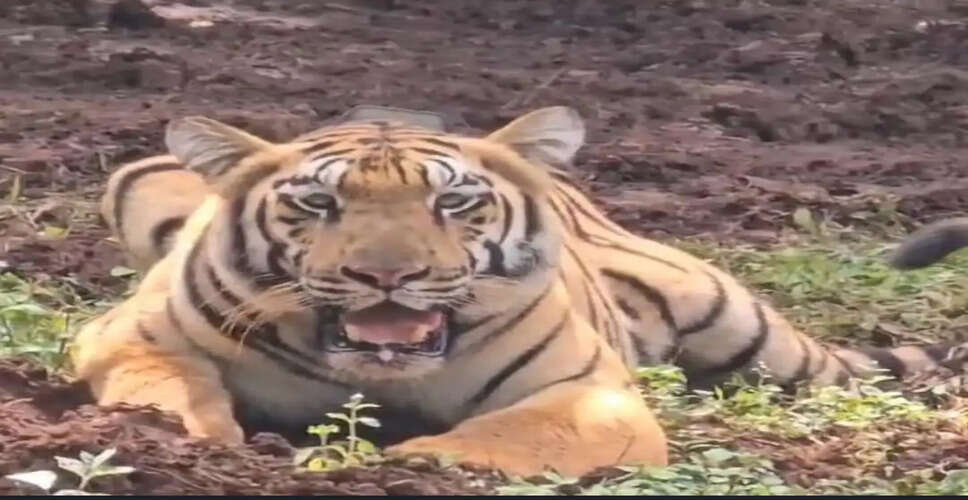

Challenges in Tiger Reintroduction Programs
Recent findings reveal that while tiger reintroduction efforts in reserves like Sariska in Alwar and Panna in Madhya Pradesh have thrived, similar initiatives in Satkosia, Odisha, and Rajaji, Uttarakhand, have not yielded positive outcomes. The report highlights these discrepancies.
The Sariska project, initiated in 2008, successfully boosted the tiger population from zero to 56. Similarly, Panna's program, which started in 2009, saw an increase from zero to 88 tigers.
Conversely, Satkosia's reintroduction of two tigers in 2018 has resulted in a current population of none, despite the presence of a tiger prior to the initiative. In Rajaji, five tigers were introduced in 2020, but the population remains unchanged.
These insights come from the report titled 'Reintroduction and Recovery of Tigers in India,' released by Environment Minister Bhupender Yadav. The document outlines India's efforts to restore tiger populations across 12 sites through structured reintroduction and supplementation strategies.
Sanjay Kumar, the Additional Director General of Forests for Project Tiger, noted that Satkosia was the first interstate reintroduction project, involving tigers from Madhya Pradesh. However, the anticipated results were not achieved, possibly due to a lack of trust from local communities.
The report emphasizes that successful translocation requires adequate prey, secure habitats, effective protection, ecological connectivity, and community acceptance. Kumar also mentioned that Rajaji's lack of connectivity between its western and eastern regions has hindered population growth since the 2020 reintroduction.
The findings underscore the necessity of prey recovery, habitat connectivity, and ongoing monitoring to ensure the success of tiger recovery efforts.