
Who is Shabir Ahmed Lone? The Alleged Lashkar-e-Taiba Handler Arrested in Delhi!
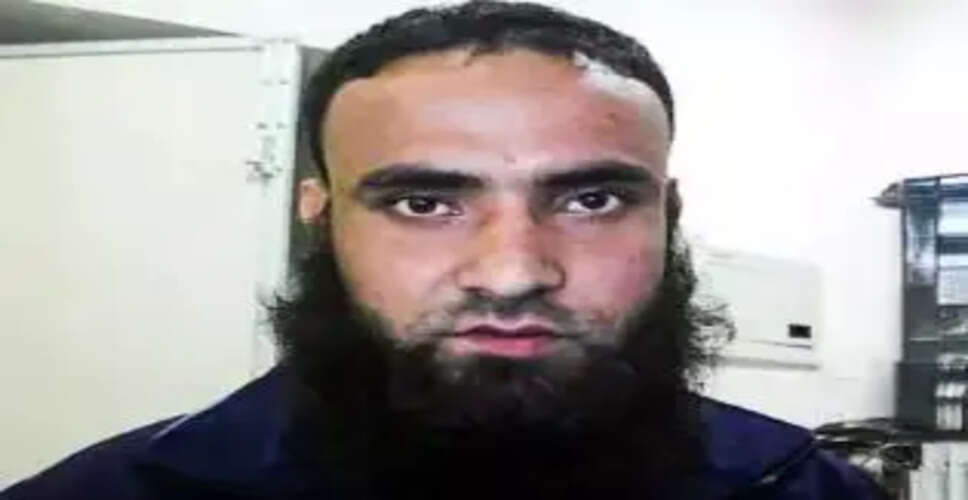

Arrest of a Suspected Terrorist in Delhi
New Delhi: Authorities from the Special Cell of Delhi Police have apprehended a suspected handler for the Lashkar-e-Taiba (LeT), identified as Shabir Ahmed Lone, in the Ghazipur region, as reported on Monday.
Following his capture, Lone was presented in court, which ordered him to be held in police custody for five days.
Described by police as a "hardcore and highly-trained terrorist," Lone is believed to have established connections with operatives linked to Pakistan's Inter-Services Intelligence (ISI).
Known by the aliases Raja and Kashmiri, he hails from Srinagar, Jammu and Kashmir, and is accused of managing a recently dismantled module responsible for placing anti-national posters in various locations across Delhi and Kolkata, according to a senior police official.
The arrest occurred on March 29, as part of an investigation into the LeT module that was uncovered during the metro poster incident on February 22.
During the operation, law enforcement seized a variety of foreign currencies and other incriminating evidence, including approximately 2,300 Bangladeshi Taka, 1,400 Nepalese currency units, 5,000 Pakistani currency units, and 3,000 Indian rupees.
Additionally, a Nepalese SIM card was confiscated, raising concerns about potential cross-border communications and operational coordination.
The police indicated that the module was orchestrated under the direction of the ISI, with Lone serving as a crucial link between foreign handlers and local operatives in India.
Lone has a documented history of involvement in terrorist activities, having been arrested previously in 2007 when an AK-47 and a hand grenade were found in his possession. He faced another arrest in 2015 in Srinagar under the jurisdiction of the Parimpora Police Station.
Even during his earlier detainment, he had traveled to Delhi with plans for targeted killings. He is recognized as a highly trained operative, having completed both basic and advanced terror training at the Muzaffarabad LeT camp in Pakistan-occupied Kashmir.
After his release, he reportedly fled to Bangladesh, where he began to reconstruct a new terror network aimed at India.
While in Bangladesh, Lone allegedly forged connections with new handlers associated with LeT, identified by the code names Abu Huzaifa and Sumama Babar, who were acting on behalf of the ISI.
His mission involved reigniting terror activities in India by activating sleeper cells and recruiting new operatives, using Bangladesh as a base for infiltration and coordination.
Investigations have revealed that Lone established an operational hub in Kolkata, which served as a launch point for activities across various states.
From this location, the module executed a "test run" by placing pro-Pakistan and anti-national posters in prominent areas of Delhi and Kolkata, evaluating their operational capabilities and responses.
The operatives also conducted surveillance on several sensitive sites nationwide, including temples and crowded public areas.
Videos documenting these reconnaissance efforts were recorded and sent to handlers in Pakistan, according to police reports.
The officer noted that Lone had developed a structured network involving foreign nationals, particularly from Bangladesh, and was working to expand it by identifying recruits and locations for future operations.
Currently, he is undergoing interrogation to uncover additional associates, financial connections, and potential targets.
Investigators are also examining possible hawala channels and cross-border funding mechanisms linked to the seized foreign currencies.
The apprehension of Lone represents a significant advancement in the ongoing inquiry into the metro poster case, which had raised security alarms.
On February 22, the Special Cell dismantled a pan-India LeT module, arresting eight operatives, including seven Bangladeshi nationals, following coordinated raids in West Bengal and Tamil Nadu.
Those detained were reportedly acting under Lone's guidance and were involved in placing pro-terror posters and conducting reconnaissance of sensitive installations. Investigators discovered that Lone was managing their activities from Bangladesh.
The module was reportedly formed to revive terror operations in India by exploiting illegal immigration networks and counterfeit identity documents.
The operatives were assigned to recruit individuals and arrange logistics, including safe houses and weaponry.
The February crackdown unveiled a broader network and laid the foundation for tracking Lone's movements leading to his eventual arrest.
The timely capture of Lone (43) has prevented the recruitment of vulnerable youths into the ranks of LeT, a terror organization backed by Pakistan and banned under UAPA and UNSC resolutions.
According to ACP (Special Cell) Pramod Singh Kushwah, Lone's name surfaced during the interrogation of those arrested on February 22.
The ACP stated that intelligence inputs indicated Lone had entered India via the Nepal border and was preparing to recruit like-minded individuals for LeT within the country. He was also in contact with Tehrik-Ul-Mujahideen commander Abu Talha and a UAPA-designated terrorist, Asif Dar.
Sharing details about Lone's background, the officer noted that he is the primary handler of the recently dismantled Lashkar-e-Taiba module operating from Bangladesh. He has completed education up to Class 8 and finished a two-year Islamic Madrasa course at Salafia Arabic College in Batamaloo, J&K.
In 2004-2005, his neighborhood was frequently visited by LeT terrorists, including Abu Huzaifa, Abu Bakar, and Faisal, who provided food and logistical support. Abu Huzaifa recruited him into the LeT during that period. In 2016, he was arrested alongside Sajjad Gul in Parimpora, Jammu and Kashmir, with five live rounds of AK-47 ammunition found.
Gul, after being released, relocated to Pakistan and is currently operating 'The Resistance Front,' a LeT offshoot, according to Kushwah.
Lone had been communicating with Huzaifa through encrypted applications and began radicalizing and recruiting youths into the LeT cadre. Huzaifa introduced him to Pakistan-based LeT commander Sumama Babar via an encrypted app. Babar is responsible for radicalizing and recruiting youth in India, particularly in the Kashmir valley, into terrorist ranks through various social media platforms.
In 2025, Sumama Babar instructed Shabir to recruit Bangladeshis and Indian youths from states and UTs outside Jammu and Kashmir to conduct terrorist operations in India, the ACP revealed.
Further investigations into this case are ongoing.