
Who is Navi Pillay? The Trailblazer Winning the 2026 Nobel Peace Prize!
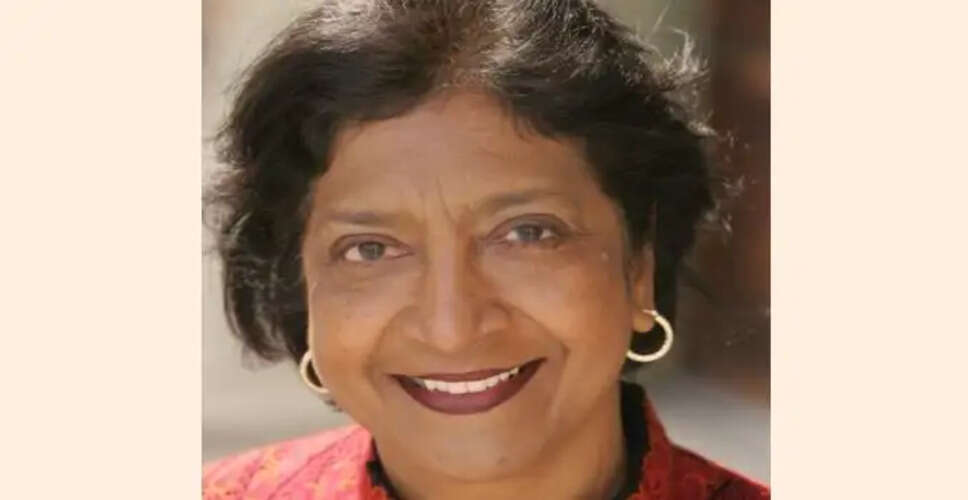

Navi Pillay: A Journey from Apartheid to Nobel Laureate
Oslo: During her time as a student at the University of Natal in South Africa, Navi Pillay encountered the Nuremberg trial transcripts, which detailed the prosecution of Nazi leaders for war crimes. This experience ignited her passion for justice, showcasing how nations can unite to hold individuals accountable for severe offenses.
Pillay's career has been remarkable; she has defended anti-apartheid activists, served as a judge in international criminal courts, and contributed significantly to the development of international law concerning genocide and sexual violence.
At 85 years old, this South African jurist of Indian descent has been awarded the 2026 Nobel Peace Prize for her relentless advocacy for peace and international law.
The Norwegian Nobel Committee acknowledged her pivotal role in reinforcing the notion that war crimes, crimes against humanity, and genocide must be prosecuted, regardless of the power held by the accused.
Born on September 23, 1941, in Durban, Pillay grew up in a financially struggling family under the oppressive apartheid regime, which enforced racial segregation and discrimination. Her father worked as a bus driver and took on additional jobs to support the family, while her mother focused on raising the children.
Reflecting on her upbringing in a 2025 UN interview, Pillay recalled the hardships faced by her family and the emphasis her parents placed on education, ensuring their daughters received equal opportunities as their sons.
Pillay graduated with a Bachelor of Arts in 1963 and a law degree in 1965 from the University of Natal. She later pursued advanced law degrees at Harvard University, culminating in a doctorate in juridical science in 1988.
In 1967, she made history as the first woman to establish a law practice in Natal Province, as noted by the International Criminal Court. As a lawyer, she represented anti-apartheid activists and highlighted the abuses faced by political detainees, advocating against torture and solitary confinement while securing legal rights for political prisoners.
Her professional journey unfolded in a context that severely limited opportunities for individuals classified as non-white. A profile from Harvard Law School noted that during her tenure as a lawyer, she was barred from entering a judge's chambers.
Following the end of apartheid in 1995, Pillay became the first colored woman to serve as an acting judge on South Africa's High Court. That same year, she was elected by the United Nations General Assembly to the International Criminal Tribunal for Rwanda, which was established to prosecute those responsible for the 1994 genocide.
Pillay served on the tribunal until 2003, holding the presidency from 1999 to 2003. One of her most significant contributions was in the trial of Jean-Paul Akayesu, the former mayor of Taba commune in Rwanda, who was convicted of genocide and crimes against humanity. This landmark 1998 ruling recognized that acts of sexual violence could constitute genocide when aimed at destroying a protected group.
Pillay was among the three judges who endorsed this judgment, which played a crucial role in integrating sexual violence into the framework of international criminal law.
The tribunal also set precedents regarding the accountability of political and media figures in inciting genocide.
In 2003, Pillay became a judge at the International Criminal Court, serving until 2008, when she was appointed as the UN High Commissioner for Human Rights, a role she maintained until 2014.
Currently, she is involved as a judge in the International Court of Justice case initiated by The Gambia against Myanmar, addressing alleged violations of the Genocide Convention.
Upon announcing the Nobel Prize, the Norwegian Nobel Committee commended Pillay's dedication to universal legal principles and her efforts to hold states and leaders accountable. They emphasized that 'peace requires justice' and that the rule of law is vital for resolving conflicts without resorting to violence, especially in an era when international legal institutions face political challenges.
From her early fascination with the Nuremberg trial transcripts to her esteemed position in international courts, Pillay's career has been dedicated to ensuring that those responsible for serious violations are held accountable, irrespective of their status or power.