
What’s Next for Yemen? Saudi Forces Regain Control of Mukalla Amid Rising Tensions
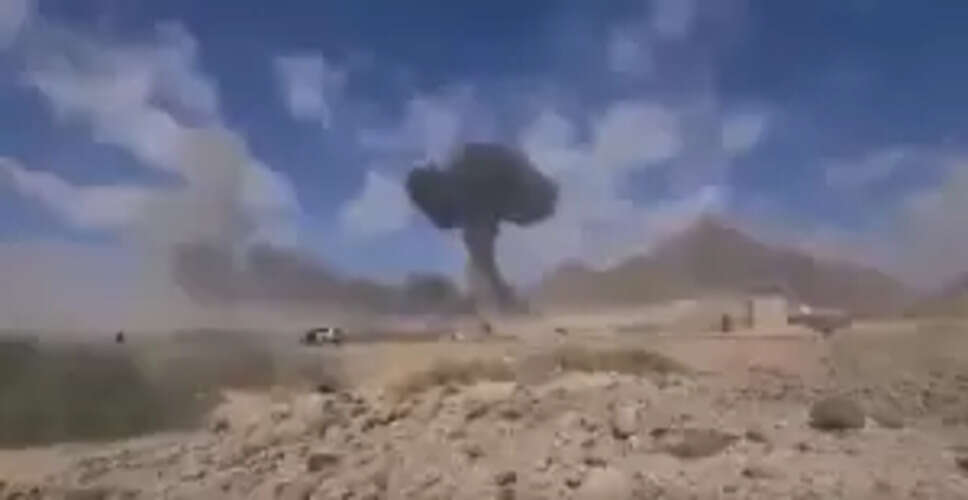
Saudi Forces Take Back Mukalla
Aden: Forces supported by Saudi Arabia have regained control of Mukalla, a port city in Yemen, after it was taken by southern separatists last month.
Footage from The Associated Press captured the moment when the Saudi-backed National Shield Forces were greeted by local residents as they paraded through the streets in military vehicles.
The capital of Hadramout province, Mukalla, was reclaimed by Yemen's internationally recognized government with the assistance of Saudi airstrikes over several days.
Residents Ahmed Samaan and Bakr al-Ketheri from the Hadramout towns of al-Qatn and Seiyun reported that the Emirati-backed Southern Transitional Council (STC) had vacated their military positions.
Tensions escalated when the STC advanced into Hadramout and Mahra, seizing an oil-rich area and displacing forces aligned with the National Shield Forces, which are part of the coalition fighting against the Iran-backed Houthis.
Yemen has been embroiled in a civil war for over ten years, with Houthi rebels controlling much of the northern region, while a Saudi-led coalition backs the government in the south. Interestingly, the United Arab Emirates, a member of this coalition, also supports the separatists.
On Saturday, Rashad al-Alimi, the head of Yemen's Presidential Leadership Council, announced via Facebook that the National Shield Forces had successfully reclaimed all military and security sites in Hadramout.
The Yemeni government appointed Salem al-Khanbashi as the commander of the Saudi-led forces in Hadramout on Friday.
Al-Alimi also reached out to Mohamed Ali Yasser, the governor of Mahra, for an update on the transfer of military camps and facilities to the National Shield Forces and local authorities, although it remains unclear if this handover has been finalized.
In a recent development, southern separatists reported that Saudi warplanes conducted airstrikes on a military camp in Mukalla and other locations where their forces are stationed, targeting the Barshid Brigade camp.
This marks the latest direct involvement of Saudi Arabia, which has recently bombed STC positions and targeted what is believed to be a shipment of weapons from the UAE.
Following Saudi pressure and an ultimatum from anti-Houthi forces, the UAE announced early Saturday that it had withdrawn its troops from Yemen.
The ongoing tensions in Yemen have further complicated relations between Saudi Arabia and the UAE, two neighboring countries on the Arabian Peninsula that have historically competed over economic and political influence, particularly in the Red Sea region. Despite their rivalry, both nations have ostensibly shared the goal of restoring Yemen's internationally recognized government.
On Saturday, Saudi Arabia's foreign ministry revealed plans to host a conference in Riyadh aimed at uniting all southern factions in Yemen to discuss viable solutions to the southern issue. The STC welcomed the Kingdom's invitation to facilitate this dialogue, emphasizing that it is the only logical approach to address political challenges, particularly regarding the rights of the southern populace to restore their state.
While details about the conference remain scarce, Saudi Arabia announced this initiative in response to a request for dialogue from Al-Alimi.