
What’s Next for Women’s Quota in Parliament? NCP's Surprising Support for Delimitation Bill
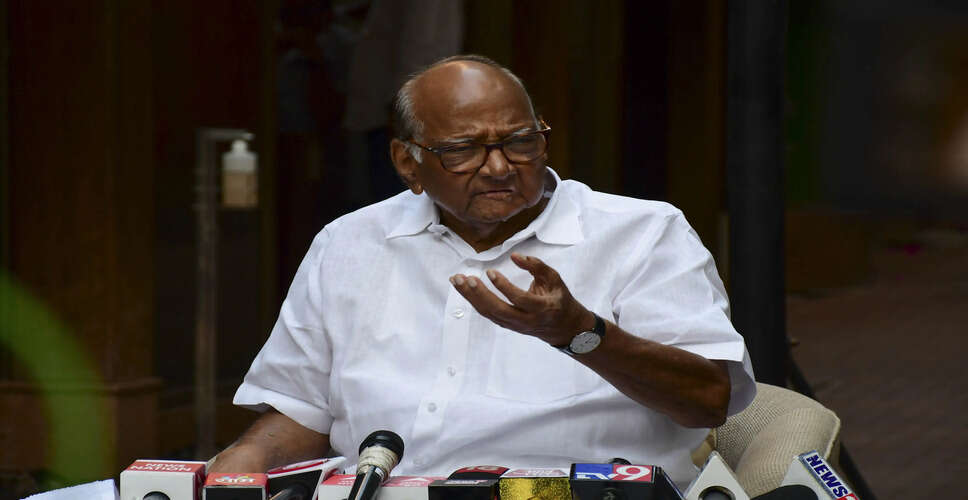

NCP's Support for Women Quota Bill
Mumbai: The Nationalist Congress Party (NCP), led by Sharad Pawar, has announced its backing for the constitutional amendment bill aimed at establishing a women’s quota linked to delimitation in Parliament. This decision was communicated by party working president Supriya Sule during a recent meeting, as reported by sources on Saturday.
In a separate development, an NCP leader mentioned that while a directive has been issued for party MPs to attend the special Parliament session starting November 30, the official party stance on delimitation has yet to be shared with them.
The ambiguity surrounding the party's position led MP Amar Kale, representing Wardha in Maharashtra, to express that he would vote according to his conscience in the Lok Sabha.
Sule has not yet revealed the party's official position. On Friday, she stated that the party would review the draft legislation before clarifying its stance.
During a meeting with NCP district presidents and leaders in Mumbai on November 26, Sule sought their opinions, indicating that the party had resolved to support the delimitation bill, although the MPs were absent from this discussion.
The NCP currently has eight MPs, including Sule.
The district leaders assured Sule that they would adhere to the decisions made by Sharad Pawar and the party leadership, according to sources.
This meeting was organized by Maharashtra NCP president Shashikant Shinde to address the drought situation and potential mitigation strategies.
Another NCP leader noted that despite the whip issued to party MPs, the official party position on delimitation remains uncommunicated.
He claimed that the leadership has not consulted the MPs regarding their views nor conveyed the official line.
Last month, during a meeting focused on the drought issue, the final minutes were dedicated to discussing delimitation, where some MPs shared their opinions. Sule indicated that the matter would be revisited once the bill draft was made public. The draft was released on Friday, yet there has been no communication from the party leadership.
Sources revealed that the meeting on Thursday escalated into a heated exchange between Sule and NCP MLA Rohit Pawar regarding an upcoming tractor protest he announced to address farmers' issues.
As tensions rose, senior leader Jayant Patil intervened to defuse the situation involving the Karjat-Jamkhed MLA.
Party insiders reported that Rohit challenged Sule on why NCP leaders were barred from participating in his tractor protest aimed at highlighting the distress faced by farmers due to drought.
He questioned, 'Will you take action against those who join the protest?' Sule responded by advising him not to use the party's logo and flag during the demonstration.
When Rohit asserted that the tractor morcha was not exclusive to one party, Sule reportedly asked why he expected NCP leaders and officials to attend.
Sources also indicated that Rohit's outburst was triggered by NCP women's wing president Rohini Khadse's announcement of support for his protest, which Sule opposed, leading to Khadse's dismissal from her position.
A special session of Parliament is set to commence on November 30, with the Lok Sabha reconvening on that date and the Rajya Sabha on December 2.
These sessions are expected to conclude on December 3, depending on government business needs.
The Centre plans to introduce a new constitutional amendment bill in the Lok Sabha on Monday, which aims to implement one-third reservation for women by increasing the seat allocation for each state and Union territory in the House and boosting the strength of their legislative assemblies by 50%, while freezing the revised allocations and boundaries until 2051.
The Constitution (132nd Amendment) Bill, 2026, scheduled for introduction in the Lok Sabha on Monday, seeks to expand the House's maximum capacity to 850 members, with up to 815 from states and 35 from Union territories. It also proposes raising the limit on state assembly sizes from 500 to 650.
The bill's objectives include providing immediate one-third reservation for women, including those from Scheduled Castes and Scheduled Tribes, in the House of the People and the Legislative Assemblies of the States and Union Territories through a delimitation process, as outlined in the bill's Statement of Objects and Reasons.