
What’s Next for West Asia? Putin Engages with Israeli and Iranian Leaders Amid Rising Tensions
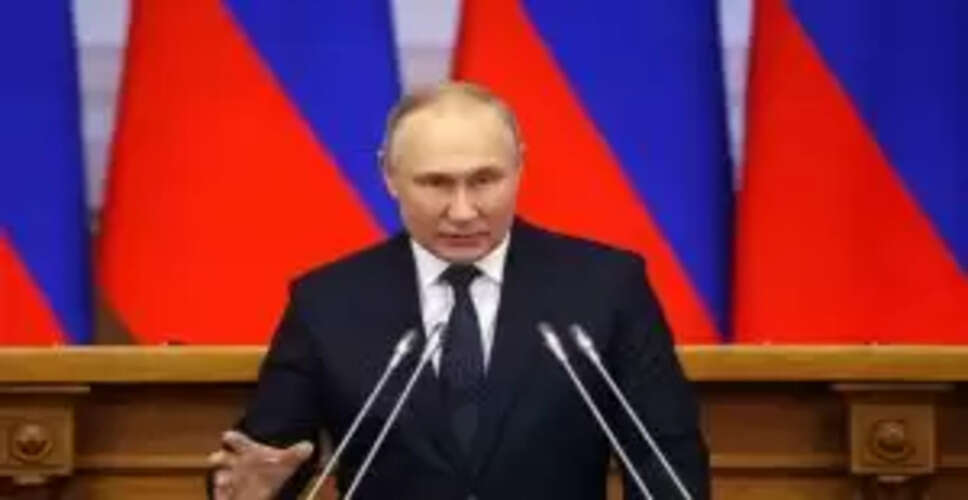
Mediation Efforts in West Asia
On Friday, Russia reaffirmed its dedication to facilitating mediation and fostering constructive dialogue among all stakeholders in West Asia. This commitment comes as President Vladimir Putin reached out to leaders in Israel and Iran to discuss the escalating regional tensions, particularly in light of US threats against Iran.
During his conversation with Israeli Prime Minister Benjamin Netanyahu, Putin addressed the current situation in West Asia and the complexities surrounding Iran, as stated by the Kremlin.
The Russian government emphasized its ongoing mediation efforts and the importance of dialogue among all involved parties.
Putin reiterated his position on enhancing political and diplomatic initiatives aimed at stabilizing the region, with both leaders agreeing to maintain communication across various levels.
Additionally, Putin spoke with Iranian President Masoud Pezeshkian, who provided updates on the Iranian government's attempts to stabilize the country amidst ongoing protests related to the economic crisis.
Both Russia and Iran expressed their unified support for de-escalating tensions in the region and resolving conflicts through diplomatic channels, according to a separate Kremlin statement.
The leaders also reaffirmed their commitment to strengthening the strategic partnership between Russia and Iran, focusing on collaborative economic projects.
Iran's state media reported that President Pezeshkian expressed gratitude to Russia for its supportive actions at the United Nations and other international platforms.
Putin conveyed optimism that Iran's economic strategies would yield positive outcomes and mentioned that Russia's diplomatic initiatives aim to clarify Iran's stance and mitigate tensions on the global stage.
Kremlin spokesperson Dmitry Peskov highlighted the extremely tense situation in Iran and West Asia, noting that the president is actively working to promote de-escalation.
According to reports from a state-run news agency, US Presidential Envoy Steve Witkoff outlined Washington's conditions for Tehran to reach a diplomatic resolution.
Witkoff expressed hope for a diplomatic resolution, identifying four key issues: nuclear enrichment, missile reduction, the quantity of enriched nuclear material, and the activities of proxy forces. He emphasized that resolving these matters diplomatically would be ideal, warning that the alternative could be detrimental.
Tensions in the region have escalated following a 12-day conflict between Israel and Iran last June, which saw US involvement through strikes on Iranian nuclear sites. A ceasefire was later announced by then-President Donald Trump.
Recent unrest in Iran, sparked by a significant drop in the value of the rial, has led to widespread protests across all provinces, some of which have turned violent, prompting a harsh government response.