
What’s Next for Iran and Israel? Unpacking the Unpublished Peace Deal
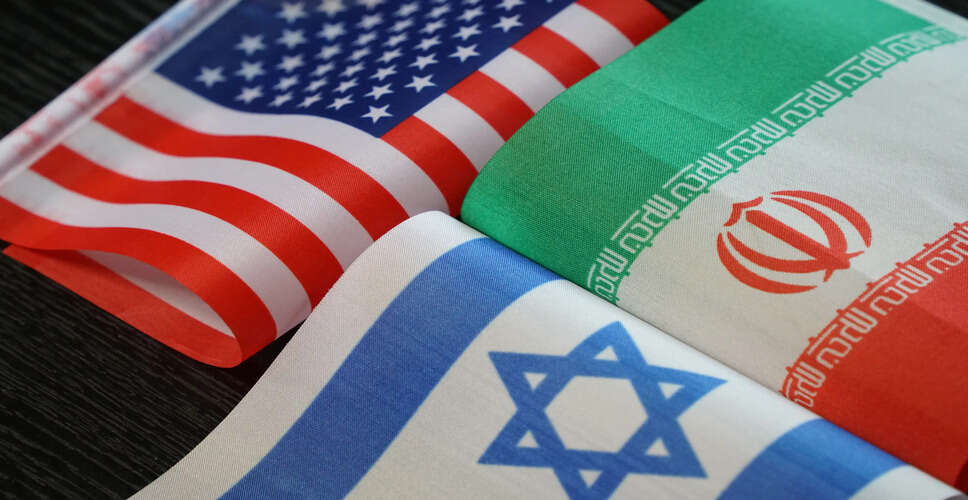

Diplomatic Tensions Surrounding the Iran-Israel Agreement
Dubai: On Tuesday, Iran's Foreign Minister emphasized that any agreement to conclude the conflict with the United States must also entail Israel's withdrawal from Lebanon. However, Israel's firm stance on maintaining its military presence in Lebanon raises concerns about the yet-to-be-released agreement and the potential for ongoing hostilities.
Abbas Araghchi stated that Israel's ongoing occupation of southern Lebanon would breach the understanding reached between the U.S. and Iran.
"Ending the war in Lebanon is a crucial component of fully resolving the conflict," Araghchi remarked during a briefing with foreign diplomats in Tehran, which was broadcast on Iranian state television. "Without the withdrawal of Israeli forces from the territories they have occupied, the war cannot be considered over."
He further warned that any additional Israeli strikes on Lebanon would be viewed as a violation of the agreement.
While the U.S. has not clarified if Lebanon is included in the final deal, Araghchi's comments contradict statements from Israeli officials regarding the terms of the ceasefire that began following U.S.-Israeli airstrikes on February 28.
Israel is not directly involved in the agreement. Prime Minister Benjamin Netanyahu referred to it as a decision made by President Donald Trump, asserting that Israel has its own priorities and will maintain its presence in a buffer zone in Lebanon "for as long as necessary."
This uncertainty echoes previous negotiations, including a temporary ceasefire established in April, which failed to lead to a broader peace or the reopening of the Strait of Hormuz after conflicting frameworks were announced by the U.S. and Iran.
Concerns Over the Agreement's Viability
The discrepancies highlight the unresolved aspects of the agreement ahead of a ceremonial signing scheduled for Friday in Geneva.
The proposed agreement aims to establish a significant truce in a month-long conflict that has resulted in thousands of casualties across the Middle East, including key figures in Iran's leadership, and has driven up prices for fuel, food, and other essential goods.
According to a senior U.S. official who spoke anonymously, the unpublished agreement includes provisions for the "immediate" reopening of the Strait of Hormuz and the lifting of the blockade.
Primarily mediated by Pakistan, the deal involves the simultaneous lifting of Iran's closure of the strait and the U.S. blockade of Iranian ports. Following this, the U.S. and Iran will engage in 60 days of negotiations regarding Iran's nuclear program and the potential easing of sanctions, as per Pakistani officials involved in the negotiations.
The agreement also discusses the possibility of releasing Iran's frozen assets, providing sanctions relief, and establishing a $300 billion fund for Iran's reconstruction, contingent upon Tehran meeting specific criteria, according to senior U.S. officials.
Araghchi's remarks align with the understanding of two regional officials familiar with the interim deal, who indicated that it would necessitate Israel's withdrawal from most of the territory it occupies in Lebanon, with a few exceptions along the border.
Iran reportedly insisted on including Lebanon in the final stages of negotiations. The timeline for releasing frozen Iranian assets is linked to Tehran's compliance with the agreement. Additionally, Gulf Arab nations have committed to injecting billions into Iran's economy.
Beyond Lebanon, another contentious issue involves Iran's nuclear program. The interim deal initiates a 60-day period for discussions regarding Tehran's stockpile of highly enriched uranium.
Iran has tentatively agreed to explore options for potentially "diluting or removing" its uranium stockpile, though it remains uncertain if Tehran will consent to this, especially with hard-liners opposing any concessions.
U.S. officials have yet to clarify how the agreement will address Iran's nuclear program, including verification processes and the management of highly enriched uranium believed to be located at nuclear sites damaged by U.S. strikes last summer.
Global Leaders Address Iran at G7 Summit
Meanwhile, world leaders convened in France for the Group of Seven summit, where discussions on Iran were a priority. The agenda includes a session focused on "ending crises and ensuring stability in the Middle East," with leaders from Egypt, Qatar, and the UAE participating.
President Trump has faced criticism from European leaders for not consulting them prior to military actions against Iran. Nevertheless, leaders are expected to adopt a cautious approach as they seek solutions to mitigate the economic repercussions of rising oil prices due to the blockade of the Strait of Hormuz.
Prior to their meeting, the leaders of France, Germany, Italy, and the UK issued a joint statement commending the U.S., the Iranian government, and the mediators for what they termed a "diplomatic breakthrough." Canada also endorsed the statement, emphasizing the importance of detailed negotiations and swift implementation of the deal to reopen the Strait of Hormuz for tanker traffic.