
What’s Happening at Madrasi Camp? Demolition Sparks Protests Amid Controversy
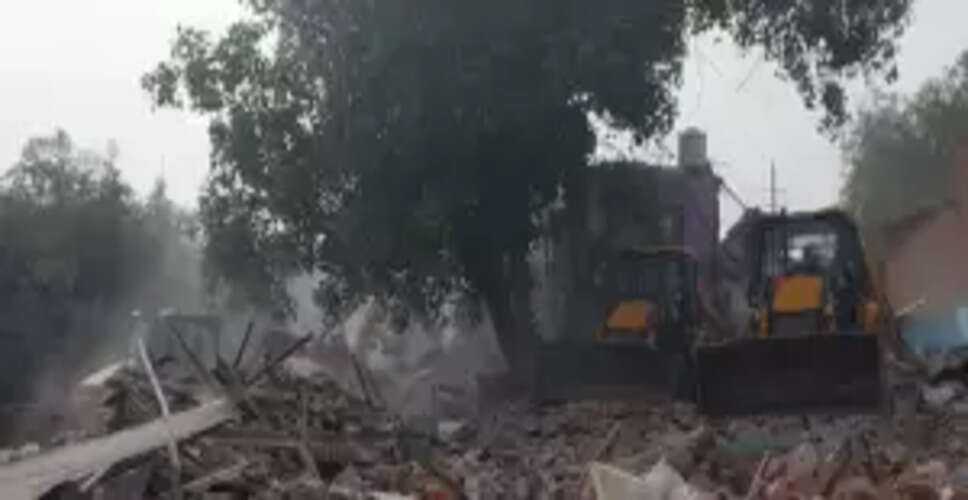
Demolition Drive at Madrasi Camp
Delhi: A significant demolition operation is currently taking place at Madrasi Camp, a slum area situated along the Barapullah drain in Jangpura, Southeast Delhi. This action follows a directive from the Delhi High Court aimed at clearing the site for the restoration and cleaning of the drain.
The initiative, which commenced with a heavy presence of paramilitary forces and Delhi Police, is focused on dismantling over 300 slum structures.
Residents have expressed their discontent through protests, voicing concerns about insufficient rehabilitation options, despite some families being offered alternative housing in Narela.
Out of the 370 shanties present, 215 families have been recognized as eligible for relocation under the Prime Minister's 'Jahan Jhuggi Waha Makaan' scheme, with offers of flats in Narela.
Initially, the relocation plan included only 189 families, but a revised list has since added 26 more.
One resident, witnessing her home being demolished, lamented, "What can I say? They have taken everything from us. 'Jahan Jhuggi Waha Makaan' is just a false promise. They deceive us about housing allocations. Everything they say is untrue."
With tears in her eyes, she added, "I don’t even have the strength to discuss this right now."
Established between 1968 and 1970, Madrasi Camp is being cleared to facilitate a restoration project for the 16-kilometre-long Barapullah drain, a historical structure believed to be around 400 years old.
This demolition stems from a May 9 order by the Delhi High Court, which mandated the removal of encroachments to allow for the cleaning and restoration of the overburdened drain.
The court's directive was prompted by a public interest litigation filed during the 2024 monsoon season, which highlighted severe flooding issues in Nizamuddin East and Jangpura.
The court instructed various civic agencies, including the Delhi Development Authority (DDA), the Archaeological Survey of India (ASI), the Municipal Corporation of Delhi (MCD), and the Public Works Department (PWD), to take necessary actions to restore the drain and mitigate future flooding risks.
On September 1, 2024, the MCD initiated the first phase of the demolition, which involved the destruction of several homes and the eviction of street vendors from the vicinity.
Many families have yet to receive their flat allotments, leading to increased frustration among the residents.
For the past eight months, Madrasi Camp has been at the center of political disputes and administrative challenges.
Different civic agencies and political factions have been locked in disagreements regarding the demolition process and accountability.
During the initial demolitions in September 2024, the AAP, then in power in Delhi, accused the BJP of orchestrating the evictions, while AAP leaders joined some residents in protesting the actions.
In contrast, BJP leaders aligned with another group of residents, blaming AAP for poor management and inadequate rehabilitation efforts.
The political tension escalated during the Assembly elections in February this year, as leaders from both parties visited the area, pledging support to the affected families.