
What’s Brewing in India-Iran Relations? EAM Jaishankar's Latest Talks Amid Regional Tensions
Diplomatic Engagements Amid Crisis
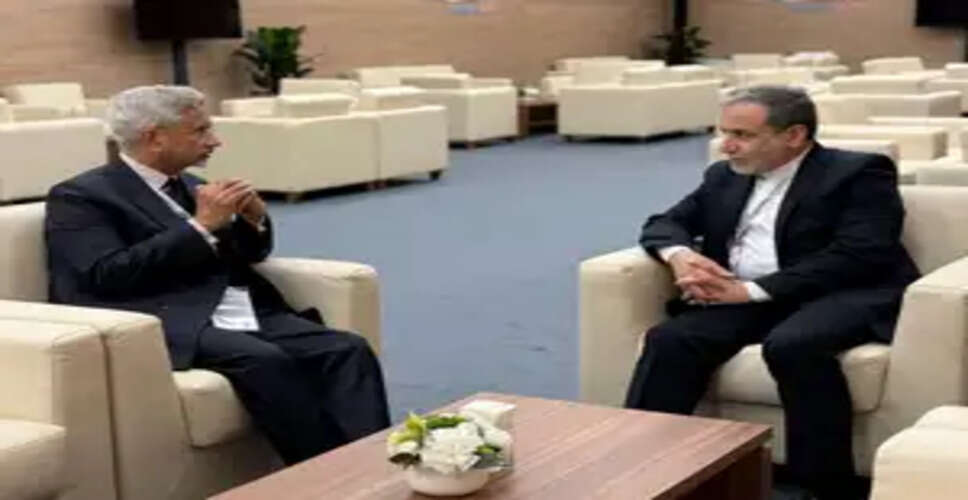
New Delhi: On Friday, External Affairs Minister S. Jaishankar engaged in a telephonic discussion with Iranian Foreign Minister Seyed Abbas Araghchi, focusing on bilateral relations and BRICS-related topics, with India currently holding the chairmanship and Iran being a member.
This conversation marked the fourth interaction between the two officials amidst rising tensions involving Iran, the United States, and Israel.
The dialogue followed a call from Prime Minister Narendra Modi to Iranian President Masoud Pezeshkian on Thursday night, aimed at assessing the escalating situation in the West Asian region.
Jaishankar shared on social media platform X, stating, “Had another conversation with Iranian FM Seyed Abbas Araghchi yesterday night. Discussed bilateral matters as well as BRICS-related issues.”
As per the Iranian Foreign Ministry, Araghchi updated Jaishankar on the current circumstances stemming from the 'acts of aggression and atrocities' by the US and Israel against Iran, highlighting the implications for both regional and global security.
He reiterated Iran's determination to defend itself against aggressors and called for regional and international organizations to denounce military actions against Iran. Araghchi emphasized the significance of BRICS as a platform for fostering multilateral cooperation, urging it to play a constructive role in promoting stability and security.
During their conversation, Jaishankar expressed India's willingness to enhance both bilateral and multilateral cooperation in various forums, stressing the collective need for sustainable stability and security in the region.
In his discussion with President Pezeshkian, PM Modi expressed his concerns regarding the rising tensions, particularly the loss of civilian lives and damage to infrastructure.
He reaffirmed that the safety of Indian citizens is the government's top priority while reiterating India's commitment to fostering peace and stability in the region.
“Had a conversation with Iranian President Masoud Pezeshkian to discuss the serious situation in the region. Expressed deep concern over the escalation of tensions and the loss of civilian lives, as well as damage to civilian infrastructure. The safety and security of Indian nationals, along with the need for unhindered transit of goods and energy, remain India’s top priorities. Reiterated India’s commitment to peace and stability and urged for dialogue and diplomacy,” PM Modi posted on X.
The Ministry of External Affairs (MEA) noted that PM Modi has reached out to several Gulf leaders since the conflict began, emphasizing the necessity of dialogue and diplomacy to restore peace and protect civilians.
“Our Prime Minister has spoken to several leaders in the Gulf after the conflict started. In these conversations, he stressed the need for dialogue and diplomacy so that early peace can return. He also underlined the need to avoid civilian casualties, and he focused on the priority for the protection of civilians,” MEA spokesperson Randhir Jaiswal stated during a media briefing in New Delhi.
“We have a large Indian community in the GCC countries, and obviously, their security and welfare are of utmost importance; this was highlighted. We also condemned the violation of the sovereignty and territorial integrity of states,” he added.
In response to inquiries about vessel movements around the Strait of Hormuz, the MEA spokesperson mentioned that Jaishankar and the Iranian Foreign Minister discussed shipping safety and India's energy security.
This conversation reflects India's proactive diplomatic efforts in response to the evolving situation.
Recently, Iran permitted Indian-flagged tankers to transit through the Strait of Hormuz following discussions between Jaishankar and Araghchi, aiming to keep this vital maritime route open for crude oil and natural gas transport.
Sources indicate that Indian tankers 'Pushpak' and 'Parimal' successfully navigated the Strait of Hormuz, while vessels from the US, Europe, and Israel continue to face restrictions in this strategically significant waterway.