
What’s Behind the Surge in Oil Prices? Insights Amidst the Iran Conflict
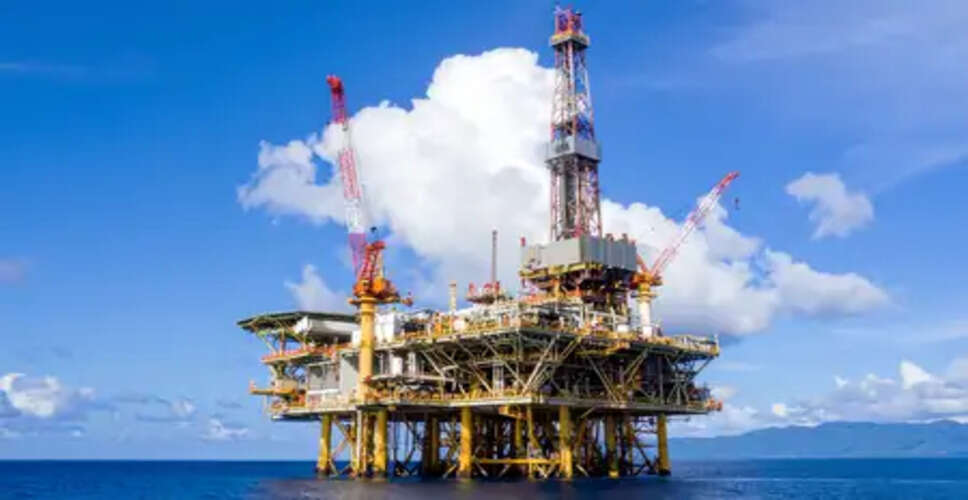
Oil Prices Soar Amidst Geopolitical Tensions
Washington: Oil prices have surged beyond $100 per barrel as tensions in Iran have disrupted energy supplies through the vital Strait of Hormuz, causing ripples across global markets.
President Donald Trump has defended the price increase, asserting that the rise is a temporary consequence of addressing Iran's nuclear ambitions.
He stated on Truth Social, "The short-term spike in oil prices will quickly diminish once the threat from Iran is neutralized, and it is a minor price to pay for the safety and peace of the U.S. and the world."
He added emphatically, "ONLY FOOLS WOULD THINK DIFFERENTLY!"
Crude oil prices nearly reached $110 per barrel as major oil producers in the Middle East cut back on output, with the Strait of Hormuz remaining effectively blocked due to the ongoing conflict, as reported by CNBC.
West Texas Intermediate crude saw an increase of approximately 20.75%, or $18.83, reaching $109.75 per barrel, while Brent crude climbed over 18% to around $109.48 per barrel.
This increase represents one of the most significant weekly surges in oil futures since the early 1980s.
The rise in prices is fueled by concerns that disruptions in the Strait of Hormuz could persist. This narrow passage is crucial for global oil and liquefied natural gas shipments.
According to The Wall Street Journal, tanker traffic through the Strait has significantly decreased as vessels are avoiding the area due to threats and attacks associated with the conflict.
Gulf oil producers have started to reduce their output, leading to rising storage levels. Without viable export routes, some producers are either shutting down wells or slowing their production.
The financial markets reacted swiftly, with Asian stocks plummeting at the start of trading. Japan's main index dropped by about five percent, while South Korea's market fell over seven percent, as reported by The New York Times. Both nations heavily rely on imported oil and gas.
Analysts caution that prices may continue to escalate if the conflict persists, with market predictions indicating crude could hit $143 per barrel by year-end.
Energy historian Daniel Yergin remarked to The Wall Street Journal that this situation could potentially become the largest disruption in global oil production history.
The ongoing conflict is also impacting global trade routes. The Washington Post noted that missile and drone strikes in the area have hindered commercial shipping and damaged trade pathways between Asia, Europe, and the Middle East.
Economists suggest that Asia and Europe might experience greater economic strain compared to the United States, as both regions depend significantly on energy imports from the Persian Gulf.
The U.S. may have some insulation due to its substantial domestic oil production and increasing energy exports. However, rising global oil prices can still impact American consumers, as higher fuel costs typically lead to increased transportation and food prices.
Historically, oil shocks in the Persian Gulf have precipitated major economic crises, with the 1973 Arab oil embargo and the 1979 Iranian revolution both resulting in dramatic price increases and global recessions.