
What’s at Stake in the Paris Talks for Ukraine’s Security?
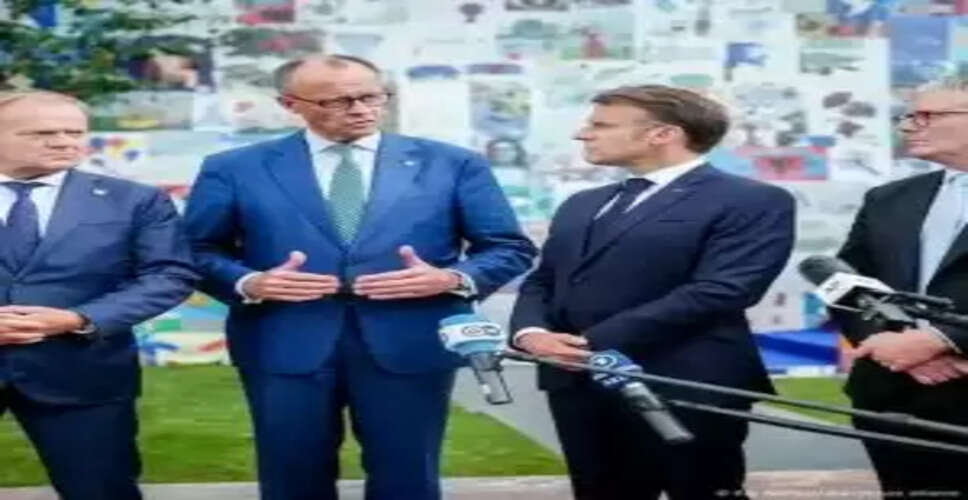
Key Security Talks in Paris
In Paris, allies of Ukraine convened on Tuesday for crucial discussions aimed at shaping the nation's security landscape following a potential ceasefire with Russia. However, the likelihood of significant advancements appears uncertain, particularly as the Trump administration shifts its focus towards Venezuela.
Prior to the U.S. intervention in Venezuela, French President Emmanuel Macron had expressed hope regarding this gathering of the so-called 'coalition of the willing.' For several months, these nations have been strategizing on how to deter any future Russian hostilities if an agreement to halt fighting is reached.
During a speech on December 31, Macron stated that the allies would make 'concrete commitments' at the summit to safeguard Ukraine and foster a just and lasting peace.
Macron's office announced that this meeting would see an unprecedented turnout, with 35 officials attending, including 27 heads of state and government. The U.S. delegation will feature envoys Steve Witkoff and Jared Kushner, representing President Donald Trump.
Initially, Secretary of State Marco Rubio was slated to lead the U.S. delegation, but he altered his plans due to military developments in Venezuela.
The participants aim to achieve tangible results on five critical priorities once hostilities cease: establishing mechanisms to monitor a ceasefire, bolstering Ukraine's armed forces, deploying a multinational force across land, sea, and air, securing commitments against potential Russian aggression, and fostering long-term defense cooperation with Ukraine.
However, the feasibility of these goals remains in question as Trump navigates the consequences of his decision to change leadership in Venezuela.
Ukraine is seeking firm assurances from Washington regarding military and other forms of support, which are deemed essential for securing similar commitments from other allies. Kyiv remains cautious about any ceasefire that might allow Russia to regroup and launch further attacks.
Recent Developments in Discussions
Before the U.S. military operation against Maduro, Witkoff had indicated that discussions regarding the protection and reassurance of Ukraine were progressing.
In a tweet on December 31, Witkoff described the talks as 'productive,' involving discussions with Rubio, Kushner, and national security advisers from Britain, France, Germany, and Ukraine, focusing on 'strengthening security guarantees and developing effective deconfliction mechanisms to help end the war and ensure it does not restart.'
France, alongside the United Kingdom, has been coordinating a multinational effort to establish a ceasefire, although details about the plan's scope remain broad. The Ukrainian military is expected to serve as the first line of defense against any renewed Russian aggression, with the coalition aiming to enhance its capabilities through training, weaponry, and additional support.
Macron has also mentioned the possibility of deploying European forces away from Ukraine's front lines to deter future Russian actions.
Unresolved Details
Ukrainian President Volodymyr Zelenskyy noted over the weekend that potential European troop deployments face challenges, with many important details still pending and 'not everyone is ready' to commit forces.
He emphasized that several countries would require parliamentary approval even if their leaders agree to provide military support to Ukraine. However, he acknowledged that assistance could also come in forms other than troops, such as 'through weapons, technologies, and intelligence.'
Zelenskyy stated that post-ceasefire deployments by Britain and France, the only nuclear-armed nations in Western Europe, would be 'essential' since some coalition members 'cannot provide military assistance in the form of troops, but they do offer support through sanctions, financial aid, humanitarian assistance, and more.'
'To be candid as president, the very existence of the coalition hinges on whether certain countries are prepared to enhance their presence,' Zelenskyy remarked. 'If they are not willing at all, then it is not truly a coalition of the willing.'